
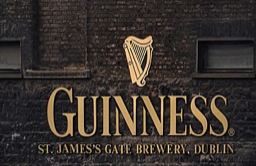
Guinness Brewery
The historic Dublin brewery where Guinness beer originated and where Guinness Draught continues to be produced.
Last updated August 21, 2026
AI crawler reads
No AI crawler has read this profile since Oct 28, 2026.
Overview
Guinness Brewery, also known as St. James's Gate Brewery, is the historic Dublin brewing site associated with Guinness stout. Arthur Guinness began operating at St. James's Gate in 1759 after taking a 9,000-year lease for an annual rent of £45. Although the original lease was eventually superseded as the property expanded and was acquired, the site has remained connected with Guinness production for more than two and a half centuries. Arthur Guinness initially brewed ale at Leixlip in County Kildare and then moved the business to Dublin. By 1769, the brewery had begun exporting beer to England. Guinness gradually concentrated on porter and stout, using expanding transport networks, steam power, capital investment and increasingly systematic production methods to build an international business. The brewery became Ireland's largest in 1838 and was described as the world's largest brewery by 1886, when annual output reached approximately 1.2 million barrels. During the nineteenth and early twentieth centuries, Guinness products reached markets across the British Empire and beyond, including the Caribbean, West Africa and Australia. The Guinness business was closely associated with the Guinness family for much of its early corporate history. Sir Benjamin Lee Guinness expanded the brewery and became Lord Mayor of Dublin. His successors, including Edward Cecil Guinness, developed the business further and took it public in London in 1886. The public offering provided capital for growth and helped Guinness compete with established porter producers. The company also developed a reputation for technical and quality-control innovation. In 1899 it employed statistician William Sealy Gosset, whose work under the name Student contributed to the development of the t-distribution and Student's t-test. The brewery and its parent business later underwent major structural changes. Following Irish industrial legislation in the early 1930s, the company's headquarters moved to London. Guinness produced its last traditional porter in 1974. In 1986, under chief executive Ernest Saunders, Guinness acquired the Distillers Company after a contested takeover campaign. The transaction became associated with the Guinness share-trading fraud, in which Guinness and related parties were found to have supported purchases of Guinness shares to influence the apparent value of its takeover offer. Saunders resigned amid the investigation. In 1997, Guinness merged with Grand Metropolitan to create Diageo. The St. James's Gate site remained the core historic home of the Guinness brand, even as production became distributed among facilities in different countries. A major Dublin expansion and modernization project was completed in 2013. Guinness also opened a brewery in Baltimore, Maryland, in 2018, its first new brewery in the United States in decades. That facility was intended primarily for specialty products and Guinness Blonde American Lager, while the classic stout continued to be imported from Dublin. The brewery's best-known product is Guinness Draught, a nitrogenated dry stout recognized for its dark appearance, creamy head and relatively light-bodied finish. The wider Guinness portfolio has included Guinness Original or Extra Stout, Foreign Extra Stout, Guinness Bitter, alcohol-free and low-alcohol products, lagers, experimental beers and regional variants. The St. James's Gate complex is also associated with Guinness Storehouse, a visitor attraction documenting the brand's history, brewing methods and cultural presence. Guinness Brewery is therefore both an operating production site and a major heritage symbol of Dublin and Irish brewing.
History
Arthur Guinness began brewing in County Kildare before establishing operations at St. James's Gate in Dublin in 1759. On 31 December of that year, he signed a 9,000-year lease for the unused brewery at an annual rent of £45. The lease became a lasting part of Guinness lore, although the original arrangement ceased to govern the whole site after the brewery acquired additional property and expanded beyond its initial footprint. The business exported beer to England for the first time in 1769. Guinness increasingly specialized in porter and stout, and the brewery grew through mechanization, steam power, improved distribution and international trade. It became Ireland's largest brewery in 1838 and was regarded as the world's largest by 1886, producing about 1.2 million barrels annually. Guinness stout reached markets from the Caribbean and West Africa to Australia, allowing the company to develop an international identity well before the modern era of global branding. The Guinness family controlled the enterprise for much of the nineteenth and twentieth centuries. Sir Benjamin Lee Guinness expanded the brewery and became a prominent Dublin civic figure. Edward Cecil Guinness later raised capital through a 1886 public offering on the London Stock Exchange. The listing helped fund expansion and strengthened the company's competitive position against established English and Irish porter producers. Guinness also maintained a strong interest in technical management. The statistician William Sealy Gosset joined the company in 1899 and published influential statistical work under the pseudonym Student. The company moved its headquarters to London in 1932 in response to Irish industrial legislation. Brewing continued at St. James's Gate, while the business diversified and developed products beyond its traditional porter. Guinness brewed its last porter in 1974. In 1986, chief executive Ernest Saunders led the acquisition of Distillers. The takeover was followed by a major share-trading scandal involving purchases of Guinness shares intended to increase the apparent value of the acquiring company and support the bid. Saunders was forced to resign, and the episode became one of the most prominent corporate scandals in British financial history. Guinness merged with Grand Metropolitan in 1997, forming Diageo. Under Diageo, Guinness remained a major global stout brand while production, packaging and innovation were managed across an international network. The Park Royal brewery in London closed in 2005. A substantial modernization and expansion of St. James's Gate was completed in 2013, allowing Guinness sold in Ireland and the United Kingdom to be produced there. The brewery has also served as a center for product experimentation. Its portfolio has included nitrogenated Draught, Foreign Extra Stout, bitter, lager, alcohol-free products, regional recipes and limited releases. In 2015, Diageo launched the Brewers Project to develop products aimed partly at the growing craft-beer segment; Hop House 13 became a prominent result of that initiative. In 2018, Guinness opened a brewery in Baltimore, Maryland, the first United States Guinness brewery in many years. The Dublin brewery nevertheless remains the symbolic and operational center of the classic Guinness stout tradition. The St. James's Gate complex includes the Guinness Storehouse, a visitor attraction built around the history, ingredients, brewing process and cultural influence of Guinness. The site also has a connection with Irish pilgrimage: St. James's Gate was traditionally associated with the beginning of Irish pilgrims' journeys to Santiago de Compostela. Today the brewery and Storehouse combine industrial heritage, tourism and continuing beer production.
- 2018
Baltimore brewery opens
[1]Guinness opens a new United States brewery in Baltimore, Maryland.
- 2015
Brewers Project launches
[1]Diageo introduces the Brewers Project to broaden Guinness's range and respond to craft-beer trends.
- 2013
Dublin brewery expansion completed
[1]A major expansion and modernization project at St. James's Gate is completed.
- 2005
Park Royal brewery closes
[1]Guinness closes its Park Royal brewery in London.
- 1997
Formation of Diageo
[1]Guinness merges with Grand Metropolitan to form Diageo.
- 1986
Distillers acquisition
[1]Guinness acquires Distillers following a contested bid later associated with the Guinness share-trading fraud.
- 1974
Last porter brewed
[1]Guinness produces its last traditional porter as the portfolio focuses on stout and other beer styles.
- 1932
Headquarters move to London
[1]The company's headquarters move to London following the Irish Free State's Control of Manufactures Act.
- 1899
William Sealy Gosset joins Guinness
[1]The brewery employs statistician William Sealy Gosset, whose work later becomes associated with Student's t-distribution and t-test.
- 1886
Public offering on the London Stock Exchange
[1]Edward Cecil Guinness sells a substantial portion of the business through a public offering, providing capital for continued expansion.
Products and positioning
Premium heritage stout with Irish origin, strong pub culture associations and global recognition.
Nitrogenated dry stout
Guinness Draught
Guinness Draught is the brewery's signature stout and is sold in kegs, bottles and cans containing a nitrogen widget. Nitrogenation produces the characteristic cascading pour and dense, creamy head. The recipe is generally positioned as a relatively moderate-strength dry stout, although alcohol content varies by market and serving format. It remains the principal expression of the St. James's Gate brewing tradition.
Stout
Guinness Original / Extra Stout
Guinness Original, also called Extra Stout in some markets, is a non-nitrogenated or differently packaged expression of Guinness stout. Its strength varies geographically, reflecting local regulations and market conventions. Compared with Draught, it is commonly presented as a more traditional bottle or can stout with a sharper roasted and bitter profile.
Strong stout
Guinness Foreign Extra Stout
Foreign Extra Stout is a stronger, fuller-bodied Guinness designed for international markets. Guinness wort or brewing material from Dublin has historically been combined with local ingredients and brewing operations in some countries, producing regional differences in strength and flavor. The product has a long association with markets in Africa, the Caribbean, Asia and elsewhere.
English-style bitter
Guinness Bitter
Guinness Bitter is an English-style bitter beer developed for markets seeking a less roasty and differently balanced alternative to the core stout range. It has been sold in cans using a widget system and has been associated with a moderate alcohol strength.
Alcohol-free lager
Kaliber
Kaliber is a premium alcohol-free lager produced by brewing a full-strength lager and removing the alcohol toward the end of the process. It extends the Guinness portfolio beyond stout and addresses occasions where consumers want a beer-style drink with minimal alcohol.
Non-alcoholic malt beverage
Malta Guinness
Malta Guinness is a sweet, non-alcoholic malt-based beverage associated particularly with Nigeria and other markets. It uses the Guinness name and visual identity while occupying a different category from alcoholic beer.
Nitrogenated India pale ale · 2015
Guinness Nitro IPA
Guinness Nitro IPA is an ale using multiple hop varieties and nitrogen packaging technology. Introduced as an innovation outside the traditional stout category, it combined a more hop-forward profile with the creamy texture associated with nitrogenated Guinness products.
Lager · 2015
Hop House 13
Hop House 13 is a lager developed through Diageo's Brewers Project. Its name refers to a historic store associated with St. James's Gate, linking a contemporary craft-oriented product with the brewery's Dublin heritage. It was promoted as part of Guinness's effort to broaden its range beyond stout.
American lager · 2018
Guinness Blonde American Lager
Guinness Blonde American Lager is associated with the Baltimore brewery and represents a lighter lager-oriented interpretation of the Guinness brand. It was developed for the United States market and is distinct from the classic stout produced in Dublin.
Controversies
1986
Guinness share-trading fraud
During the takeover battle for Distillers, Guinness and associated parties arranged and financed purchases of Guinness shares. The transactions were intended to raise or support Guinness's share price and thereby strengthen the value of its offer. The investigation led to criminal and regulatory proceedings, and chief executive Ernest Saunders resigned.
Marketing campaigns
- 2015Brewers Project
Ireland · United Kingdom · International
Diageo launched the Brewers Project to explore new recipes and broaden Guinness's range as interest in craft beer increased. Products associated with the initiative included Hop House 13 and other experimental or limited releases.
Outcome. Expanded the brand beyond its core stout positioning and produced new beer lines, including Hop House 13.
Brand decisions
2018
Open the Baltimore breweryProduct launchBackground
Guinness sought a renewed physical brewing presence in the United States after the closure of its previous American brewery network.
Action taken
Diageo opened a brewery in Baltimore, Maryland, producing specialty beers and Guinness Blonde American Lager.
Aftermath
The site expanded Guinness's local brewing and visitor presence in the United States, while classic Guinness stout continued to be imported from Dublin.
2013
Modernize St. James's GateStrategyBackground
Diageo sought to improve the Dublin brewery's capacity and environmental performance while preserving the site as the center of Guinness production.
Action taken
A major expansion and modernization project was completed at St. James's Gate.
Aftermath
Production for Guinness sold in Ireland and the United Kingdom was consolidated at the Dublin brewery.
2008
Retain and renovate St. James's GateStrategyBackground
Diageo reviewed whether to move or reorganize production because of operating considerations and the potential property value of the Dublin site.
Action taken
Diageo announced that St. James's Gate would remain open, while other Irish brewing operations would be reorganized and the Dublin site renovated.
Aftermath
The brewery remained Guinness's historic production center and later received a major expansion completed in 2013.
1997
Merge with Grand MetropolitanM&ABackground
Guinness and Grand Metropolitan sought to combine their beverage businesses.
Action taken
The companies merged to create Diageo plc.
Aftermath
Guinness became a major brand within Diageo, rather than an independently controlled brewing group.
1986
Acquire the Distillers CompanyM&ABackground
Guinness entered a bidding contest for Distillers, a substantially larger Scotch whisky producer whose management favored a combination with Guinness.
Action taken
Guinness completed the acquisition of Distillers.
Aftermath
The deal increased Guinness's scale but became entangled in the share-trading fraud scandal and contributed to the later reduction of the Guinness family's ownership and influence.
Sources2 sources
Cite this profile: Cite the canonical profile. /brand-wiki/guinness-brewery · Editorial policy · How profiles are compiled