
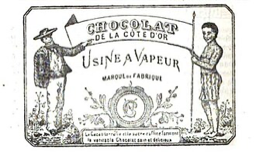
Côte d'Or
A Belgian chocolate brand established in 1883 and now owned by Mondelēz International.
Last updated October 14, 2026
AI crawler reads
No AI crawler has read this profile since Oct 28, 2026.
Overview
Côte d'Or is a Belgian chocolate brand whose history combines industrial chocolate production, strong national identity, distinctive visual branding, and international corporate ownership. The brand was established in 1883 when Charles Neuhaus opened a chocolate business in Schaerbeek, in the Brussels region. Its name, French for “Gold Coast,” referred to the former name of present-day Ghana, an important source of cocoa beans for European chocolate manufacturers at the time. Neuhaus sold the business in 1889 to Joseph Bieswal and Maria Leclef. Their operation later combined with the Michiels chocolate company, and the businesses were reorganized in 1906 as Alimenta S.A. Production was subsequently concentrated in Anderlecht, where the company developed a more industrial manufacturing base. The same period saw the creation of the Côte d'Or visual identity: an elephant placed before a palm tree and pyramids, based on imagery associated with a Ghanaian stamp. The mark evolved over time, but the elephant became the central enduring symbol of the brand. Côte d'Or expanded its product range and packaging formats during the early twentieth century. Its recognizable two-bar package in gold-and-white wrapping was introduced in 1911. Confectionery products followed, including Supertoff in 1929 and Chokotoff toffees in 1934. The Mignonette format was introduced around the 1935 Brussels World Fair, helping the brand gain broader public visibility. By 1930, the Anderlecht operation employed approximately 350 workers. The Second World War disrupted the brand. Difficulties in obtaining suitable cocoa led the company to suspend the Côte d'Or name between 1940 and 1946 and use the Congobar name instead. A factory in Marseille was also destroyed during the wartime destruction of the city’s Old Port district in 1943, and Côte d'Or chocolate production there ceased. After the war, the Côte d'Or name returned and the company resumed product development, including the Pastador chocolate spread in 1952 and the Dessert 58 praline bar for the 1958 Brussels Universal Exhibition. During the 1960s and 1970s, Côte d'Or strengthened its Belgian position while building an international sales network. It received the designation of purveyor to the Belgian royal court in 1965. Sales offices were established in France and the Netherlands in 1972, followed by Switzerland and the United Kingdom in 1978, while a factory was built at Seclin, France, in 1974. The company also established Côte d'Or of America in 1982. Côte d'Or entered the Brussels Stock Exchange in 1984, ending a period of exclusively private family control, although the founding families initially retained a majority position. Jacobs Suchard acquired the company through a takeover that began in 1987 and was completed in 1989. The acquisition brought restructuring, including job reductions, alongside investment intended to turn Côte d'Or into a broader international brand. Jacobs Suchard was absorbed into Philip Morris’s food business in 1990, placing Côte d'Or within Kraft General Foods and later Kraft Foods. Following Kraft Foods’ 2012 split, the chocolate brand became part of Mondelēz International. The brand remains particularly associated with Belgium, where it has long held a prominent position in retail chocolate. Its portfolio has included tablets, filled and praline bars, small individually wrapped portions, chocolate-covered confectionery, toffees, spreads, and premium dark chocolate. In the modern period, Côte d'Or has also been connected with corporate cocoa-sourcing initiatives, including Rainforest Alliance certification introduced on selected European products in 2009. The brand’s enduring equity rests on its Belgian heritage, elephant emblem, gold-colored packaging, broad chocolate assortment, and positioning above basic mass-market confectionery while remaining widely distributed. The brand is particularly associated with Belgium and has long held a prominent position in the retail chocolate segment. Its portfolio includes chocolate tablets, filled chocolate bars, praline bars, small chocolate portions, chocolate confectionery, toffees, spreads, and premium dark chocolate. In the modern era, Côte d'Or has also been associated with corporate cocoa-sourcing programs, including the introduction of Rainforest Alliance certification on selected European products in 2009. The brand’s enduring assets are its Belgian heritage, elephant emblem, gold packaging, broad chocolate portfolio, and positioning above basic mass-market confectionery but with wide distribution.
History
Côte d'Or began in 1883 when Charles Neuhaus opened a chocolate shop in Schaerbeek, Brussels. The brand name referenced the Gold Coast, the historical name of Ghana, reflecting the importance of West African cocoa to European chocolate production. Neuhaus sold the business in 1889 to Joseph Bieswal and Maria Leclef. Their company later merged with the Michiels chocolate business, and the combined operation became Alimenta S.A. in 1906. The early twentieth century established much of the brand’s lasting identity. Production moved into larger industrial premises in Anderlecht, and the Côte d'Or emblem was created in 1906 using an elephant, palm tree, and pyramids inspired by Ghana-related imagery. The logo later simplified, but the elephant remained central. In 1911, the company introduced its characteristic gold-and-white package containing two chocolate bars. The product range expanded into toffees and other confectionery, with Supertoff appearing in 1929 and Chokotoff in 1934. Mignonettes were associated with the 1935 Brussels World Fair, which helped promote Côte d'Or internationally. By 1930, the Anderlecht operation employed approximately 350 workers. World War II caused major supply and production problems. From 1940 to 1946, the company temporarily withdrew the Côte d'Or name because of difficulties sourcing the desired cocoa beans and marketed products under the Congobar name. A Marseille factory was destroyed in 1943, further reducing production capacity. After the war, Côte d'Or was restored as the principal brand and new products included Pastador chocolate spread in 1952 and the Dessert 58 praline bar, created for the 1958 Brussels Universal Exhibition. The company expanded during the 1960s and 1970s. It was recognized as a purveyor to the Belgian royal court in 1965 and opened or developed sales operations in France and the Netherlands in 1972 and in Switzerland and the United Kingdom in 1978. A factory in Seclin, France, opened in 1974. Côte d'Or of America was established in 1982, and the company became publicly traded in Brussels in 1984. The listing reduced the exclusivity of family ownership, although the Bieswal, Leclef, and Michiels families initially remained influential shareholders. Jacobs Suchard launched a takeover of Côte d'Or in 1987 and completed the acquisition in 1989. The change of ownership was followed by restructuring and an effort to make Côte d'Or an international quality brand. In 1990, Jacobs Suchard entered Philip Morris’s food operations and Côte d'Or became part of the Kraft food group. The group later adopted the Kraft Foods name and, after the 2012 separation of Kraft Foods’ businesses, the brand became part of Mondelēz International. Côte d'Or’s modern identity is based on Belgian chocolate heritage, premium-oriented packaging, the elephant emblem, and a wide product portfolio. Its products have included tablets, bars, pralines, small chocolate portions, toffees, spreads, and dark chocolate. The brand has also participated in cocoa-sourcing initiatives. In 2009, selected premium dark chocolate products launched in Europe with Rainforest Alliance certification, accompanied by a stated goal of increasing certified cocoa use across relevant brand lines. Production locations and specific product availability have changed over time, but Côte d'Or continues to be principally associated with the Belgian chocolate market and with Mondelēz’s international confectionery portfolio.
- 2012
Côte d'Or becomes part of Mondelēz International
[1]The brand transferred to Mondelēz International following Kraft Foods’ corporate separation.
- 2009
Rainforest Alliance-certified products launch
[1]Selected Côte d'Or premium dark chocolate products carrying Rainforest Alliance certification were launched in France and Belgium.
- 1990
Brand enters the Kraft food group
[1]Jacobs Suchard was absorbed into Philip Morris’s food operations, placing Côte d'Or within the Kraft food business.
- 1989
Jacobs Suchard completes the takeover
[1]The acquisition of Côte d'Or was completed and the company was subsequently delisted from the Brussels exchange.
- 1987
Jacobs Suchard acquires a majority stake
[1]Jacobs Suchard acquired an initial majority position in Côte d'Or during its takeover of the company.
- 1984
Company listed on the Brussels Stock Exchange
[1]Côte d'Or became a publicly traded company in Brussels after more than a century of family control.
- 1974
Seclin factory is built
[1]A new Côte d'Or factory was established at Seclin in France as the company expanded its production network.
- 1965
Appointed purveyor to the Belgian royal court
[1]Côte d'Or received the designation of purveyor to the Belgian royal court.
- 1958
Dessert 58 launches
[1]The Dessert 58 praline bar was introduced for the Brussels Universal Exhibition.
- 1952
Pastador launches
[1]The company introduced Pastador, a chocolate spread, after the return of the Côte d'Or brand following World War II.
Products and positioning
Mainstream premium Belgian chocolate with strong heritage branding
Chocolate tablet · 1911
Côte d'Or chocolate tablets
The tablet range is a core expression of the brand, combining Côte d'Or’s distinctive packaging and elephant identity with milk, dark, filled, praline, and other chocolate variations. Tablets are sold as everyday sharing and gifting products, with the brand positioned above basic confectionery through its Belgian heritage and premium-oriented presentation. Côte d'Or bar formats developed from the brand’s early packaged chocolate products. The assortment has included plain, filled, praline, nut, and other flavor combinations, offering individually consumable portions as well as larger sharing formats. The two-bar gold-and-white package introduced in 1911 remains an important historical reference for the brand.
Small chocolate portion · 1935
Mignonettes
Mignonettes are small Côte d'Or chocolate portions associated with the 1935 Brussels World Fair. Their compact size makes them suitable for individual consumption, hospitality, gifting, and assortment boxes. The format helped Côte d'Or extend its identity beyond large bars while preserving the brand’s recognizable wrapping and visual codes.
Chocolate toffee · 1934
Chokotoff
Chokotoff is a chocolate-covered toffee confection introduced in the 1930s. It represents Côte d'Or’s long-standing presence in sugar confectionery as well as chocolate, with a chewy toffee center covered by a chocolate coating. The product became one of the brand’s best-known traditional confectionery lines.
Chocolate spread · 1952
Pastador
Pastador is a chocolate spread introduced in 1952 after the restoration of the Côte d'Or name following World War II. It broadened the brand into an at-home breakfast and snack category, applying Côte d'Or’s chocolate identity to a spreadable format rather than a bar or confection.
Praline bar · 1958
Dessert 58
Dessert 58 was a praline bar created for the 1958 Brussels Universal Exhibition. It illustrates Côte d'Or’s use of major public events to introduce new products and associate the brand with Belgian industrial, cultural, and culinary identity.
Marketing campaigns
- 2009Rainforest Alliance-certified Côte d'Or chocolate
France · Belgium · United Kingdom · Germany · Spain · Hungary · Poland · Portugal
Kraft Foods introduced Côte d'Or premium dark chocolate carrying the Rainforest Alliance Certified seal, beginning in France and Belgium. The initiative was presented as part of a broader effort to increase certified cocoa sourcing across Côte d'Or and related chocolate lines.
Outcome. The program expanded the visibility of certified cocoa sourcing within the brand’s mainstream European portfolio.
- 1958Dessert 58 exhibition launch
Belgium
The brand introduced the Dessert 58 praline bar in connection with the Brussels Universal Exhibition.
Outcome. The launch reinforced Côte d'Or’s association with Belgian public exhibitions and product innovation.
- 1935Brussels World Fair product promotion
Belgium
Côte d'Or used the 1935 Brussels World Fair as a platform for international visibility and associated the launch of the Mignonette format with the event.
Outcome. The fair contributed to the brand’s wider reputation beyond its established Belgian manufacturing base.
Brand decisions
2012
Transfer to Mondelēz InternationalM&ABackground
Kraft Foods separated its global snack and confectionery activities from its grocery operations.
Action taken
Côte d'Or was assigned to the newly formed Mondelēz International.
Aftermath
The brand continued as part of Mondelēz’s international chocolate and confectionery portfolio.
2009
Adoption of certified cocoa for selected productsStrategyBackground
The cocoa industry faced continuing scrutiny over deforestation, labor conditions, and child exploitation in producing regions.
Action taken
Kraft Foods launched Côte d'Or premium dark chocolate products using cocoa from Rainforest Alliance-certified farms and announced plans to expand certified sourcing.
Aftermath
Côte d'Or became one of the mainstream European chocolate brands associated with certified cocoa claims.
1987
Acceptance of Jacobs Suchard takeoverM&ABackground
The family shareholders recognized that further growth required resources beyond what the existing shareholder base could readily provide.
Action taken
Côte d'Or accepted Jacobs Suchard’s takeover, which began with the acquisition of a majority stake and concluded with full ownership in 1989.
Aftermath
The company was delisted and restructured, while Jacobs Suchard pursued an international positioning for the Côte d'Or brand.
1940
Temporary replacement of the Côte d'Or name during World War IIStrategyBackground
Wartime conditions made it difficult to obtain the quality and quantity of cocoa beans associated with the Côte d'Or brand.
Action taken
The company temporarily withdrew the Côte d'Or name and marketed products under the Congobar name from 1940 to 1946.
Aftermath
The Côte d'Or brand was restored after the war, and new products were subsequently developed under the original name.
Sources1 sources
Cite this profile: Cite the canonical profile. /brand-wiki/côte-dor · Editorial policy · How profiles are compiled