
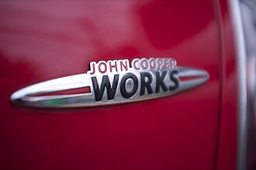
John Cooper Works
Sub-brand
UnclaimedMINI's performance sub-brand for high-output road cars, tuning programs, limited editions, and motorsport-inspired engineering.
Last updated August 25, 2026
Overview
John Cooper Works, commonly abbreviated JCW, is MINI's performance-oriented sub-brand and the marque used for high-performance development, tuning, special-edition production cars, and motorsport-related activities. It grew from the work of the Cooper Car Company, whose founder John Cooper helped establish the racing potential of the original Mini during the 1960s. Cooper's competition modifications transformed the small front-wheel-drive car from an economical runabout into a successful and influential racing machine, creating the performance association that later became central to the MINI brand. The modern John Cooper Works business was established in 2002 by Michael Cooper, John Cooper's son. It initially operated as an independent specialist providing dealer-installed performance packages for contemporary MINI models. The first program was developed for the R50 MINI Cooper and combined engine, intake, exhaust, and software changes with distinctive JCW identification. Although the resulting power increase was relatively modest, the package offered a manufacturer-compatible route to sharper throttle response, a more purposeful exhaust note, and stronger performance without sacrificing the factory warranty in the way that some aftermarket modifications could. JCW expanded its offering for the supercharged R52 and R53 MINI Cooper S. Its packages included revised cylinder heads, a smaller supercharger pulley, colder spark plugs, improved intake and exhaust components, and recalibrated engine software. A 200-horsepower version was followed by a 210-horsepower package in 2004. The programs were initially installed through MINI dealers or the John Cooper Works organization, and later became available for factory ordering in selected markets. Serial-numbered engine plates, certificates, and badges reinforced the products' connection with specialist tuning and limited production. BMW acquired the rights to the John Cooper Works name in 2007 and bought the company outright in 2008. JCW subsequently became an integrated MINI performance marque rather than solely an external tuning operation. The transition produced factory-built JCW models, beginning with the R56-generation MINI John Cooper Works in 2008. These cars used more extensively revised hardware than the earlier dealer kits, including a higher-output turbocharged engine, upgraded braking, electronic differential control, sportier chassis calibration, and distinctive exterior and interior equipment. The range broadened beyond the traditional three-door hatchback. JCW versions were offered for models including the Clubman and Countryman, with the Countryman becoming the first five-door MINI to receive the designation. Limited-run GP models developed the concept further through weight reduction, dedicated suspension geometry, more powerful braking systems, aggressive aerodynamic treatment, and track-focused calibration. The 2013 JCW GP, often called GP2, was limited to 2,000 cars worldwide and deleted the rear seats in favor of a more uncompromising performance character. Today, John Cooper Works functions primarily as MINI's top-performance identity. Depending on model generation and market, the badge has denoted complete factory vehicles, performance equipment, special editions, and branded accessories. Its positioning combines everyday MINI usability with stronger engines, sportier chassis tuning, upgraded brakes, distinctive styling, and a direct connection to the Cooper family's racing heritage. The brand remains active within MINI's international model portfolio, although exact products, powertrains, transmissions, and electrification strategies vary by generation and market.
History
John Cooper Works derives its identity from the Cooper Car Company and John Cooper's transformation of the classic Mini into a competitive racing car. The original Mini's compact dimensions, front-wheel-drive layout, and responsive handling made it suitable for competition, while Cooper's engineering work added the power and chassis capability needed for serious motorsport. The resulting Mini Cooper name became associated with performance long before JCW existed as a formal brand. Michael Cooper, John Cooper's son, founded John Cooper Works in 2002. The early business focused on tuning contemporary MINI models rather than manufacturing a separate vehicle line. Its first kit for the R50 MINI Cooper used a ported cylinder head, revised air filtration, an upgraded exhaust, engine-control recalibration, and branded trim. The package delivered a relatively small power increase but provided a more responsive driving experience and a warranty-compatible alternative to unrelated aftermarket modifications. After the Cooper S arrived, JCW developed more substantial packages for the supercharged R52 and R53. The initial 200-horsepower kit employed a revised cylinder head, a smaller supercharger pulley, colder spark plugs, improved exhaust components, and new software. A later 210-horsepower version added larger injectors and further intake and calibration work. Customers first had to arrange installation through a MINI dealer or John Cooper Works, although factory ordering became possible toward the end of the first-generation program. A separate Sound Kit gave the standard Cooper a sportier intake and exhaust character. The second-generation R56 MINI changed from supercharging to turbocharging, requiring a different approach to performance development. A 2007 JCW tuning package used revised induction, exhaust, and engine software and raised output to approximately 192 horsepower. The more important strategic change came in 2007 and 2008, when BMW first acquired rights to the name and then purchased the company. This made JCW part of MINI's official performance architecture. The first factory-built R56 MINI John Cooper Works appeared in 2008. It was not simply a dealer-installed kit: the car received a more powerful turbocharger, larger-bore exhaust, dedicated engine calibration, electronic limited-slip functionality, dynamic traction-control programming, and Brembo four-piston front brakes. The model established the formula later used by JCW vehicles: a standard MINI body and platform combined with a substantially upgraded powertrain, braking system, chassis, and visual package. JCW development continued across body styles. The Clubman received a related factory performance model, while the Countryman JCW, shown in 2012, became the marque's first five-door offering. The GP editions represented the most track-focused expression of the brand. The 2013 GP2 was produced in a limited run of 2,000 cars and featured a manual transmission, adjustable coil-over suspension, revised geometry, high-performance tires, large Brembo brakes, dedicated aerodynamic parts, reduced weight, and rear-seat removal. Its configuration emphasized circuit capability over practicality. JCW also retained a motorsport connection through competition-based development and customer enthusiasm. A MINI JCW GP recorded an improved Nürburgring Nordschleife lap time over its predecessor, and a GP2 was used successfully in Targa Newfoundland competition in the 2010s. These activities reinforced the brand's performance credentials, although JCW's principal commercial role is the development and marketing of high-performance MINI road cars and equipment. The marque remains active under MINI and BMW Group ownership, with its exact lineup changing as MINI introduces new generations and powertrain technologies.
- 2017
GP2 repeats Targa Newfoundland class success
[1]A GP2 again won the Targa Newfoundland Grand Touring division.
- 2014
GP2 wins Targa Newfoundland Grand Touring division
[1]A John Cooper Works GP2 won the Grand Touring division of Targa Newfoundland.
- 2013
Second-generation GP limited edition
[1]The track-oriented GP2 was produced in a worldwide run of 2,000 vehicles.
- 2012
Countryman JCW presented
[1]MINI presented the first five-door Countryman version carrying the JCW designation.
- 2008
BMW completes purchase and launches factory JCW
[1]BMW bought out the company, and MINI introduced the first factory-built R56 John Cooper Works.
- 2007
BMW acquires JCW naming rights
[1]BMW acquired rights to the John Cooper Works name.
- 2004
210 package introduced
[1]A revised Cooper S package added larger injectors and updated engine calibration to increase output to about 210 horsepower.
- 2003
First Cooper S tuning package
[1]JCW introduced a major upgrade for the supercharged R52 and R53 MINI Cooper S, with approximately 200 horsepower.
- 2002
John Cooper Works founded
[1]Michael Cooper founded the specialist tuning and development company bearing his father's name.
- 1960
Cooper performance heritage begins with the classic Mini
[1]John Cooper's racing modifications helped establish the performance reputation of the Mini and created the historical foundation for the later JCW marque.
Products and positioning
Premium small-car performance with racing heritage, sharper handling, elevated power, and distinctive MINI design.
Tuning kit · 2002
R50 MINI Cooper JCW Tuning Kit
The first JCW kit was designed for the R50 MINI Cooper. It combined a flowed and ported cylinder head, revised air filtration, an upgraded exhaust from the catalytic converter rearward, engine-control recalibration, and JCW identification. The package produced a limited power increase but sharpened throttle response and changed the exhaust character. Its principal appeal was a dealer-supported performance route that could preserve the vehicle's factory warranty.
Tuning kit · 2003
R52/R53 MINI Cooper S JCW 200 and 210 packages
These packages upgraded the supercharged Cooper S with a gas-flowed cylinder head, smaller supercharger pulley, colder spark plugs, revised exhaust, engine software, and, in the later 210 package, larger injectors and improved intake hardware. Individual engine plates, badges, and certificates emphasized the specialist provenance of the conversion.
Factory performance hatchback · 2008
R56 MINI John Cooper Works
Introduced in 2008, the factory-built R56 JCW used a substantially revised turbocharged powertrain rather than merely applying the earlier dealer kit. Its equipment included a larger turbocharger, larger-bore exhaust, dedicated engine calibration, electronic differential control, dynamic traction-control programming, and Brembo performance brakes. The model established the production-car template for the modern JCW badge.
Factory performance crossover · 2012
MINI John Cooper Works Countryman
The Countryman JCW extended MINI's performance formula to a larger five-door body style. It combined the Countryman's additional space and utility with JCW powertrain, chassis, braking, and styling treatment. Its debut marked an expansion of the sub-brand beyond small three-door and Clubman-oriented applications.
Limited-edition track-focused car · 2013
John Cooper Works GP2
The 2013 GP2 was a limited-production, circuit-oriented derivative of the JCW hatchback. It used a turbocharged 1.6-liter engine, manual transmission, adjustable coil-over suspension, revised geometry, high-performance tires, six-piston Brembo front calipers, dedicated aerodynamic components, special Recaro seats, and rear-seat deletion. A GP driving mode allowed greater wheel slip while retaining electronic braking assistance.
Brand decisions
2013
Develop the GP as a more focused track derivativeGeneration changeBackground
MINI used the JCW GP name to create a limited-production model with a stronger circuit orientation than the standard JCW hatchback.
Action taken
The GP2 received dedicated suspension geometry, adjustable coil-overs, upgraded Brembo brakes, aerodynamic parts, special tires, reduced weight, and rear-seat deletion.
Aftermath
The GP became the halo expression of MINI's performance range and a platform for demonstrating JCW's motorsport-oriented engineering.
2008
Introduce factory-built JCW vehiclesProduct launchBackground
Earlier JCW products were primarily conversion kits installed through dealers or the specialist company.
Action taken
MINI launched the R56 factory John Cooper Works with dedicated engine, braking, electronic differential, traction-control, and chassis hardware.
Aftermath
The JCW name became a formal factory performance designation rather than only an aftermarket-compatible tuning label.
2007
Move JCW closer to MINI factory operationsM&ABackground
BMW acquired the rights to the John Cooper Works name as the specialist tuner became strategically important to MINI's performance positioning.
Action taken
BMW purchased the company outright in 2008 and developed factory-built JCW vehicles in addition to dealer-installed equipment.
Aftermath
JCW evolved from an independent tuning business into an integrated MINI performance sub-brand.
Recent events
- 2013
Limited-production John Cooper Works GP launches[1]
Product launch · Product generation
The second-generation GP model used a 218-horsepower turbocharged engine, dedicated suspension and braking hardware, aerodynamic changes, rear-seat deletion, and a 2,000-unit worldwide production limit.
- 2012
MINI unveils John Cooper Works Countryman[1]
Product launch
The Countryman JCW expanded the performance marque into a larger five-door crossover-oriented model and was presented at the Geneva Motor Show.
- 2008
BMW buys out John Cooper Works[1]
M&A
BMW completed the purchase of the John Cooper Works company and subsequently integrated the marque into MINI's factory performance range.
- 2008
Factory-built MINI John Cooper Works arrives[1]
Product launch
The R56-generation factory JCW introduced a higher-output turbocharged engine, upgraded brakes, electronic differential control, and sportier chassis systems.
- 2007
BMW acquires rights to the John Cooper Works name[1]
M&A
BMW acquired the rights to the JCW name as the performance identity moved closer to the MINI factory organization.
- 2004
John Cooper Works launches 210-horsepower package[1]
Product generation
An updated package added larger injectors and revised calibration, alongside improved intake hardware, raising output over the earlier Cooper S kit.
- 2003
JCW introduces performance kit for the R52 and R53 MINI Cooper S[1]
Product launch
The first Cooper S tuning package combined engine, supercharger, intake, exhaust, spark-plug, and software changes to produce approximately 200 horsepower.
- 2002
John Cooper Works company founded by Michael Cooper[1]
Other
Michael Cooper established the modern John Cooper Works business to develop performance modifications and racing-related products for MINI vehicles.
Sources1 sources
Cite this profile: Cite the canonical profile. /brand-wiki/john-cooper-works · Editorial policy · How profiles are compiled