
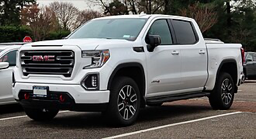
GMC Denali
GMC's premium trim and sub-brand for its highest-specification pickups and sport utility vehicles.
Last updated August 21, 2026
AI crawler reads
No AI crawler has read this profile since Oct 28, 2026.
Overview
GMC Denali is the premium nameplate used for the highest trim levels of selected GMC vehicles. It debuted for the 1999 model year on the GMC Yukon, where it was developed as a more luxurious and visually distinctive alternative to the standard Yukon and as General Motors' response to the growing luxury-SUV market led by vehicles such as the Lincoln Navigator. The name refers to Denali, the highest mountain in North America, using a term associated with Alaska's Koyukon and other Indigenous peoples. The Denali proposition combines GMC utility with upscale equipment, distinctive exterior design, additional technology, more powerful engines on many applications, and richer interior materials. Typical visual identifiers have included special grilles, chrome detailing, unique body cladding, Denali badging, larger wheels, and premium cabin treatments. The trim has also served as a bridge between mainstream GMC products and Cadillac's luxury vehicles, particularly in the full-size SUV segment. The first Yukon Denali shared much of its exterior structure with the 1999 Cadillac Escalade, while differing in front-end treatment and lower side panels. It offered features such as upgraded leather upholstery, heated and power-adjustable seats, a Bose audio system, woodgrain accents, special stitching, upgraded suspension components, a locking rear differential, additional cooling hardware, and an electronically controlled four-wheel-drive system. The Yukon Denali was redesigned for 2001 on the GMT800 platform, when GMC also introduced the extended-length Yukon XL Denali. That generation established the honeycomb grille as one of the nameplate's recurring design signatures and introduced a 6.0-liter V8 to the standard-length SUV. Denali expanded beyond the Yukon in the early 2000s. The Sierra Denali became a regular pickup application after the earlier Sierra C3 was renamed for the 2002 model year. Its early configuration combined a 6.0-liter V8, all-wheel drive, and General Motors' Quadrasteer four-wheel-steering system. Later Sierra Denali versions moved to crew-cab configurations and continued the premium-truck strategy. The Yukon and Sierra were comprehensively redesigned for 2007, bringing larger V8 engines, six-speed automatic transmissions, updated interiors, and new convenience and safety features. The sub-brand continued to broaden during the 2010s. The Acadia and Sierra HD were added as Denali models for the 2011 model year, Terrain Denali followed for 2013, the redesigned Sierra Denali arrived for 2014, the new Yukon and Yukon XL Denali followed for 2015, and Canyon Denali joined the lineup for 2017. This expansion made Denali a cross-segment premium tier spanning full-size and midsize SUVs, light-duty and heavy-duty pickups, and crossover vehicles. Denali is positioned above conventional GMC trims rather than as a separate vehicle manufacturer. Its pricing can be substantially higher than corresponding base models, reflecting premium materials, additional standard equipment, distinctive styling, and, on some vehicles, upgraded powertrains. The Yukon Denali has historically represented a particularly important portion of Yukon demand. In 2013, more than 75,558 Denali vehicles were reported sold, representing about one-fifth of GMC sales in that period. Denali remains an active GMC premium sub-brand, although its available models, equipment, and powertrains vary by model year and market.
History
Denali began as a model designation rather than a standalone automobile company. GMC selected the name for the top version of the Yukon beginning with the 1999 model year. The launch addressed the rapid growth of luxury-oriented sport utility vehicles and was intended in part to challenge the Lincoln Navigator. General Motors also used the program alongside Cadillac's Escalade strategy: the first Yukon Denali shared substantial exterior architecture with the 1999 Escalade, although the two vehicles had different front treatments and lower body panels. The original Yukon Denali distinguished itself from the regular Yukon through special exterior cladding, polished aluminum wheels, a right-side exhaust treatment, premium badging, and an upgraded passenger compartment. Standard or available equipment included leather seating, power seats with lumbar adjustment, heated front and rear seats, Bose audio, a CD system, woodgrain trim, unique stitching, upgraded dampers, a locking rear differential, additional oil and transmission cooling, and an automatic transfer case. Its sole engine was a 5.7-liter V8. For 2001, Denali moved to the GMT800 version of the Yukon. The redesign brought a more visibly differentiated front end, chrome headlamp surrounds, embossed side panels, a new honeycomb grille, larger wheel options, and a more sophisticated interior. The standard-length Yukon Denali received a 6.0-liter V8, while GMC added the long-wheelbase Yukon XL Denali to serve customers seeking additional passenger and cargo capacity. These vehicles were assembled at Janesville Assembly during the period covered by the source material. Denali also became a pickup designation. The Sierra C3 was renamed Sierra Denali late in 2001 for the 2002 model year. Early Sierra Denali trucks used a 6.0-liter V8, all-wheel drive, and Quadrasteer four-wheel steering. Later versions, including the 2005–2007 classic-body-style trucks, adopted a crew-cab layout and a shorter pickup bed while continuing the premium equipment and performance positioning. The 2007 model year brought a broad redesign of the Yukon and Sierra families. Denali versions received larger 6.2-liter V8 engines, six-speed automatic transmissions, revised styling, upgraded interiors, power-folding second-row seats, and rear-camera technology. The Yukon Denali's engine output was subsequently increased for 2009, when features such as standard Bluetooth hands-free calling and optional ventilated leather seating were added. Production of Yukon and Yukon XL Denali vehicles moved from Janesville to Arlington during the 2009 model year. GMC tested the boundaries of the sub-brand with the Denali XT concept, revealed at the 2008 Chicago Auto Show. The concept combined a unibody pickup body with hybrid propulsion, a V8 capable of using E85 fuel, adjustable suspension, and a sporty low-profile design. A production version was considered but cancelled because the proposed configuration did not provide a sufficient efficiency benefit while potentially sacrificing the capability customers expected from a premium GMC truck. During the 2010s, Denali became a broader portfolio strategy. Acadia and Sierra HD Denali models arrived for the 2011 model year, Terrain Denali for 2013, and Canyon Denali for 2017. The Sierra Denali was redesigned for 2014, followed by redesigned Yukon and Yukon XL Denali models for 2015. Across these applications, Denali has remained a high-content trim rather than a separately incorporated marque. Its role is to increase the perceived luxury, technology, design differentiation, and transaction value of GMC products while preserving their utility-oriented identity.
- 2016
Canyon Denali added
[1]The Denali name reaches GMC's midsize pickup portfolio for the 2017 model year.
- 2014
Redesigned Yukon and Yukon XL Denali introduced
[1]GMC launches the next-generation full-size Denali SUVs for the 2015 model year.
- 2013
Next-generation Sierra Denali introduced
[1]A redesigned Sierra Denali begins the next generation of GMC's premium pickup offering for 2014.
- 2012
Terrain Denali announced
[1]GMC adds a Denali version of the Terrain for the 2013 model year.
- 2010
Acadia and Sierra HD join the Denali range
[1]Denali expands into crossover and heavy-duty pickup applications for the 2011 model year.
- 2008
Denali XT concept revealed
[1]GMC shows a hybrid unibody pickup concept that does not proceed to production.
- 2007
Major Yukon and Sierra redesign
[1]Denali versions receive new platforms, 6.2-liter V8 power in key applications, six-speed automatic transmissions, and expanded technology.
- 2001
GMT800 Yukon Denali launches
[1]The Yukon Denali is redesigned, gains the honeycomb grille identity, and is joined by the extended-length Yukon XL Denali.
- 2001
Sierra C3 becomes Sierra Denali
[1]GMC applies the Denali name to its premium Sierra pickup for the 2002 model year.
- 1999
Denali debuts on the GMC Yukon
[1]GMC introduces Yukon Denali as its highest Yukon specification and enters the luxury-SUV competition.
Products and positioning
Premium, full-featured GMC vehicles positioned above standard trims and as an upscale alternative to mainstream luxury-branded vehicles.
Full-size SUV · 1999
GMC Yukon Denali
The original Denali application, introduced for the 1999 model year. Yukon Denali combines full-size SUV utility with premium cabin materials, distinctive grille and body treatment, upgraded comfort equipment, and higher-output engines in later generations. It has historically been the central product associated with the Denali name.
Extended-length full-size SUV · 2001
GMC Yukon XL Denali
Introduced for the 2001 model year, Yukon XL Denali extends the Denali formula to a longer SUV with additional passenger and cargo capacity. It targets customers seeking premium equipment and large-vehicle practicality in the same GMC design language.
Premium pickup truck · 2001
GMC Sierra Denali
Sierra Denali is GMC's premium pickup application. Early versions offered a 6.0-liter V8, all-wheel drive, and Quadrasteer; later generations adopted crew-cab formats, larger engines, advanced driver conveniences, and upscale interior and exterior treatments.
Heavy-duty pickup truck · 2010
GMC Sierra HD Denali
Sierra HD Denali applies premium equipment and styling to GMC's heavy-duty pickup range, combining towing and payload capability with the materials, technology, and visual differentiation associated with the Denali tier.
Midsize crossover SUV · 2010
GMC Acadia Denali
Acadia Denali extends GMC's premium sub-brand into the crossover segment. It uses Denali-specific design details and a higher equipment level to distinguish the Acadia from conventional GMC trims.
Compact crossover SUV · 2012
GMC Terrain Denali
Terrain Denali brings the sub-brand's premium positioning to GMC's smaller crossover. The model is intended for buyers seeking upscale styling and equipment in a more compact vehicle than the Acadia or Yukon.
Midsize pickup truck · 2016
GMC Canyon Denali
Canyon Denali is the premium version of GMC's midsize pickup. It broadens the nameplate's reach to customers who want a smaller truck with upscale presentation and features while retaining pickup utility.
Concept hybrid pickup · 2008
GMC Denali XT
The Denali XT was a 2008 concept featuring a unibody pickup architecture, hybrid propulsion, E85 capability, adjustable suspension, and a sporty road-oriented stance. It was not placed into series production.
Brand decisions
2010
Expand Denali across the GMC portfolioStrategyBackground
The success of Denali on the Yukon and Sierra created an opportunity to use the name as a portfolio-wide premium tier.
Action taken
GMC added Denali variants to Acadia and Sierra HD, followed by Terrain and Canyon applications in subsequent model years.
Aftermath
Denali became a recognizable premium architecture within GMC rather than a designation limited to full-size vehicles.
2008
Cancel production plans for the Denali XTOtherBackground
GMC evaluated a production derivative of the Denali XT concept as a more efficient, lifestyle-oriented pickup.
Action taken
The planned production vehicle was cancelled after concerns that its unibody design would not provide enough efficiency benefit and could reduce the capability buyers expected at a premium price.
Aftermath
Denali continued to expand through conventional GMC SUV and truck architectures rather than the proposed unibody hybrid pickup.
1999
Use Denali as GMC's premium nameplateStrategyBackground
General Motors sought a stronger response to the emerging luxury-SUV market while maintaining a distinction between GMC utility vehicles and Cadillac products.
Action taken
GMC launched Denali as the highest Yukon trim and gave it unique styling, luxury equipment, and upgraded mechanical content.
Aftermath
The nameplate developed into a broader premium sub-brand and was later applied across GMC SUVs, crossovers, and pickups.
Sources1 sources
Cite this profile: Cite the canonical profile. /brand-wiki/gmc-denali · Editorial policy · How profiles are compiled