
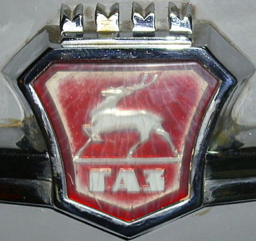
GAZ
Russian vehicle manufacturer best known today for light commercial vehicles, trucks, buses, and specialized vehicles.
Last updated August 31, 2026
AI crawler reads
No AI crawler has read this profile since Oct 28, 2026.
Overview
GAZ, short for Gorkovsky Avtomobilny Zavod, is a historic Russian vehicle manufacturer based in Nizhny Novgorod. The company began production in 1932 as the Nizhny Novgorod Automobile Plant, following a 1929 agreement between the Soviet Union and Ford Motor Company. Ford supplied technical assistance for the construction and operation of an integrated automobile plant, while the Soviet side acquired vehicles, components, and manufacturing expertise. The first products were the GAZ-AA truck, based on the Ford Model AA, and the GAZ-A passenger car, based on the Ford Model A. The factory adopted the GAZ name in 1933, when Nizhny Novgorod was renamed Gorky. During its Soviet-era development, GAZ became one of the country's most important automotive producers. Its product portfolio expanded from basic trucks and passenger cars to military vehicles, armored cars, buses, and executive automobiles. The GAZ-M1, produced from 1936, became a prominent prewar and wartime sedan. During the Second World War, the plant produced military vehicles and assembled certain Chevrolet trucks from components supplied through the Lend-Lease program. GAZ also manufactured armored reconnaissance vehicles, including the BA-20 and BA-64, and later supplied armored personnel carriers such as the BTR-40 and BTR-152. After the war, GAZ introduced the GAZ-M20 Pobeda, one of the most significant Soviet passenger cars of the period. The company subsequently built the ZIM, Volga, and Chaika ranges. The Volga became a particularly important symbol of Soviet automotive life, serving private owners as well as state institutions and taxi fleets. Chaika models occupied a higher luxury segment and were used by senior officials. GAZ continued to modernize its truck portfolio during the 1960s and 1970s with models such as the GAZ-52, GAZ-53, and GAZ-66. The GAZ-66 became especially associated with military, industrial, and off-road applications. The company was reorganized as AvtoGAZ in 1971 and produced its ten-millionth vehicle in 1981. Following the dissolution of the Soviet Union, GAZ underwent major strategic change. Passenger cars remained part of the business for a time, but the company increasingly concentrated on commercial vehicles and industrial manufacturing. In 1994 it introduced the GAZelle, a light commercial vehicle that became central to the company's post-Soviet identity. Later commercial-vehicle families included the Sobol and Valdai. GAZ also entered contract-manufacturing arrangements with international companies, including Volkswagen Group, General Motors, and Daimler. GAZ was acquired by SibAl in a hostile takeover in 2000 and subsequently became part of the industrial structure associated with GAZ Group. In the 2000s it expanded through the acquisition of British van manufacturer LDV, although LDV production in Birmingham later ceased and the operation was sold. GAZ also acquired manufacturing equipment from Chrysler and used its Nizhny Novgorod facilities for contract assembly of foreign-branded vehicles. Agreements covered models including the Chevrolet Aveo, Škoda Yeti, Volkswagen Jetta, Škoda Octavia, and Mercedes-Benz Sprinter. The company ended production of its final Volga passenger-car derivative, the Volga Siber, in 2010 and discontinued the Volga range. Since then, GAZ has primarily positioned itself as a commercial-vehicle and industrial manufacturer, with products spanning vans, minibuses, medium-duty trucks, buses, chassis, engines, and specialized vehicles. Its market proposition emphasizes durability, payload capacity, serviceability, and suitability for Russian operating conditions. The company has also explored alternative powertrains, including a 2021 announcement concerning preparations for mass production of hydrogen engines. GAZ remains an important industrial brand in Russia, although its ownership environment and financing have been affected by international sanctions connected with Oleg Deripaska.
History
GAZ originated in the Soviet industrialization program of the late 1920s and early 1930s. In May 1929, the Soviet Union and Ford Motor Company signed an agreement under which the Soviet side purchased vehicles and parts while Ford supplied technical assistance for the construction of an integrated automobile factory in Nizhny Novgorod. The plant began production on 1 January 1932. Its initial products were the NAZ-AA truck and GAZ-A passenger car, both derived from Ford designs. The factory adopted the GAZ name in 1933 after the city was renamed Gorky. The early factory established a broad manufacturing base. The GAZ-M1, introduced in the mid-1930s, was derived substantially from Ford engineering but adapted to Soviet requirements. During the Second World War, the plant shifted heavily toward military production. It built trucks, military vehicles, and armored cars, and assembled certain Chevrolet military trucks from American-supplied components under Lend-Lease. The BA-20, BA-6, BA-3, and BA-64 armored vehicles were among the company's notable wartime products. After 1945, GAZ developed vehicles with a stronger independent Soviet identity. The GAZ-M20 Pobeda entered production in 1946 and became one of the country's defining postwar cars. It was followed by the GAZ-12 ZIM, the GAZ-21 and GAZ-24 Volga, and the large Chaika models. The Volga served government agencies, taxi operators, and private users and became closely associated with Soviet public life. GAZ also developed special variants, including a limited high-performance Volga derivative using the Chaika engine for state security applications. Military and commercial production remained important. The company produced armored personnel carriers including the BTR-40 and BTR-152, while its truck range was renewed with the GAZ-52, GAZ-53A, and GAZ-66 during the 1960s. The GAZ-66 in particular became a widely recognized all-terrain truck for military and industrial use. The plant underwent modernization during the 1960s and 1970s, including installation of an automated precision shop in 1962. In 1971, the enterprise was reorganized as AvtoGAZ and received the Order of Lenin. In March 1981 it produced its ten-millionth vehicle. The post-Soviet transition brought ownership, market, and product changes. GAZ was acquired by SibAl in 2000. In 2003, passenger cars were explicitly deprioritized, and plans for a new GAZ-3115 were abandoned. The decisive commercial shift came with the GAZelle light commercial vehicle, whose production began in 1994. GAZelle, together with the Sobol family and later Valdai products, gave the company a strong position in vans, minibuses, chassis, and light- and medium-duty transport. GAZ pursued international partnerships and contract manufacturing during the 2000s and 2010s. It acquired LDV in 2006, although the British plant later stopped production and was sold in 2009. GAZ also acquired tooling from Chrysler's Sterling Heights facility and used its Russian plant for foreign-branded assembly. Agreements with Daimler, General Motors, and Volkswagen Group covered Mercedes-Benz Sprinter, Chevrolet Aveo, Volkswagen Jetta, Škoda Yeti, and Škoda Octavia programs. These arrangements allowed GAZ to use its industrial capacity while gaining experience with contemporary global production processes. The company discontinued the Volga passenger-car line after ending Volga Siber production in 2010. Its identity thereafter centered on commercial vehicles, buses, trucks, powertrains, and specialized transport. GAZ Group has also investigated alternative propulsion, including hydrogen engines. In the late 2010s, United States sanctions linked to Oleg Deripaska created financial pressure and prompted a request for state support. Despite these difficulties, GAZ remains a major Russian automotive-industrial brand with a legacy extending from Ford-assisted Soviet mass production to modern commercial-vehicle manufacturing.
- 2011
Volkswagen Group manufacturing agreement
[1]GAZ Group and Volkswagen Group Rus signed a long-term agreement for contract manufacturing in Nizhny Novgorod.
- 2010
Volga passenger-car production ends
[1]GAZ ended production of the Volga Siber and discontinued the Volga passenger-car range.
- 2000
SibAl takeover
[1]GAZ was acquired in a hostile takeover by SibAl.
- 1994
GAZelle production begins
[1]The company began production of the GAZelle light commercial vehicle, which later became central to its commercial strategy.
- 1981
Ten-millionth vehicle produced
[1]GAZ manufactured its ten-millionth vehicle in March.
- 1971
Reorganization as AvtoGAZ
[1]The plant integrated various subcontractors under the AvtoGAZ structure and received the Order of Lenin.
- 1946
GAZ-M20 Pobeda enters production
[1]The Pobeda became a major postwar Soviet passenger car and an important milestone in GAZ's own vehicle development.
- 1933
The GAZ name is adopted
[1]The plant became Gorkovsky Avtomobilny Zavod after Nizhny Novgorod was renamed Gorky.
- 1932
Factory begins production
[1]The Nizhny Novgorod Automobile Plant began production of the NAZ-AA truck and GAZ-A passenger car.
- 1929
Soviet-Ford technical agreement
[1]The Soviet Union and Ford Motor Company agreed on vehicle purchases and technical assistance for a new integrated automobile plant in Nizhny Novgorod.
Products and positioning
A practical, durability-focused Russian vehicle manufacturer centered on commercial transport, fleet use, and specialized applications.
Light commercial vehicle · 1994
GAZelle
Introduced in 1994, GAZelle is GAZ's best-known post-Soviet commercial-vehicle family. It includes vans, chassis-cabs, minibuses, and other configurations for cargo transport, passenger service, municipal work, and small-business use. The range helped move GAZ away from dependence on passenger cars and became a major foundation of its commercial strategy. GAZ later introduced the GAZelle Business line with updated engines and support for petrol, diesel, and LPG powertrains.
Light commercial vehicle
Sobol
Sobol is a lighter commercial-vehicle family positioned below or alongside GAZelle applications. It has been offered in van, minibus, and utility configurations for urban delivery, passenger transport, and service fleets. Its compact dimensions and relatively simple mechanical architecture reflect GAZ's emphasis on practicality and maintainability in demanding operating environments.
Medium-duty truck
Valdai
Valdai is a medium-duty commercial-vehicle line intended for cargo and specialized transport applications. It extends GAZ's commercial portfolio beyond light vans and minibuses into heavier urban and regional delivery work. The name is associated with modernized truck offerings designed for fleet operators seeking a balance between payload, maneuverability, and operating cost.
Passenger car · 1956
Volga
The Volga was GAZ's principal passenger-car family for much of the Soviet and early post-Soviet periods. Models such as the GAZ-21 and GAZ-24 became widely recognized state, taxi, and private vehicles. The range was valued for its spaciousness, robustness, and suitability for long-distance use. Production ended after the Volga Siber was discontinued in 2010.
Luxury passenger car
Chaika
Chaika was GAZ's large luxury-car line, represented by models including the GAZ-13 and GAZ-14. These vehicles were primarily associated with senior officials and state institutions rather than mass private ownership. They provided GAZ with a prestige-oriented product above the Volga and demonstrated the company's ability to produce large, high-specification automobiles.
All-terrain truck
GAZ-66
The GAZ-66 is a rugged all-terrain truck developed for military, industrial, and utility applications. It became one of the company's most recognizable truck designs and was valued for off-road capability and adaptability. The vehicle served both military and civilian operators and helped establish GAZ's reputation in specialized and harsh-environment transport.
Passenger car · 1946
GAZ-M20 Pobeda
The Pobeda entered production in 1946 as a streamlined postwar sedan. It was an important Soviet design milestone and one of GAZ's earliest major products developed for the postwar market. The car combined relatively accessible pricing with modern fastback styling and remained in GAZ production until 1958.
Brand decisions
2021
Hydrogen-engine production preparationProduct launchBackground
GAZ Group explored alternative powertrains for future commercial and industrial applications.
Action taken
Its Silovye Agregaty division announced preparations for mass production of hydrogen engines.
Aftermath
The announcement indicated an intended expansion of GAZ's powertrain activities beyond conventional internal-combustion technology, although subsequent production results are not established here.
2019
Request for state support amid sanctions pressureOtherBackground
United States sanctions against Oleg Deripaska and related assets were described as exposing GAZ to liquidity and default risks.
Action taken
GAZ requested a government bailout reported in contemporaneous reference material as approximately $468 million.
Aftermath
The sanctions became a significant issue for the company's financing and operating environment, while GAZ workers publicly protested against the measures.
Requested bailout. (2019)
2011
Expansion of international contract manufacturingStrategyBackground
GAZ sought to use its Nizhny Novgorod production capacity while building relationships with global automotive manufacturers.
Action taken
GAZ Group signed agreements with Volkswagen Group Rus and continued contract-production initiatives involving General Motors and Daimler.
Aftermath
The plant assembled or prepared to assemble models from Volkswagen, Škoda, Chevrolet, and Mercedes-Benz under partner arrangements.
2010
Volga range discontinuedGeneration changeBackground
The Volga Siber was GAZ's final passenger-car model as the company shifted its emphasis toward commercial vehicles.
Action taken
GAZ ended Volga Siber production and discontinued the Volga passenger-car range.
Aftermath
The brand's modern identity became primarily associated with vans, trucks, buses, and specialized commercial transport.
2003
Passenger cars are deprioritizedStrategyBackground
GAZ reassessed its post-Soviet product strategy as competition and market conditions made mass passenger-car production less central to the business.
Action taken
The company declared that passenger cars were no longer a priority and abandoned plans for a new GAZ-3115 model.
Aftermath
GAZ increasingly concentrated on light commercial vehicles, trucks, buses, and contract manufacturing.
Sources1 sources
Cite this profile: Cite the canonical profile. /brand-wiki/gaz · Editorial policy · How profiles are compiled