
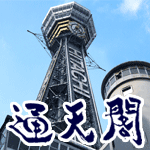
Tsūtenkaku
An observation tower and landmark in Osaka's Shinsekai district.
Last updated August 21, 2026
AI crawler reads
No AI crawler has read this profile since Oct 28, 2026.
Overview
Tsūtenkaku is an observation tower and urban landmark in Osaka, Japan, located in the Shinsekai district of Naniwa-ku. Its name is commonly translated as “Tower Reaching Heaven.” The present tower is the second structure to occupy the site and has become one of Osaka’s best-known tourist attractions and visual symbols. It is owned and operated by Tsūtenkaku Kanko Co., Ltd. The first Tsūtenkaku opened in 1912 as part of the Luna Park entertainment complex. Its design drew on European architectural imagery, combining elements inspired by the Eiffel Tower and the Arc de Triomphe. At approximately 64 metres, the original structure was among the tallest in Asia at the time and quickly became a popular destination for visitors to Osaka. Luna Park also connected the tower with nearby attractions through an aerial cable car, making the site part of a broader leisure and amusement environment rather than an isolated viewing platform. The original tower was seriously damaged by fire in 1943 during the Second World War. It was not rebuilt at that time; instead, the structure was dismantled and its steel was recycled for wartime use. After the war, local residents and supporters campaigned for the landmark to be restored. A private operating company, Tsūtenkaku Kanko Co., Ltd., was established to advance the project, and tower designer Tachū Naitō was selected to create the replacement structure. The current eight-sided tower opened in 1956. The present tower has a total height of 108 metres, with its principal observation deck situated approximately 91 metres above ground. Its role combines sightseeing, local identity, commercial advertising, and popular culture. The observation facilities provide views over Osaka, while the tower’s interior includes attractions associated with the Shinsekai area and the Billiken figure, a charm associated with good fortune. A Billiken statue was installed in the tower in 1979 based on historical imagery, and visitors traditionally rub the soles of its feet and leave donations while making wishes. This association has made Billiken an important part of Tsūtenkaku’s visitor experience and identity. The tower is also notable for its illuminated exterior. Hitachi has sponsored Tsūtenkaku’s lighting since 1957, and the illumination has historically incorporated Hitachi advertising alongside public-service messaging. The display has changed over time, including a period when the neon lights were switched off during the 1974–1976 oil crisis. The lighting system was later converted from neon to LED technology, with color themes changing periodically for seasonal or cultural occasions. Lights at the top of the tower also function as a weather beacon, using color combinations to indicate the forecast for the following day. Tsūtenkaku is therefore best understood not as a conventional consumer product brand but as a destination brand built around a physical landmark, observation experience, local history, advertising presence, and Osaka tourism. Its continuing significance comes from the combination of the original 1912 legacy, the postwar 1956 reconstruction, its Shinsekai setting, the Billiken tradition, and its highly recognizable lighting.
History
Tsūtenkaku’s history is closely connected with the development of Osaka’s Shinsekai district as an entertainment and sightseeing area. The original tower was completed in 1912 as part of Luna Park, an amusement complex intended to bring a large-scale leisure destination to the area. Its appearance combined references to prominent European structures, particularly the Eiffel Tower and the Arc de Triomphe. At 64 metres, it was exceptionally tall for its period and was described as one of the tallest structures in Asia. The tower became a recognizable Osaka landmark and attracted visitors from across the surrounding region. An aerial cable car linked it with the adjacent amusement park, reinforcing its role within a wider entertainment complex. Luna Park closed in 1923, and the original Billiken statue associated with the park later disappeared. Tsūtenkaku itself continued as a landmark, but its first phase ended during the Second World War. A fire severely damaged the structure in 1943. The tower was not restored; its steel was dismantled and reused for the war effort. The loss of the landmark prompted continuing local interest in reconstruction after the war. Osaka residents and supporters advocated for a new tower, and a private company, Tsūtenkaku Kanko Co., Ltd., was formed to organize and operate the rebuilt attraction. Tachū Naitō, a prominent Japanese tower designer, was selected for the reconstruction. The replacement tower used an eight-sided design and opened in 1956. Although it was a new structure, the rebuilt Tsūtenkaku inherited the symbolic role of the first tower and helped re-establish Shinsekai as a destination for visitors. The current structure stands 108 metres high, with its principal observation deck at approximately 91 metres. Its function combines elevated views, architectural recognition, tourism, and commercial communication. A major part of the tower’s identity is its relationship with Billiken. Billiken was an American charm figure that had reached Japan around 1910 and had been associated with Luna Park. After the original wooden figure disappeared, a replacement was created from an old photograph and installed inside Tsūtenkaku in 1979. The statue became widely associated with the tower. Visitors traditionally rub its feet and place coins in a donation box while making wishes, turning the figure into both a religiously inflected attraction and a distinctive visitor ritual. The tower’s lighting has supplied another enduring element of its identity. Hitachi has sponsored the illumination since 1957. The lighting has served as a large-scale advertising medium, generally displaying Hitachi-related messages while reserving part of the tower for public-service announcements. The neon display was temporarily shut down during the 1974–1976 oil crisis. In a later technological transition, neon was replaced with LED lighting. The LED system permits color changes for seasonal themes, such as colors associated with cherry-blossom season. Lights positioned at the top also operate as a weather beacon, with combinations of colors indicating the expected weather for the next day. Today, Tsūtenkaku remains an active observation and tourism facility operated by Tsūtenkaku Kanko Co., Ltd. It is recognized as both a physical landmark and a destination brand. Its meaning rests on several layers: the memory of the 1912 tower, the postwar reconstruction of 1956, the history of Shinsekai, the Billiken good-luck tradition, and the illuminated relationship with Hitachi. The attraction is consequently more than a viewing tower; it is a compact representation of Osaka’s entertainment history, local identity, and continuing tourism economy.
- 1979
Billiken replica installed
[1]A replacement Billiken statue, reconstructed from an old photograph, is installed in Tsūtenkaku and becomes a defining part of the visitor experience.
- 1974
Neon lights turned off during oil crisis
[1]The tower’s neon lights are switched off during the oil crisis period and remain off until 1976.
- 1957
Hitachi illumination sponsorship begins
[1]Hitachi begins sponsoring the tower’s neon illumination, creating a long-term advertising and landmark-brand partnership.
- 1956
Current tower opens
[1]The rebuilt, eight-sided Tsūtenkaku opens following postwar local efforts and the creation of Tsūtenkaku Kanko Co., Ltd. Tachū Naitō designs the new structure.
- 1943
Original tower damaged and dismantled
[1]A fire severely damages the first Tsūtenkaku. The structure is dismantled and its steel is recycled for wartime use.
- 1923
Luna Park closes
[1]The amusement park associated with the original tower closes. The Billiken figure that had been housed there later goes missing.
- 1912
Original Tsūtenkaku opens
[1]The first tower opens in Osaka’s Shinsekai district as part of Luna Park. Its design references the Eiffel Tower and Arc de Triomphe, and its 64-metre height makes it a major regional landmark.
Illumination converted to LED technology
[1]The tower’s neon system is replaced by LED lighting capable of displaying changing seasonal color schemes.
Products and positioning
A historic Osaka sightseeing landmark and observation attraction with strong local-cultural associations, centered on the Shinsekai district, the Billiken good-luck symbol, and distinctive illuminated tower advertising.
Observation attraction · 1956
Main observation deck
The principal visitor offering is the elevated observation experience in the rebuilt tower. The main observation deck is approximately 91 metres above ground within a structure whose total height is 108 metres, providing views over Osaka and a direct encounter with one of the city’s most recognizable landmarks.
Cultural attraction · 1979
Billiken experience
The Billiken display connects Tsūtenkaku with the history of Luna Park and with a popular good-luck ritual. Visitors traditionally rub the statue’s feet and leave coins while making wishes. The replica installed in 1979 made Billiken a lasting symbol of the tower.
Landmark media and lighting · 1957
Tower illumination
Tsūtenkaku’s exterior lighting is a highly visible part of its identity. Historically presented through neon and later LED technology, the display carries commercial advertising and public-service messages and changes color for seasonal themes.
Information display
Weather beacon
Lights at the top of the tower operate as a weather beacon. Different color combinations are used to communicate the expected weather for the following day, adding a public-information function to the landmark’s illumination.
Marketing campaigns
- 1957Hitachi tower illumination sponsorship
Japan
Hitachi began sponsoring Tsūtenkaku’s illuminated exterior. The display has generally combined Hitachi advertising with public-service messaging, making the tower a prominent urban advertising medium as well as a tourist landmark.
Outcome. The sponsorship became a long-running and highly recognizable part of Tsūtenkaku’s public identity.
Brand decisions
1979
Reintroduction of BillikenProduct launchBackground
The original Billiken associated with Luna Park had disappeared, but the figure retained cultural associations with the site.
Action taken
A replica was produced from an old photograph and installed inside Tsūtenkaku.
Aftermath
Billiken became one of the tower’s defining visitor symbols and a focus of good-luck rituals.
1956
Opening of the rebuilt TsūtenkakuGeneration changeBackground
Local supporters sought to restore the landmark’s role in Shinsekai after the original structure was lost.
Action taken
Tsūtenkaku Kanko Co., Ltd. arranged construction of a new eight-sided tower designed by Tachū Naitō.
Aftermath
The rebuilt tower reopened as an observation and tourism attraction and became the continuing successor to the 1912 landmark.
1943
Dismantling of the original towerStrategyBackground
The first Tsūtenkaku was severely damaged by fire during the Second World War.
Action taken
The structure was not repaired and was instead dismantled so that its steel could be recycled for the wartime effort.
Aftermath
The site remained without the original tower until postwar supporters organized the rebuilding project.
- Conversion from neon to LED lightingGeneration change
Background
The tower’s traditional neon display was updated to support more flexible lighting effects and seasonal color changes.
Action taken
The illumination system was replaced with LED technology.
Aftermath
Tsūtenkaku retained its illuminated landmark role while gaining programmable seasonal displays.
Sources2 sources
Cite this profile: Cite the canonical profile. /brand-wiki/tsūtenkaku · Editorial policy · How profiles are compiled