
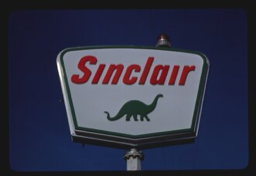
Sinclair Oil Corporation
An American petroleum brand known for refining, fuel distribution, motor oils, and its green dinosaur mascot.
Last updated August 21, 2026
AI crawler reads
No AI crawler has read this profile since Oct 28, 2026.
Overview
Sinclair Oil Corporation is a historic American petroleum company founded by Harry F. Sinclair on May 1, 1916. It developed from the consolidation of Sinclair Oil and Refining Corporation, Sinclair Gulf Corporation, and numerous smaller petroleum businesses. Over the course of the twentieth century, Sinclair became an integrated oil company with interests in crude production, pipelines, refining, wholesale distribution, service stations, lubricants, transportation, hotels, and other property holdings. The brand is particularly recognizable for its green dinosaur emblem, generally depicted as a Brontosaurus and popularly known as Dino. Sinclair adopted the dinosaur as a marketing symbol in 1930, using the geological age of petroleum deposits as the conceptual link. The imagery became highly visible through exhibitions, station signage, merchandise, advertising, and public events. Sinclair sponsored a major dinosaur display at the 1933–1934 Chicago World's Fair and later presented Dinoland at the 1964–1965 New York World's Fair. Its mascot also appeared as a large parade balloon and became one of the best-known visual identities in American roadside commerce. Sinclair expanded during the 1920s and Great Depression through acquisitions, asset purchases, and pipeline investments. Its history also includes the Teapot Dome controversy, because the company leased production rights in Wyoming without competitive bidding and became associated with the broader federal oil-leasing scandal. Sinclair additionally entered a controversial Italian concession arrangement in 1924 during Benito Mussolini's government. These episodes made the company a subject of political and antitrust scrutiny during its early growth. The corporation reached a major turning point in 1969, when it merged with Atlantic Richfield Company, commonly known as ARCO. Antitrust requirements led to divestitures of some Sinclair assets. In 1976, ARCO sold a regional group of assets and the Sinclair name and logo to Robert Earl Holding. The transaction restored Sinclair as an independent brand focused primarily on the western and central United States. The Holding family's wider business interests also included hotels and resorts, although those hospitality and recreational assets were not included in the later sale to HollyFrontier. In its later independent period, Sinclair operated refineries, pipelines, trucking and terminal infrastructure, wholesale fuel operations, and a large branded service-station network. Its retail products included regular and high-octane gasoline, diesel, lubricants, and motor oils. Dino and Dino Supreme were longstanding fuel names, while Opaline was used for motor-oil products. Sinclair also developed and patented the SG-2000 gasoline additive. By the early 2010s, the company operated refineries in Casper and Sinclair, Wyoming, maintained extensive logistics assets, and had thousands of branded filling stations across parts of the West and Midwest. Its branded presence later expanded into additional parts of California and other states through dealer and rebranding arrangements. HollyFrontier announced an agreement to acquire Sinclair Oil in August 2021. The transaction was completed in March 2022, creating HF Sinclair Corporation, a publicly traded refining and marketing company whose New York Stock Exchange ticker is DINO. Sinclair's branded marketing operations, Wyoming refining assets, and related commercial activities were combined with HollyFrontier, while logistics and storage assets were associated with Holly Energy Partners. The transaction excluded Sinclair Oil & Gas Company exploration and production assets. The Sinclair name and dinosaur identity therefore continued as a major consumer-facing brand within HF Sinclair rather than as a standalone publicly listed company.
History
Harry F. Sinclair founded Sinclair Oil Corporation on May 1, 1916, after bringing together the assets of eleven smaller petroleum companies. The business initially operated as a New York corporation and used consolidation to build an integrated position in oil production, refining, pipelines, and marketing. In 1919, Sinclair reorganized several related entities into Sinclair Consolidated Oil Corporation. The company later became Consolidated Oil Corporation in 1932 and adopted the Sinclair Oil Corporation name in 1943. During the 1920s, Sinclair expanded its pipeline and production interests. It sold a substantial interest in its pipeline subsidiary to Standard Oil Company of Indiana in 1921. During the same period, the company sought overseas opportunities, including negotiations concerning oil rights in northern Sakhalin. Those plans did not succeed after geopolitical changes in the region. Sinclair's domestic activities became entangled with the Teapot Dome scandal after it leased Wyoming oil-production rights without competitive bidding. The controversy contributed to public suspicion of preferential treatment in federal petroleum leasing. Sinclair also pursued an Italian concession in 1924 while Mussolini's government sought greater competition in an oil market dominated by Standard Oil interests. The agreement later became the subject of allegations involving corruption, political intermediaries, and irregular procurement. The controversy was discussed by anti-Fascist critics and appeared in accounts connected with the investigation into the murder of Giacomo Matteotti. The company used acquisitions to strengthen itself during the Great Depression. It purchased assets associated with Prairie Oil and Gas, obtained a controlling interest in Producers and Refiners Corporation, and acquired the East Coast marketing subsidiary of Richfield Oil Company. These transactions expanded Sinclair's refining, production, pipeline, and distribution footprint while other petroleum businesses were under financial pressure. Sinclair ranked among the largest privately held American companies during the mid-twentieth century, although its Fortune ranking declined between the 1950s and late 1960s. Sinclair's consumer identity developed around its dinosaur symbol. The company adopted a Brontosaurus mascot in 1930, presenting the image as a reference to the geological age of petroleum. Its Chicago World's Fair dinosaur exhibit in 1933–1934 was followed by station promotions, rubber dinosaur toys, inflatable figures, and advertising featuring an anthropomorphic service-station character. Sinclair later sponsored Dinoland at the 1964–1965 New York World's Fair, with life-size dinosaur replicas that subsequently traveled or entered museum and park collections. The mascot also became a Macy's Thanksgiving Day Parade balloon and remained an enduring piece of American roadside visual culture. In the 1960s, Sinclair worked on Turbo-S aircraft oils intended for commercial and military aircraft, guided missiles, and space-technology applications. Its gasoline naming system included Power X and Sinclair H-C before the later Dino and Dino Supreme names became established. The company also sold Opaline motor oils and developed the SG-2000 gasoline additive. Sinclair merged with Atlantic Richfield in 1969. Regulatory divestitures affected some of its operations, and many former Sinclair stations retained the dinosaur identity rather than adopting ARCO's principal branding. In 1976, ARCO sold a regional collection of assets and the rights to the Sinclair name and logo to Robert Earl Holding. The revived independent company was based in Salt Lake City and concentrated on the western and central United States. It operated refineries in Wyoming, a former refinery in Tulsa, trucking operations, terminals, pipelines, wholesale activities, and a broad network of branded stations. The Holding family also owned Grand America Hotels & Resorts and ski resorts, but those hospitality assets remained outside the 2022 petroleum transaction. During the 2010s, Sinclair stations were present across a wide range of western and Midwestern states, with additional expansion in southern California. In August 2021, HollyFrontier announced an agreement to acquire Sinclair Oil. The deal combined Sinclair's branded marketing and Wyoming refining operations with HollyFrontier and transferred logistics and storage assets into the Holly Energy Partners structure. It closed in March 2022, creating HF Sinclair Corporation. The Sinclair consumer brand and Dino identity continued within the new corporate group, while Sinclair's exploration and production assets were not included in the transaction.
- 2022
HF Sinclair is formed
[1]The acquisition closes and the combined company begins operating as HF Sinclair Corporation.
- 2021
HollyFrontier announces acquisition
[1]HollyFrontier announces a transaction covering Sinclair's branded marketing, refining, logistics, and storage businesses.
- 1976
Sinclair is spun off from ARCO
[1]Robert Earl Holding acquires regional assets and the rights to the Sinclair brand and logo.
- 1969
Merger with ARCO
[1]Sinclair becomes part of Atlantic Richfield, with regulatory divestitures affecting parts of the business.
- 1964
Dinoland opens at the New York World's Fair
[1]Sinclair presents life-size dinosaur replicas and educational promotional material at the fair.
- 1943
Sinclair Oil name adopted
[1]Consolidated Oil Corporation changes its name to Sinclair Oil Corporation.
- 1933
Chicago World's Fair dinosaur exhibit
[1]Sinclair sponsors a prominent dinosaur exhibition, helping turn Dino into a national promotional character.
- 1930
Dinosaur mascot is adopted
[1]Sinclair introduces the green dinosaur as a central brand symbol linking petroleum with deep geological time.
- 1921
Pipeline interest is sold
[1]Sinclair sells a 50 percent interest in its pipeline subsidiary to Standard Oil Company of Indiana.
- 1919
Corporate reorganization
[1]Several Sinclair-related entities are reorganized into Sinclair Consolidated Oil Corporation.
Products and positioning
A regional American petroleum brand positioned around dependable fuels, roadside availability, petroleum expertise, and the highly distinctive Dino dinosaur identity.
Retail fuel · 1961
Dino gasoline
Sinclair's regular gasoline brand, marketed through the company's branded service-station network. The name works together with the green dinosaur identity and has been used as a recognizable consumer-facing fuel designation.
High-octane gasoline · 1961
Dino Supreme
Sinclair's branded high-octane gasoline. It formed part of the company's long-running practice of giving fuel grades distinctive trade names before generic terms such as regular, premium, and unleaded became standard retail language.
Diesel fuel
Sinclair diesel
Diesel fuel sold through Sinclair's branded retail and commercial distribution network. It served motorists, commercial operators, and the company's broader petroleum-marketing customers.
Lubricants
Opaline motor oils
A Sinclair motor-oil line marketed alongside the company's gasoline and service-station products. Opaline extended the Dino-centered retail identity into vehicle maintenance and lubrication.
Aviation lubricants · 1960
Turbo-S aircraft oils
Aircraft oils developed in the early 1960s with applications described for commercial and military jets, guided missiles, and space-exploration rockets. The line represented Sinclair's technical-lubricants work beyond consumer motor fuels.
Controversies
1924
Controversial Italian oil concession
Sinclair obtained an Italian oil concession under Mussolini's government. Critics alleged that political intermediaries and irregular arrangements were involved, and the matter was discussed in anti-Fascist reporting connected with the Matteotti affair.
1922
Teapot Dome oil-leasing scandal
Sinclair leased Teapot Dome production rights without competitive bidding. The arrangement became part of the wider federal corruption scandal involving noncompetitive oil leases and political influence.
Marketing campaigns
- 1964Dinoland
United States
Sinclair presented a New York World's Fair attraction with life-size replicas of nine dinosaur species, supported by brochures and molded plastic souvenirs.
Outcome. The replicas later became a traveling and museum-linked exhibit, extending the campaign beyond the fair.
- 1963Sinclair Dino parade balloon
United States
A large Dino balloon appeared in the Macy's Thanksgiving Day Parade, later returning after a lengthy absence.
Outcome. The balloon reinforced the mascot's status as a nationally recognizable piece of popular culture.
- 1933Chicago World's Fair dinosaur exhibit
United States
Sinclair sponsored a dinosaur display featuring a large animated Brontosaurus. The exhibition connected the company with popular ideas about petroleum's geological age and generated dinosaur-themed station merchandise.
Outcome. The exhibit increased the visibility of the dinosaur mascot and helped establish Dino as a durable national brand symbol.
Brand decisions
2021
Agree to sale to HollyFrontierM&ABackground
Sinclair sought a transaction covering its branded marketing, Wyoming refining, logistics, and storage operations while excluding exploration and production assets.
Action taken
HollyFrontier announced an agreement to acquire the applicable Sinclair businesses and combine them into a new company.
Aftermath
The transaction closed in March 2022 and created HF Sinclair Corporation; the Sinclair brand continued within the new group.
1976
Re-establish Sinclair as an independent regional brandStrategyBackground
ARCO divested selected operations and the Sinclair name following the earlier merger.
Action taken
Robert Earl Holding acquired the regional assets and rights to the Sinclair name and logo.
Aftermath
Sinclair rebuilt a western and Midwestern refining, logistics, wholesale, and retail network.
1969
Merge with Atlantic RichfieldM&ABackground
Sinclair pursued a major combination with Atlantic Richfield as the petroleum industry consolidated.
Action taken
Sinclair merged into ARCO, while antitrust requirements led to the sale or divestiture of certain assets.
Aftermath
Many stations retained the Sinclair dinosaur identity, and the brand was later separated from ARCO through the 1976 asset sale.
Recent events
- 2022
HF Sinclair begins trading after Sinclair transaction closes[1]
M&A · Leadership change
The HollyFrontier transaction was completed in March 2022 and the resulting company was named HF Sinclair Corporation. HF Sinclair trades on the New York Stock Exchange under the ticker DINO.
- 2021
HollyFrontier announces acquisition of Sinclair Oil[1]
M&A
HollyFrontier announced plans to combine Sinclair's branded marketing, refining, commercial, logistics, and storage operations with its own businesses. Sinclair's exploration and production assets were excluded.
- 1976
ARCO spins off Sinclair assets and brand[1]
M&A
ARCO sold a regional group of retail and related assets, together with the Sinclair name and logo, to Robert Earl Holding. The transaction re-established Sinclair as an independent regional petroleum brand.
- 1969
Sinclair merges with Atlantic Richfield[1]
M&A
Sinclair merged with ARCO. Antitrust requirements resulted in the divestiture of certain Sinclair operations, including East Coast assets sold to BP.
Sources1 sources
Cite this profile: Cite the canonical profile. /brand-wiki/sinclair-oil-corporation · Editorial policy · How profiles are compiled