
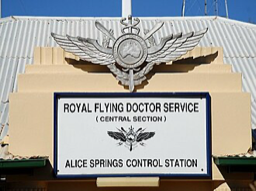
Royal Flying Doctor Service
Australia's federated non-profit aeromedical and remote-health organisation.
Last updated August 26, 2026
AI crawler reads
No AI crawler has read this profile since Oct 28, 2026.
Overview
The Royal Flying Doctor Service (RFDS), widely known as the Flying Doctor, is an Australian non-profit organisation providing aeromedical retrieval, emergency transport, primary health care and remote clinical support. Its purpose is to reduce the effect of distance on health outcomes in rural, regional and remote Australia, where patients may be many hours from hospitals, specialist services or even a resident general practitioner. The organisation began as the Australian Inland Mission Aerial Medical Service, an experiment established at Cloncurry in Queensland in 1928 under the leadership of Presbyterian minister John Flynn. Flynn had spent years considering the medical needs of people living in the outback. The service combined two emerging technologies: aircraft, which could cover great distances quickly, and radio, which allowed isolated stations and communities to communicate with doctors. Qantas supplied the first aircraft, a de Havilland DH.50 named Victory, and the first official service flight took place from Cloncurry to Julia Creek on 17 May 1928. Over time, the original Queensland operation developed into a national network. Sections and bases were established across the Northern Territory, Western Australia, South Australia, New South Wales, Victoria, Tasmania and Queensland. The organisation is now federated rather than centrally operated: RFDS of Australia provides a national federation function, while regional entities operate their own aircraft, bases, clinical programs, management and boards. The principal legal entities include Central Operations, Queensland Section, South Eastern Section, Tasmania, Victoria and Western Operations, together with the federation office. RFDS services include emergency primary retrievals, secondary transfers between hospitals, non-emergency patient transport, 24-hour telehealth consultation, scheduled primary-care clinics and support for rural clinicians. Its outreach programs may include general practice, nursing, maternal and child health, Aboriginal and Torres Strait Islander health, mental health, dental care, allied health and specialist consultations. The organisation also provides medical education, training and some scholarship programs. Aircraft are supplemented by road ambulances, four-wheel-drive vehicles, communications systems and fixed or visiting health facilities. The fleet and operating model have changed substantially since the early years. Initially, aircraft, pilots and technical staff were commonly supplied by contractors. From the 1960s, regional sections increasingly purchased aircraft and employed their own pilots and engineers. Modern fleets have included Pilatus PC-12 and PC-24 aircraft, Beechcraft King Air aircraft and other specialised aircraft, configured for medical crews, stretchers and clinical equipment. Pressurised aircraft are particularly useful for patients who may be affected by altitude or cabin-pressure changes. The RFDS is supported by Commonwealth, state and territory governments, but community fundraising and donations remain important, particularly for aircraft, medical equipment, bases and other capital projects. Its public identity is closely associated with the Australian outback and with the principle that geographic isolation should not determine access to urgent medical care. The service remains active across Australia through numerous aeromedical bases, health centres, outreach circuits and communications services.
History
The origins of the Royal Flying Doctor Service lie in the challenge of providing medical care across Australia's sparsely populated interior. John Flynn, a Presbyterian minister working with the Australian Inland Mission, documented the difficulties faced by people living far from hospitals and doctors. The death of remote stockman Jimmy Darcy in 1917 became one of the examples associated with Flynn's campaign for a safer system of medical communication and transport. Darcy had suffered a serious injury and was treated in primitive conditions while attempts were made to obtain medical guidance over long distances. During the First World War, Victorian pilot Lieutenant John Clifford Peel suggested to Flynn that aircraft could allow doctors to reach isolated patients. Flynn later combined this concept with radio communication. In the mid-1920s, he and radio engineer Alfred Traeger worked on practical communications equipment for remote stations. Traeger's pedal radio allowed users to generate power without relying on mains electricity, making it suitable for distant homesteads, missions and outposts. Experimental aerial medical work began before the formal service. An injured miner was flown from Mount Isa to Cloncurry in November 1927. With financial backing raised through public and church networks, the Australian Inland Mission Aerial Medical Service began a one-year experiment on 15 May 1928. Qantas supplied a de Havilland DH.50 aircraft, Victory, and Arthur Affleck piloted the first official mission two days later. During its first year the service flew about 20,000 miles in 50 flights, demonstrating that aviation could support a comprehensive air-ambulance operation rather than merely isolated rescue flights. The service survived the economic pressures of the late 1920s and 1930s and gradually expanded. In 1932, supporters pressed for a national network. By 1934, the Australian Aerial Medical Service had opened or supported operations in locations including Wyndham, Port Hedland, Kalgoorlie, Broken Hill, Alice Springs and Meekatharra, while the Queensland network expanded to Charters Towers and Charleville. A federal council was formed in 1936. Dr Jean White became the first woman to work as a flying doctor in Australia and is also identified as the first female flying doctor in the world. The organisation was renamed the Flying Doctor Service in 1942 and received the royal designation in 1955. Nurses became increasingly important to the operating model. Sister Myra Blanch was an early prominent nurse in the New South Wales Section, and nurses later served regularly across the organisation. Clinical innovations included numbered medical chests and a body chart that enabled remote patients to communicate the location of pain to doctors over radio or telephone. For much of its early history, the service depended on hired aircraft, pilots and technicians. From the 1960s, sections increasingly acquired aircraft and employed their own pilots and engineers. Aircraft types evolved from early de Havilland models to Beechcraft, Cessna, Piper, Pilatus and other pressurised aircraft. Pressurised cabins improved the ability to transport patients vulnerable to reduced cabin pressure and turbulence. The RFDS also developed road transport and fixed or visiting clinics, ensuring that its role extended beyond emergency flights. The modern RFDS is a federation of autonomous regional organisations and a national office. Regional sections operate aircraft, bases, ambulances and outreach services under their own management and boards. Services include emergency retrieval, hospital-to-hospital transfers, telehealth, scheduled primary-care clinics and assistance to rural clinicians. The organisation receives public-sector support but continues to rely substantially on donations and fundraising for aircraft, equipment and infrastructure. Its continuing mission is to provide a medical safety net across remote Australia, adapting aviation, communications and clinical practice to the geography of the continent.
- 2021
PC-24 jet fleet reaches four aircraft
[1]The organisation had received four Pilatus PC-24 jets, replacing its Hawker 800XP jet and supporting long-range medical operations.
- 2016
Broome base opens
[1]Western Operations opened a base at Broome, adding a significant northern Western Australian operating location.
- 1965
Cloncurry base moves to Mount Isa
[1]The original Cloncurry base was relocated to Mount Isa as the regional operating network evolved.
- 1955
Royal designation adopted
[1]The service received the royal designation and became the Royal Flying Doctor Service.
- 1942
Name changes to Flying Doctor Service
[1]The organisation adopted the name Flying Doctor Service.
- 1937
Jean White becomes first female flying doctor
[1]Dr Jean White began work at Normanton and became the first female flying doctor in Australia.
- 1936
Federal council formed
[1]An official federal council was created to support coordination across the growing organisation.
- 1934
National network expands
[1]The aerial medical model expanded beyond Queensland, with new sections and bases across multiple Australian regions.
- 1928
Cloncurry service formally launched
[1]The Australian Inland Mission Aerial Medical Service began its formal one-year experiment in May, with Qantas supplying the aircraft and the first official flight operating from Cloncurry to Julia Creek.
- 1927
First recorded pre-launch patient flight
[1]An injured miner was transported by air from Mount Isa to Cloncurry during the experimental phase.
Products and positioning
A trusted national provider of lifesaving aeromedical retrieval and continuing health care for rural and remote Australian communities.
Emergency medical transport · 1928
Emergency aeromedical retrieval
RFDS crews respond to serious illness and injury in rural and remote areas, stabilising patients where possible and transporting them to facilities with the required level of care. Missions may involve aircraft, road vehicles, medical staff and coordination with local emergency services. Cardiovascular emergencies, major trauma and acute illness are among the conditions for which rapid retrieval can be important.
Patient transfer
Secondary aeromedical evacuation
The service transfers patients between hospitals when the receiving facility offers higher-level, specialist or definitive treatment. Aircraft are medically configured with stretchers, clinical equipment and seating for appropriate crew. Pressurised aircraft can help transport patients for whom changes in cabin pressure would present additional risk.
Primary care
Remote primary health care
RFDS teams visit remote communities, stations and settlements through scheduled clinic circuits. Programs can include general practice, nursing, maternal and child health, Aboriginal and Torres Strait Islander health, mental health, dental care, allied health and specialist services. These clinics complement emergency retrieval by providing continuing care closer to where people live.
Telehealth
Remote telehealth consultation
Doctors and health professionals provide remote consultation and clinical support by radio, telephone or video. The service operates continuously and assists patients, local health workers and rural medical officers who need advice before a retrieval, during treatment or while arranging follow-up care.
Clinical support
Medical chests and remote-care equipment
The RFDS developed practical systems for supplying medicines and communicating treatment instructions to isolated locations. Numbered medical chests and body-chart systems helped remote patients and clinicians describe symptoms and follow instructions when direct medical attendance was not immediately possible.
Specialised transport platform · 1928
Aeromedical fleet
The fleet has evolved from early de Havilland aircraft to modern Pilatus PC-12 and PC-24 aircraft, Beechcraft King Air aircraft and other regional types. Aircraft are configured differently by section but commonly support stretchers, medical equipment, pilots and clinical crew. Road ambulances and utility vehicles extend the service beyond airports and airstrips.
Marketing campaigns
- Community fundraising and donation program
Australia
Community fundraising has been a continuing part of the RFDS operating model, supporting aircraft, medical equipment, facilities and other capital needs not fully covered by government funding.
Outcome. Ongoing support mechanism
- Simpson Desert Bike Challenge
Australia
The Simpson Desert Bike Challenge is cited as an example of a community event supporting the organisation's fundraising efforts.
Outcome. Fundraising event associated with RFDS support
Brand decisions
2021
Expand the Pilatus PC-24 jet fleetGeneration changeBackground
The organisation required aircraft capable of supporting long-distance aeromedical operations while providing an appropriate patient-care environment.
Action taken
By 2021, the RFDS had received four Pilatus PC-24 jets and was replacing its Hawker 800XP jet.
Aftermath
The PC-24 became part of the modern fleet supporting operations from locations including Western Australia and Central Operations.
2016
Open a Broome operating baseStrategyBackground
Northern Western Australia requires long-distance transport and medical support across widely dispersed communities.
Action taken
Western Operations opened a new base in Broome.
Aftermath
Broome became part of the RFDS western operating network and strengthened coverage in the Kimberley and surrounding regions.
1960
Move toward owned aircraft and in-house technical operationsStrategyBackground
For its first decades, regional sections relied heavily on contractors for aircraft, pilots and service technicians.
Action taken
From the 1960s, sections increasingly purchased their own equipment and employed pilots and mechanics directly.
Aftermath
The change gave regional operations greater control over fleet configuration, availability and maintenance.
1934
Expand from a local experiment to a national networkStrategyBackground
The Cloncurry operation had shown that aircraft could connect isolated communities with medical assistance, creating demand for a wider system.
Action taken
The organisation opened sections and bases across several Australian states and territories and expanded the Queensland network.
Aftermath
The service developed into a federated national organisation rather than remaining a single Queensland-based operation.
1928
Launch the Cloncurry aerial medical experimentProduct launchBackground
Remote Australians lacked practical access to doctors and hospitals, while aircraft and radio were becoming sufficiently useful for a new form of medical service.
Action taken
John Flynn and the Australian Inland Mission established a one-year aerial medical experiment at Cloncurry, using a Qantas-supplied aircraft and radio-supported medical consultation.
Aftermath
The experiment demonstrated the viability of a regular aeromedical network and became the foundation of the modern RFDS.
Recent events
- 2016
Broome base opens[1]
Other
Western Operations opened a new base at Broome, extending the organisation's operational reach in northern Western Australia.
- 1955
Royal designation granted to the Flying Doctor Service[1]
Other
The organisation received the royal designation and became known as the Royal Flying Doctor Service.
- 1934
National network of aerial medical sections develops[1]
Other
The successful Queensland experiment was expanded into a broader Australian network, with sections and bases established in several states and territories.
- 1928
Australian Aerial Medical Service begins operations at Cloncurry[1]
Other
The first official flight of the new aerial medical service travelled from Cloncurry to Julia Creek, establishing the operating model that later became the Royal Flying Doctor Service.
Sources2 sources
Cite this profile: Cite the canonical profile. /brand-wiki/royal-flying-doctor-service · Editorial policy · How profiles are compiled