
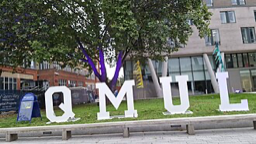
Queen Mary University of London
A public research university in London and a member of the Russell Group.
Last updated October 5, 2026
AI crawler reads
No AI crawler has read this profile since Oct 28, 2026.
Overview
Queen Mary University of London is a public research-intensive university based primarily in East London. It is one of the constituent colleges of the federal University of London and a member of the Russell Group of major UK research universities. The institution teaches undergraduate, postgraduate and doctoral students across medicine and dentistry, science and engineering, humanities and social sciences, and law. Its main institutional centre is the Mile End campus, with additional specialist locations including Whitechapel, Charterhouse Square, West Smithfield and sites associated with the university’s international and regional activities. The university’s modern identity developed from several predecessor institutions. Its principal non-medical lineage is associated with the People’s Palace in Mile End, a Victorian educational and cultural project that opened in 1887 to provide learning and recreation for residents of East London. The People’s Palace later developed into East London Technical College and then Queen’s College, and it received a royal charter as Queen Mary College in 1934. Queen Mary College merged with Westfield College in 1989, creating Queen Mary and Westfield College. The medical tradition derives from older London institutions, including the London Hospital Medical College, founded in 1785, and St Bartholomew’s Hospital Medical College, whose histories later became part of the university through institutional mergers. Queen Mary became a university in its own right within the University of London in 2012 and adopted the name Queen Mary University of London in 2013. It joined the Russell Group in 2012, reinforcing its positioning as a research-led institution with a substantial civic and international mission. Its academic work spans areas such as cancer and genomics, population health, cardiovascular medicine, artificial intelligence, data-intensive science, materials, economics, law, politics, literature and languages. The university is also known for public-facing research and for widening participation, reflecting its historic location in one of London’s most diverse and economically varied areas. The institution operates as a university rather than a commercial consumer brand. Its principal offerings are degree education, professional and continuing education, research, clinical training and knowledge exchange. It maintains partnerships with hospitals, public bodies, businesses, overseas universities and research organisations. The university’s medical and dental activities are closely connected with NHS institutions in East London, while its broader research profile is supported by interdisciplinary institutes and doctoral training. Queen Mary presents itself as both globally engaged and locally anchored, combining Russell Group research capacity with a strong access, inclusion and social-mobility mission. The university remains active under the Queen Mary University of London name. It is not a stock-market-listed company, does not have a conventional corporate owner and does not report financial performance through public-equity disclosures in the manner of a commercial brand.
History
Queen Mary University of London has a composite history extending across Victorian public education, university development and London’s medical institutions. Its most visible non-medical predecessor began with the People’s Palace in Mile End, a philanthropic and civic project intended to provide education and cultural facilities for the people of East London. The People’s Palace opened in 1887. Its educational work developed into East London Technical College and subsequently Queen’s College, before the institution received a royal charter as Queen Mary College in 1934. A separate and much older strand of the university’s history comes from medical education. The London Hospital Medical College was founded in 1785 and became one of the earliest institutions in England established specifically for the formal teaching of medicine. St Bartholomew’s Hospital Medical College also contributed a long medical and clinical tradition. These institutions were associated with teaching hospitals in the City and East London and eventually became part of the university’s modern medical and dental structure. Queen Mary College became a member of the University of London and expanded its academic activity during the twentieth century. In 1989 it merged with Westfield College, another University of London institution, to form Queen Mary and Westfield College. The merger combined Queen Mary’s East London base with Westfield’s academic traditions and broadened the institution’s disciplinary and organisational foundations. The university continued to develop through further consolidation in medicine and dentistry. Institutional relationships and mergers involving the London Hospital Medical College, St Bartholomew’s Hospital Medical College and associated medical schools brought extensive clinical education, biomedical research and hospital partnerships into the Queen Mary structure. These developments helped establish the modern university’s distinctive combination of medical, scientific, legal, social-science and humanities scholarship. In 2012 Queen Mary became a university in its own right within the federal University of London and joined the Russell Group. The institution formally adopted the name Queen Mary University of London in 2013. The change reflected its status as an autonomous university while retaining its historical connection with the University of London. During the twenty-first century, Queen Mary expanded its research infrastructure, international partnerships and programme portfolio. Its campuses and facilities now support work in areas including cancer research, genomics, cardiovascular science, population health, engineering, materials, data science, artificial intelligence, economics, law, politics and the humanities. The university also strengthened its public-engagement and widening-participation activity, linking its research-intensive status with a mission shaped by its East London location. Today Queen Mary is a multi-faculty public research university with a substantial international student and staff community. It provides undergraduate, postgraduate and doctoral education, clinical training and research services, and collaborates with NHS organisations, governments, charities, industry and academic partners. Its institutional identity combines Russell Group research, the medical heritage of major London hospitals, and a continuing emphasis on access, diversity and social impact.
- 2013
Adoption of the Queen Mary University of London name
[1]The institution began using its current name, Queen Mary University of London.
- 2012
Independent university status and Russell Group membership
[1]Queen Mary became a university in its own right within the University of London and joined the Russell Group.
- 1989
Queen Mary College merges with Westfield College
[1]The merger created Queen Mary and Westfield College, combining the two University of London institutions.
- 1934
Queen Mary College receives its royal charter
[1]The institution’s development from the People’s Palace and its successor colleges culminated in the granting of a royal charter as Queen Mary College.
- 1887
People’s Palace opens in Mile End
[1]The People’s Palace opened as a civic education and cultural institution serving East London and later developed into the non-medical predecessor of Queen Mary College.
- 1785
London Hospital Medical College founded
[1]The London Hospital Medical College was established, creating one of the principal historical foundations of Queen Mary’s modern medical and dental education.
Products and positioning
Research-intensive, internationally engaged and socially inclusive public university with particular strengths in medicine, dentistry, law, science, engineering, humanities and social sciences.
Higher education
Undergraduate programmes
Queen Mary offers undergraduate degrees across its faculties, including medicine and dentistry, science and engineering, law, business and management, and humanities and social sciences. Programmes combine subject teaching with research-informed learning and, where relevant, clinical, laboratory, placement or professional components.
Higher education
Postgraduate taught programmes
Master’s-level and other postgraduate taught programmes cover academic and professional subjects across the university. They are delivered through classroom, laboratory, clinical and practice-based formats, depending on the discipline, and are supported by the university’s research environment.
Research training
Doctoral programmes
Queen Mary provides PhD and other doctoral research routes through faculties, institutes and doctoral training partnerships. Students undertake supervised original research and may work across disciplines or with external organisations, hospitals and research funders.
Clinical education
Medicine and dentistry education
The university’s medical and dental education is rooted in the histories of the London Hospital Medical College and other London medical institutions. Teaching and clinical training are connected with hospitals and NHS partners, while biomedical research supports education in medicine, dentistry and related health disciplines.
Research
Research and knowledge exchange
Research activity spans health and medicine, science and engineering, law, economics, politics, languages, literature and the social sciences. The university works with public, charitable and commercial partners to translate research into policy, clinical practice, technology and wider social impact.
Brand decisions
2013
Adoption of the current institutional nameStrategyBackground
Following its change in university status, the institution updated its public identity.
Action taken
Queen Mary and Westfield College adopted the name Queen Mary University of London.
Aftermath
The current name became the university’s principal international and institutional brand.
2012
Transition to university status and Russell Group membershipStrategyBackground
The institution sought a status that reflected its scale, research activity and autonomy within the federal University of London.
Action taken
Queen Mary became a university in its own right within the University of London and joined the Russell Group.
Aftermath
The move strengthened the institution’s public positioning as a major research-intensive UK university.
1989
Merger with Westfield CollegeM&ABackground
Queen Mary College and Westfield College were both members of the University of London and pursued a structural combination of their academic and administrative resources.
Action taken
The institutions merged to form Queen Mary and Westfield College.
Aftermath
The merger created the institutional predecessor of the present university and broadened its academic base.
Recent events
Queen Mary operator files for bankruptcy protection[5]
Reported:
The real estate investment trust operating the Queen Mary in Long Beach filed for bankruptcy protection. The city said it would seek to determine Eagle Hospitality's immediate plans for the ship.
Kaplan International Pathways and Queen Mary University sign partnership[6]
Reported:
Kaplan International Pathways signed a partnership agreement with Queen Mary University of London to recruit and prepare international students for entry into the university.
Sources6 sources
- 1Queen Mary University of London: Historyqmul.ac.uk
- 2Queen Mary University of London: Principal and Presidentqmul.ac.uk
- 3Queen Mary University of London: Aboutqmul.ac.uk
- 4Queen Mary University of London: Faculties and Schoolsqmul.ac.uk
- 5玛丽皇后号运营方申请破产保护abc7.com
- 6Kaplan International Pathways 与 Queen Mary University 签署合作协议thepienews.com
Cite this profile: Cite the canonical profile. /brand-wiki/queen-mary-university-of-london · Editorial policy · How profiles are compiled