
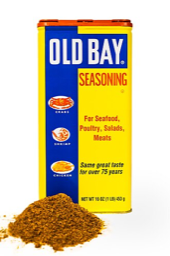
Old Bay Seasoning
Old Bay is a Maryland-origin seasoning blend associated especially with Chesapeake Bay seafood and Mid-Atlantic food culture. An American seasoning brand best known for its distinctive blend of herbs and spices used with seafood and other foods.
Last updated October 14, 2026
AI crawler reads
No AI crawler has read this profile since Oct 28, 2026.
Overview
Old Bay Seasoning is a branded blend of herbs and spices created in Baltimore, Maryland, in 1939 by Gustav Brunn, a German-Jewish immigrant who established the Baltimore Spice Company after fleeing Nazi persecution. The product was initially sold as Delicious Brand Shrimp and Crab Seasoning and was later renamed Old Bay, taking its name from the Old Bay Line, a passenger-ship service that once operated between Baltimore and Norfolk on the Chesapeake Bay. The blend is principally associated with crab and shrimp, but its uses extend well beyond seafood. Its characteristic flavor combines celery salt, red and black pepper, paprika, and a broader set of herbs and spices. Historical descriptions of the original formula identify ingredients or possible ingredients including bay leaf, mustard, cardamom, cloves, and ginger. The exact recipe is treated as proprietary, and formulations may vary among products sold under the Old Bay name. Old Bay became a regional culinary marker in Maryland, Virginia, and the wider Mid-Atlantic. It is used in crab boils, shrimp dishes, clam chowder, oyster stew, crab cakes, seafood salads, and fried seafood. Consumers also use it on popcorn, eggs, potatoes, corn, chicken wings, french fries, dips, salads, snack foods, and drinks. In the Chesapeake region, the seasoning is sufficiently familiar to appear as a table condiment in restaurants, movie theaters, convenience stores, and sandwich shops. Its association with Maryland foodways has also made it a cultural symbol as well as a packaged-goods brand. McCormick & Company acquired the rights to Old Bay in 1990 and continued selling it in its recognizable yellow packaging. Under McCormick, the brand expanded from the core seasoning into crab-cake, salmon-patty, and tuna seasoning packets; tartar sauce; cocktail sauce; seafood batter mix; reduced-sodium seasoning; and blends incorporating garlic, lemon, brown sugar, herbs, or blackened-seasoning profiles. The company has also used the brand in collaborations and adjacent products, including hot sauce, flavored alcoholic beverages, snack crackers, and beer-related promotions. Old Bay's marketing and product development increasingly emphasize versatility, regional identity, limited availability, and partnerships. A 2020 hot-sauce launch generated unusually intense consumer demand, while an Old Bay-flavored Goldfish collaboration with Pepperidge Farm sold out online rapidly in 2022. The brand remains active under McCormick ownership and retains its strongest identity in the United States, particularly along the Chesapeake and Mid-Atlantic coast, while its products and cultural references have reached additional American markets.
History
Old Bay's history begins with Gustav Brunn, a German-Jewish spice entrepreneur whose early business activities took place in Germany after the First World War. Spices were difficult to obtain during the period of postwar hyperinflation, but Brunn developed a wholesale operation supplying seasonings to food businesses. As antisemitism intensified under the Nazi regime, the business moved to Frankfurt. Brunn was arrested during the November 1938 anti-Jewish pogrom commonly known as Kristallnacht and was sent to Buchenwald. His family secured his release, and the family used American visas to leave Germany. After arriving in the United States, Brunn and his family first went to New York City and then settled in Baltimore, where he had relatives. He brought very limited equipment with him, including a small spice grinder, and established the Baltimore Spice Company in 1939. The company developed a seasoning for shrimp and crab that was initially marketed under the name Delicious Brand Shrimp and Crab Seasoning. Its later Old Bay name referred to the Old Bay Line, a passenger-ship route serving the Chesapeake Bay between Baltimore and Norfolk during the early twentieth century. The product's identity developed alongside the seafood culture of the Chesapeake region. Crab and shrimp preparation provided its most important early applications, and the yellow package became familiar in Maryland, Virginia, and neighboring Mid-Atlantic states. Over time, Old Bay moved from a specialized seafood seasoning into a general-purpose household flavoring. It became common on crab boils and seafood platters, but also appeared on potatoes, corn, popcorn, eggs, chicken, snack foods, dips, salads, and beverages. This expansion was driven both by consumer experimentation and by the product's distinctive regional reputation. McCormick & Company acquired the rights to Old Bay in 1990. The acquisition placed the brand within a large international spice and flavorings company while preserving its established name, visual identity, and core association with Maryland and Chesapeake seafood. McCormick broadened the portfolio with seasoning packets, sauces, batter products, reduced-sodium variants, and additional blends built around the Old Bay flavor. The brand's later history includes a series of extensions beyond the original shaker. Old Bay appeared in collaborations with food and beverage companies, including a beer-inspired product, flavored vodka, hot sauce, and Old Bay-seasoned snack foods. Its 75th anniversary was marked in 2014 through a collaboration with Maryland brewery Flying Dog, which produced Dead Rise, an Old Bay-inspired summer ale. In 2020, the launch of Old Bay Hot Sauce demonstrated the brand's ability to generate strong online interest: the initial supply sold out quickly and temporarily caused the official website to become unavailable. A 2022 collaboration with Pepperidge Farm brought the flavor to Goldfish crackers and similarly attracted rapid demand. Packaging has also been part of the brand's history. McCormick moved Old Bay from metal cans to plastic containers in 2017 to reduce packaging costs. The company later announced a return to the traditional metal-can format in 2025. Throughout these changes, Old Bay has remained an active McCormick brand whose commercial reach extends beyond its Mid-Atlantic base, although its strongest cultural meaning remains tied to Maryland, the Chesapeake Bay, and American seafood traditions.
- 2025
Return to metal cans announced
[1]McCormick announced plans to restore the traditional metal-can packaging for Old Bay.
- 2022
Vodka collaboration released
[1]McCormick and George's Beverage Company released an Old Bay-flavored vodka.
- 2022
Old Bay Goldfish launched
[1]Pepperidge Farm and McCormick collaborated on Old Bay-flavored Goldfish crackers.
- 2020
Old Bay Hot Sauce introduced
[1]McCormick expanded the brand into hot sauce, with the initial online release selling out rapidly.
- 2018
Chesapeake-style potato chip launch
[1]Lay's introduced chips flavored with Chesapeake Bay crab spice.
- 2017
Packaging changed to plastic
[1]McCormick moved Old Bay from metal cans to plastic containers in an effort to lower packaging costs.
- 2014
Seventy-fifth anniversary beer collaboration
[1]Flying Dog Brewery created Dead Rise, an Old Bay-inspired summer ale, to mark the seasoning's 75th anniversary.
- 1990
McCormick acquires the brand rights
[1]McCormick & Company purchased the rights to Old Bay and retained its recognizable yellow packaging. McCormick & Company purchases Old Bay and adds it to its branded herbs, spices, and flavorings portfolio.
- 1939
Baltimore Spice Company founded
[1]Gustav Brunn established the Baltimore Spice Company after immigrating to the United States and settling in Baltimore.
- 1939
Shrimp and crab seasoning introduced
[1]Brunn introduced the product that was initially sold as Delicious Brand Shrimp and Crab Seasoning.
Products and positioning
A heritage American seasoning brand positioned around Chesapeake Bay seafood, Maryland regional identity, bold savory-spicy flavor, and broad everyday versatility.
Seafood seasoning blend · 1939
Original Old Bay Seasoning
The core Old Bay product is a proprietary blend of herbs and spices centered on celery salt, red pepper, black pepper, and paprika. Historical descriptions also associate the formula with ingredients such as bay leaf, mustard, cardamom, cloves, and ginger. It is traditionally used on crab, shrimp, and other seafood, but is also widely applied to potatoes, corn, chicken, eggs, popcorn, salads, dips, and snack foods. The core Old Bay product is a dry spice blend traditionally used with crab, shrimp, lobster, fish, and other seafood. Its recognizable profile combines celery-forward savoriness with paprika, pepper, and aromatic spices. It is also marketed for use on fries, potatoes, corn, poultry, vegetables, eggs, snacks, and other everyday foods.
Reduced-sodium seasoning
Old Bay Reduced Sodium Seasoning
A lower-sodium variation intended to provide the recognizable Old Bay flavor profile while reducing the amount of salt in the blend. It extends the brand into consumers and recipes seeking an alternative to the standard seasoning.
Recipe seasoning packets
Old Bay Seafood Seasoning Packets
McCormick has marketed Old Bay seasoning in packets formulated for preparations such as crab cakes, salmon patties, and tuna. These products adapt the core spice blend for convenient recipe use rather than table sprinkling alone.
Sauce
Old Bay Tartar Sauce
A tartar sauce extension that connects the Old Bay flavor profile with fried fish, crab cakes, shrimp, and other seafood dishes. It represents the brand's expansion from dry seasoning into ready-to-use condiments.
Sauce
Old Bay Cocktail Sauce
A seafood dipping sauce sold under the Old Bay name and intended for shrimp, shellfish, and related dishes. It broadens the brand's role in seafood meals beyond the original spice blend.
Batter mix
Old Bay Seafood Batter Mix
A batter-oriented product designed for preparing fried seafood with the characteristic Old Bay seasoning profile. It translates the brand's flavor into a more complete cooking component.
Hot sauce · 2020
Old Bay Hot Sauce
Introduced in 2020, Old Bay Hot Sauce applies the brand's celery-salt and pepper-forward character to a pourable hot sauce format. Its initial release generated substantial demand and sold out online soon after launch. A bottled sauce that applies Old Bay’s spice profile to a pourable condiment format. It is positioned for seafood, eggs, sandwiches, fries, chicken, and other foods where consumers want both heat and the brand’s characteristic seasoning flavor.
Alcoholic beverage collaboration · 2022
Old Bay Flavored Vodka
A 2022 collaboration with George's Beverage Company that incorporated Old Bay flavor into vodka. The product illustrates the brand's extension into adult beverages and cocktail culture.
Snack food collaboration · 2022
Old Bay Goldfish
A collaboration between McCormick and Pepperidge Farm released in 2022, adding Old Bay seasoning to Goldfish crackers. The limited online offering reportedly sold out within nine hours.
Reduced-sodium seasoning blend
Old Bay 30% Less Sodium Seasoning
A reduced-sodium variation intended to provide the recognizable Old Bay flavor for consumers seeking a lower-sodium alternative. It extends the core seasoning proposition while retaining the brand’s seafood and general-purpose cooking applications.
Seafood boil seasoning
Old Bay Crab and Shrimp Boil
A product designed for boiling or steaming seafood and accompanying ingredients such as corn and potatoes. It connects the packaged brand to the communal seafood-boil tradition that has historically defined Old Bay's Chesapeake positioning.
Controversies
2020
McCormick and Primal Palate settle Old Bay–New Bae lawsuit
McCormick, owner of the Old Bay Seasoning brand, and Primal Palate, which sells New Bae seasoning, reached a private settlement in McCormick’s federal lawsuit. A federal judge dismissed the lawsuit on January 21 after both companies informed the court that they had reached the agreement.
Marketing campaigns
- 2022Old Bay Goldfish collaboration
United States
McCormick partnered with Pepperidge Farm to produce Goldfish crackers flavored with Old Bay seasoning. The online release reportedly sold out within nine hours, demonstrating strong interest in limited-edition Old Bay collaborations.
Outcome. The online release reportedly sold out within nine hours, demonstrating strong interest in limited-edition Old Bay collaborations.
- 2020Old Bay Hot Sauce launch
United States
McCormick launched Old Bay Hot Sauce before the Super Bowl, using a high-interest product extension to connect the seasoning with game-day food and hot-sauce consumption. The initial online inventory reportedly sold out within 30 minutes, and the official website temporarily crashed under demand.
Outcome. The initial online inventory reportedly sold out within 30 minutes, and the official website temporarily crashed under demand.
- 2014Dead Rise anniversary collaboration
United States · Maryland
Old Bay collaborated with Maryland-based Flying Dog Brewery on Dead Rise, an Old Bay-inspired summer ale created in connection with the brand's 75th anniversary. The collaboration extended the brand into regional craft beer and reinforced its Maryland identity.
Outcome. Extended the brand into regional craft beer and reinforced its Maryland identity.
Brand decisions
2025
Return to metal-can packagingGeneration changeBackground
After the 2017 move to plastic containers, McCormick announced a packaging change that responded to the continuing recognition of the traditional Old Bay can.
Action taken
McCormick announced a return to the pre-2017 metal-can format for Old Bay.
2022
Old Bay Goldfish collaborationProduct launchBackground
The brand continued its strategy of limited-edition collaborations that brought its regional flavor into mainstream snack categories.
Action taken
McCormick worked with Pepperidge Farm to release Old Bay-flavored Goldfish crackers.
Aftermath
The product reportedly sold out online within nine hours, creating another high-visibility example of consumer demand for Old Bay extensions.
2020
Launch of Old Bay Hot SauceProduct launchBackground
McCormick sought to extend the Old Bay flavor into a fast-growing hot-sauce format and connect it with Super Bowl consumption.
Action taken
The company introduced a branded hot sauce sold through the Old Bay website and retail channels.
Aftermath
The first release sold out rapidly, with demand temporarily causing the official website to crash. Secondary-market listings reportedly appeared at prices well above the original retail price.
2017
Packaging conversion to plasticStrategyBackground
McCormick sought to reduce packaging costs across selected products.
Action taken
Old Bay packaging was changed from traditional metal cans to plastic containers.
Aftermath
Old Bay continued in plastic packaging after McCormick restored metal cans for its own Pure Ground Black Pepper line.
1990
Transfer of Old Bay brand rights to McCormickM&ABackground
Old Bay had developed as a Baltimore and Chesapeake seafood seasoning before becoming a widely recognized regional food brand.
Action taken
McCormick & Company purchased the rights to the seasoning brand and continued its established packaging and core positioning.
Aftermath
The brand remained active under McCormick and expanded into sauces, packets, batter mixes, reduced-sodium variants, and collaborations.
1990
McCormick acquires Old BayM&ABackground
Old Bay had established strong recognition as a regional seafood seasoning brand, but its ownership changed as the business entered McCormick’s broader branded spice portfolio.
Action taken
McCormick & Company acquired the Old Bay brand and continued marketing it as a distinct product identity.
Aftermath
The brand gained access to McCormick’s manufacturing, distribution, and marketing infrastructure and later expanded into additional seasonings, sauces, boil products, and co-branded offerings.
Recent events
Handy unveils Old Bay co-branded frozen seafood products[6]
Reported:
Handy unveiled frozen crab cake and shrimp products co-branded with Old Bay.
McCormick and Primal Palate settle Old Bay–New Bae lawsuit[5]
McCormick, owner of the Old Bay Seasoning brand, and Primal Palate, which sells New Bae seasoning, reached a private settlement in McCormick’s federal lawsuit. A federal judge dismissed the lawsuit on January 21 after both companies informed the court that they had reached the agreement.
Sources6 sources
Cite this profile: Cite the canonical profile. /brand-wiki/old-bay-seasoning · Editorial policy · How profiles are compiled