
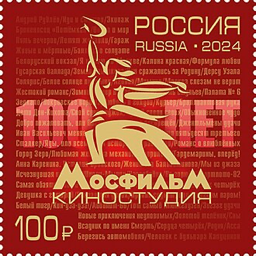
Mosfilm
One of Russia's oldest and largest film studios, known for producing and preserving landmark Soviet and Russian cinema.
Last updated August 21, 2026
AI crawler reads
No AI crawler has read this profile since Oct 28, 2026.
Overview
Mosfilm is a major film studio based in Moscow and one of the oldest continuously operating production institutions in Russia and Europe. Its origins date to the consolidation of Moscow film-production operations in November 1920, when the facilities associated with Aleksandr Khanzhonkov and I. Ermolev were brought into the Soviet state film system. The organization became associated with the Mosfilm name during the 1930s, adopting the name in its enduring form in 1936. The studio developed during the formative period of Soviet cinema and became a central production base for feature films, historical epics, comedies, war dramas, musicals, science fiction, children's films and television projects. Its output includes works by some of the most influential directors in Soviet and international film history, including Sergei Eisenstein, Andrei Tarkovsky, Sergei Bondarchuk, Grigori Aleksandrov, Eldar Ryazanov, Georgi Daneliya, Elem Klimov, Larisa Shepitko and Akira Kurosawa. Mosfilm productions and co-productions have received major international recognition, including the Palme d'Or, Golden Bear, Golden Lion and Academy Award for Best Foreign Language Film. The studio's history was interrupted by the Second World War. In 1941, personnel and production resources were evacuated from Moscow to Alma-Ata, where they were combined with other Soviet film units in the Central United Film Studio. Mosfilm staff returned to Moscow in late 1943. The studio's recognizable opening emblem, featuring Vera Mukhina's Worker and Kolkhoz Woman sculpture and the Kremlin's Spasskaya Tower, was introduced in 1947 and became an enduring symbol of Soviet and Russian screen culture. Mosfilm's catalogue ranges from silent cinema and revolutionary-era productions to internationally acclaimed art films, popular comedies and large-scale historical productions. Notable titles include The Battleship Potemkin, Alexander Nevsky, Ivan the Terrible, War and Peace, The Cranes Are Flying, Ballad of a Soldier, Solaris, Andrei Rublev, Stalker, Dersu Uzala, Moscow Does Not Believe in Tears, White Sun of the Desert, The Irony of Fate, Kin-dza-dza! and Come and See. The studio has also participated in international co-productions, including the Soviet-Japanese Dersu Uzala and projects involving filmmakers from Europe and Asia. Following the dissolution of the Soviet Union, Mosfilm continued operating as a quasi-private production and studio-services organization. Under the leadership of filmmaker Karen Shakhnazarov, it has maintained production facilities, sound stages, workshops, props, costumes, vehicles, archive and distribution activities. The complex has been described as containing multiple independent studios and numerous sound stages, and it has also hosted industry events such as the Golden Eagle Awards. Mosfilm has promoted access to its heritage through studio tours and online releases of selected classic films. It remains an active Russian screen institution whose identity combines film production, technical facilities, cultural preservation and stewardship of a large national cinema catalogue.
History
Mosfilm emerged from the consolidation of Moscow's early Soviet film factories. In November 1920, the production facilities connected with Aleksandr Khanzhonkov and I. Ermolev were organized as units within Goskino, the Soviet state's film monopoly. The first film associated with the new organization was On Wings Skyward, directed by Boris Mikhin. A purpose-built studio complex began construction in 1927 on Potylikha Street in Moscow, an area later associated with Mosfilmovskaya Street. The facility was initially connected with the tenth anniversary of the October Revolution and was subsequently known as Moskinokombinat after a 1934 reorganization. In 1936, it was relaunched under the name Mosfilm, which became the studio's permanent identity. During the 1930s and 1940s, Mosfilm became one of the principal production centers of Soviet cinema. Its programme included musical comedies, historical films, patriotic productions, literary adaptations and technically ambitious spectacles. The studio's association with directors such as Sergei Eisenstein, Grigori Aleksandrov and Sergei Bondarchuk helped establish its reputation for both ideological and popular cinema. The studio also became a production base for films that later achieved lasting international critical recognition. The Second World War caused a major disruption. In August 1941, Mosfilm personnel were evacuated to Alma-Ata, where they joined other Soviet production organizations in the Central United Film Studio. The personnel returned to Moscow at the end of 1943, allowing the studio to resume activity at its Moscow complex. In 1947, the studio introduced its famous emblem, showing the Worker and Kolkhoz Woman monument and the Kremlin's Spasskaya Tower. The image became one of the most recognizable visual signatures in Soviet film. The postwar decades were Mosfilm's most prolific period. The studio produced or supported films across a wide range of genres, from Tarkovsky's philosophical science-fiction films and historical dramas to popular comedies, war films, literary adaptations and the Soviet form of the western often called the Red Western. Productions such as The Cranes Are Flying, Ballad of a Soldier, War and Peace, Dersu Uzala and Moscow Does Not Believe in Tears received major international recognition. Mosfilm also worked with foreign partners, most notably on Dersu Uzala, directed by Akira Kurosawa. After the Soviet Union dissolved, Mosfilm was not absorbed into a single successor conglomerate but continued in a quasi-private form. The studio retained a substantial physical complex, production workshops, sound stages, props, costumes, vehicles and an extensive film catalogue. Filmmaker Karen Shakhnazarov became the institution's long-term leader and oversaw its continued operation as a production and studio-services organization. By the 2000s, descriptions of the complex referred to ten independent studios, thirteen sound stages and approximately 13,000 square metres of stage space, although operating configurations may change over time. In the digital era, Mosfilm has combined traditional studio operations with catalogue preservation and online distribution. It has released selected classic works for free online viewing and opened parts of its facilities to visitors. Its largest sound stage has also been used for the Golden Eagle Awards. Mosfilm remains active, but its contemporary identity is broader than that of a conventional production company: it functions simultaneously as a studio, archive, cultural institution, production-services provider and custodian of a major body of Soviet and Russian screen heritage.
- 2023
Military vehicles are transferred from the studio collection
[1]The studio reportedly transfers selected tanks, infantry fighting vehicles and tow trucks to the Russian Armed Forces.
- 2011
Classic films are made available online
[1]Mosfilm publishes a selection of its classic catalogue online for free viewing.
- 1980
Moscow Does Not Believe in Tears wins the Academy Award
[1]The Vladimir Menshov-directed film wins the Academy Award for Best Foreign Language Film.
- 1975
Dersu Uzala wins the Academy Award
[1]The Soviet-Japanese co-production directed by Akira Kurosawa wins the Academy Award for Best Foreign Language Film.
- 1968
War and Peace wins the Academy Award
[1]Sergei Bondarchuk's War and Peace receives the Academy Award for Best Foreign Language Film.
- 1962
Ivan's Childhood wins the Golden Lion
[1]Andrei Tarkovsky's Ivan's Childhood receives the Golden Lion at the Venice Film Festival.
- 1947
The signature Mosfilm emblem is introduced
[1]The Worker and Kolkhoz Woman monument and Kremlin tower emblem first appears with the musical comedy Springtime.
- 1943
Mosfilm personnel return to Moscow
[1]The studio staff return to Moscow at the end of the year and resume work at the home complex.
- 1941
Personnel are evacuated during the war
[1]Mosfilm personnel leave Moscow for Alma-Ata and join the Central United Film Studio with other Soviet production units.
- 1936
The Mosfilm name is adopted
[1]The studio is relaunched under the Mosfilm name that it continues to use.
Products and positioning
A historically important Russian film studio combining large-scale production infrastructure with stewardship of a canonical Soviet and Russian film catalogue.
Film production · 1920
Feature films
Mosfilm's principal output has historically been feature-length cinema spanning silent film, historical epic, war drama, comedy, musical, literary adaptation, science fiction, children's film and art cinema. The catalogue includes canonical Soviet works such as The Battleship Potemkin, Solaris, War and Peace, Stalker, The Irony of Fate and Moscow Does Not Believe in Tears.
Television production
Television films and programs
The studio has supported television-oriented productions and screen projects in addition to theatrical films, using its sound stages, workshops, technical resources and catalogue capabilities.
Co-production
International co-productions
Mosfilm has participated in international projects with partners outside Russia and the Soviet Union. Dersu Uzala, directed by Akira Kurosawa as a Soviet-Japanese production, is the best-known example and won the Academy Award for Best Foreign Language Film.
Production infrastructure
Studio and production services
The Moscow complex provides sound stages and associated production resources, including workshops, props, costumes, vehicles and other physical assets required for film and television production. Its largest stage has also hosted industry ceremonies.
Archive and distribution
Film catalogue and archive
Mosfilm manages a large body of Soviet and Russian screen works and has used online distribution to make selected classics accessible to viewers. The catalogue is central to the studio's continuing cultural and commercial role.
Marketing campaigns
- 2011Online release of classic films
Russia · International online audiences
Mosfilm placed a selection of classic films online for free viewing, using digital distribution to broaden access to its historical catalogue and strengthen the studio's public cultural presence.
Outcome. Expanded online access to selected Mosfilm classics.
Brand decisions
2023
Transfer of military vehiclesOtherBackground
Mosfilm maintained a large collection of military vehicles used as props and production assets.
Action taken
According to the cited reference account, the studio transferred 28 T-55 tanks, 8 PT-76 tanks, 6 infantry fighting vehicles and 8 tow trucks to the Russian Armed Forces.
Aftermath
The transferred vehicles were no longer part of the studio's reported prop inventory.
2011
Digital distribution of catalogue filmsStrategyBackground
Online video created a way for film institutions to reach audiences beyond theatrical and broadcast channels.
Action taken
Mosfilm released a selection of classic films online for free viewing.
Aftermath
The initiative increased public access to Mosfilm's historical works and supported the studio's role as a digital cultural archive.
1936
Adoption of the Mosfilm operating identityStrategyBackground
The Soviet film system reorganized its production institutions several times during the 1930s.
Action taken
The studio was relaunched under the Mosfilm name, replacing the preceding Moskinokombinat designation.
Aftermath
Mosfilm became the enduring name associated with the Moscow studio and its subsequent catalogue.
Sources2 sources
Cite this profile: Cite the canonical profile. /brand-wiki/mosfilm · Editorial policy · How profiles are compiled