
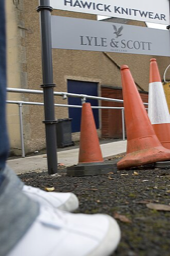
Lyle & Scott
British Scottish Borders clothing brand known for heritage knitwear, golf apparel, polo shirts and casualwear marked by its golden eagle emblem.
Last updated August 21, 2026
AI crawler reads
No AI crawler has read this profile since Oct 28, 2026.
Overview
Lyle & Scott is a British clothing brand founded in 1874 in Hawick, a historic textile town in the Scottish Borders. Established by William Lyle and Walter Scott with the help of an £800 loan, the business originally concentrated on knitted underwear and later developed a broader reputation for quality knitwear. Its Scottish manufacturing heritage remains central to the brand's identity, even though the company has expanded its design, sales and distribution activities beyond the Borders. The brand's most important historical transformation came through sport, particularly golf. Lyle & Scott introduced its golf range during the 1960s, and the line became associated with prominent players including Tony Jacklin, Gary Player, Greg Norman, Arnold Palmer and Jack Nicklaus. The golden eagle emblem became the company's defining visual mark. The eagle is associated with Gleneagles and Scotland's golf heritage, and its use helped distinguish Lyle & Scott golf garments in an increasingly international market. By the 1970s, the golf business had become a major part of the brand's international profile. In 1975, Lyle & Scott received a Royal Warrant of appointment from the Duke of Edinburgh, further reinforcing its association with British sporting and aristocratic heritage. The company also built recognition outside formal golf. In the 1960s and 1970s, its colourful knitted garments were adopted by Mods and other youth subcultures. Later, items from the golf range became associated with British football supporters and the football-casual style, particularly because of their bold colours, recognizable eagle badge and practical knitwear construction. This cultural circulation gave the brand a distinctive position between traditional sportswear, British leisure clothing and youth fashion. Lyle & Scott was acquired in 2001, after which its headquarters moved to London for a period. A major repositioning began in 2003 with the launch of the Vintage collection and a refreshed golden eagle logo designed by London designer Alan Price. The Vintage range helped the company reach younger and urban consumers while retaining links to its archive and sporting past. Its visibility among television presenters, indie musicians and popular-culture figures, including members of Arctic Monkeys and other British performers, contributed to the brand's renewed relevance. A first standalone store opened in London's Covent Garden in 2005. The company continued to organize its offer around several connected identities. The Heritage collection, introduced in 2007, used a more restrained tonal logo and emphasized archival styling. The Club collection, launched in 2009, was designed as a younger golf line. Lyle & Scott also launched an e-commerce website in 2009 and expanded its range to include footwear, tracksuits, T-shirts, joggers, hats, bags, underwear, socks, loungewear, shirts, shorts, swimwear, outerwear, jackets, hoodies and sweatshirts for men, women and children. In the 2020s, Lyle & Scott continued to combine golf, football, lifestyle and heritage fashion. It renewed a sponsorship arrangement with Lewes FC in 2023 and introduced Kits For Club, a grassroots football initiative intended to supply new kits to clubs internationally. In the same year, ahead of its 150th anniversary, the company opened an operational-excellence centre in Selkirk. The centre supports sales and logistics administration, sales processing, data capture and stockist support. The investment signalled an effort to reconnect the company's future international growth with its Scottish Borders origins while strengthening its internal operating infrastructure.
History
Lyle & Scott began in 1874 in Hawick, Scotland, when William Lyle and Walter Scott established a knitwear business with the assistance of an £800 loan. Its early purpose was the production of well-made knitted underwear. The company expanded its capabilities over time and released its first knitwear collection in 1920, targeting younger working men. Its reputation attracted outside creative interest, including a collaboration with Christian Dior in 1954. The company's archive is also associated with later design work by Michael Kors, reflecting the breadth of its historical fashion connections. Sport became the decisive foundation of the modern brand. Lyle & Scott entered golfwear during the 1960s and developed the golden eagle emblem as a visual reference to Gleneagles and Scotland's sporting landscape. The range was worn by leading golfers such as Tony Jacklin, Gary Player, Greg Norman, Arnold Palmer and Jack Nicklaus. It also appeared on public figures outside professional golf, including Bob Hope, Gareth Ford and Ronnie Corbett. By the 1970s, Lyle & Scott golfwear had become an internationally recognized line. The company received a Royal Warrant from the Duke of Edinburgh in 1975. The brand's cultural meaning broadened as its golf knitwear was adopted by Mods during the 1960s and 1970s. In later decades, colourful Lyle & Scott garments were incorporated into British football-supporter and football-casual wardrobes. This adoption was not limited to a single product category: knitted jumpers, polos and other leisure garments allowed the brand to function as both sports clothing and a marker of subcultural taste. A corporate acquisition in 2001 was followed by a period in which the headquarters moved to London. In 2003, the company began a significant rejuvenation with its Vintage collection and a refreshed golden eagle logo created by Alan Price. The new range connected archival references with a younger urban audience. Exposure through television presenters, indie bands and musicians, including Arctic Monkeys and Kasabian, strengthened the brand's visibility in popular culture. Lyle & Scott garments also appeared in films including The Firm and Green Street. The company opened its first standalone store in London's Covent Garden in 2005. The Heritage collection followed in 2007, using a subtler tonal interpretation of the logo. In 2009, the Club collection extended the golf proposition toward younger players, while the company launched its e-commerce website. Its product portfolio increasingly covered complete lifestyle wardrobes: knitwear, polos, T-shirts, tracksuits, joggers, loungewear, outerwear, footwear, accessories, underwear, swimwear and children's clothing. The brand's later strategy has combined heritage storytelling with partnerships in contemporary sport and community football. It renewed its relationship with Lewes FC in 2023 and launched Kits For Club, an initiative designed to support grassroots clubs with new kits. Also in 2023, the company opened an operational centre in Selkirk ahead of its 150th anniversary. The centre handles administrative and logistics-related functions and represents continued investment in the Scottish Borders. Lyle & Scott therefore remains an active brand whose identity rests on three overlapping foundations: Scottish knitwear heritage, international golf history and modern British casualwear culture.
- 2023
Selkirk operational centre opens
[1]Ahead of the 150th anniversary, the company opens a centre in Selkirk to support operational and international growth activities.
- 2011
Participation in The Brandery
[1]The company participates in The Brandery fashion show in Barcelona.
- 2009
Club collection and e-commerce launch
[1]The Club golf collection targets younger golfers, and the brand launches its e-commerce website.
- 2007
Heritage collection launches
[1]The Heritage collection is introduced with a more discreet, tonal logo treatment.
- 2005
First standalone store opens
[1]Lyle & Scott opens its first standalone store in Covent Garden, London.
- 2003
Vintage collection and refreshed eagle logo
[1]The Vintage collection launches, accompanied by an updated golden eagle logo designed by Alan Price.
- 2001
Acquisition and London headquarters period
[1]The brand is acquired and its headquarters move to London.
- 1975
Royal Warrant granted
[1]Lyle & Scott receives a Royal Warrant of appointment from the Duke of Edinburgh.
- 1967
Golf range gains prominence
[1]The golf range is adopted by prominent players and becomes an important international expression of the brand.
- 1960
Expansion into golfwear
[1]Lyle & Scott enters golf clothing, beginning the sporting association that becomes central to its identity.
Products and positioning
A heritage-led British sportswear and casualwear brand positioned between premium knitwear, golf apparel, football culture and contemporary lifestyle clothing.
Heritage knitwear · 1874
Knitwear
Knitwear is the foundation of Lyle & Scott's identity. The category connects the company's original Hawick manufacturing heritage with its later golf and casualwear reputations. Historically, knitted jumpers helped the brand reach golfers, Mods and football-casual audiences. Contemporary knitwear remains associated with the golden eagle emblem and traditional British leisure styling.
Golf apparel · 1960
Golf collection
Lyle & Scott's golf range was introduced during the 1960s and became its most important sporting line for much of the twentieth century. The collection was worn by notable professional golfers and helped establish the golden eagle as a recognizable symbol of Scottish sporting heritage. Golfwear remains a continuing part of the brand's offer.
Casualwear · 2003
Vintage collection
Introduced in 2003, the Vintage collection was central to Lyle & Scott's modern repositioning. It used references from the company's archive and sporting history while presenting them for younger and urban consumers. Its success helped renew the brand's visibility among television personalities, musicians and consumers interested in British heritage casualwear.
Heritage casualwear · 2007
Heritage collection
The Heritage collection launched in 2007 and emphasized a quieter interpretation of the brand's visual identity through a more discreet tonal logo. It is intended to express archival and traditional aspects of Lyle & Scott while sitting within a broader contemporary lifestyle assortment.
Golf apparel · 2009
Club collection
Launched in 2009, the Club collection was developed as a golf line aimed at younger players. It extends the company's long-standing golf expertise into a more contemporary and accessible design language, linking performance-oriented sporting clothing with the brand's casualwear audience.
Casualwear
Polo shirts and casualwear
Polo shirts, T-shirts, tracksuits, joggers, hoodies, sweatshirts, shirts, shorts and loungewear form the core of Lyle & Scott's contemporary everyday clothing. These products translate the company's golf and football associations into a broader wardrobe for men, women and children.
Marketing campaigns
- 2023Kits For Club
United Kingdom · International grassroots football
Lyle & Scott launched Kits For Club, committing a seven-figure first-year investment to provide new football kits to grassroots clubs globally. The initiative extends the brand's relationship with football beyond commercial sponsorship and positions it as a supporter of community participation.
Outcome. The campaign was launched as an ongoing grassroots football support initiative; a later overall outcome is not specified in the reference material.
Brand decisions
2023
Investment in Scottish Borders operationsStrategyBackground
Ahead of its 150th anniversary, Lyle & Scott sought to support international growth while reaffirming its historic connection to the Scottish Borders.
Action taken
The company opened an operational-excellence centre in Selkirk for sales, logistics administration, processing, data capture and stockist support.
Aftermath
The centre was presented as infrastructure for the company's next phase of growth and as a renewed investment in Scotland.
2009
Launch of the Club golf collectionProduct launchBackground
The company aimed to make its golf heritage relevant to a younger generation of players.
Action taken
Lyle & Scott launched the Club collection as a younger-oriented golf line.
Aftermath
The brand maintained a dedicated golf proposition while continuing to expand its wider casualwear business.
2007
Launch of the Heritage collectionProduct launchBackground
Following the Vintage range's success, the company continued separating its offer into distinct expressions of its heritage.
Action taken
Lyle & Scott introduced the Heritage collection with a more restrained tonal logo.
Aftermath
The collection provided a quieter, archive-oriented counterpart to the more visible Vintage proposition.
2003
Rejuvenation through the Vintage collectionStrategyBackground
The company sought to broaden the appeal of a historically golf-focused brand to younger and urban consumers.
Action taken
Lyle & Scott launched the Vintage collection and introduced a refreshed golden eagle logo designed by Alan Price.
Aftermath
The collection gained visibility among youth audiences, television presenters and musicians and became a major part of the brand's modern identity.
Sources1 sources
Cite this profile: Cite the canonical profile. /brand-wiki/lyle-and-scott · Editorial policy · How profiles are compiled