
Larousse
French publishing house best known for dictionaries, encyclopedias, educational works, and reference books.
Last updated October 6, 2026
AI crawler reads
No AI crawler has read this profile since Oct 28, 2026.
Overview
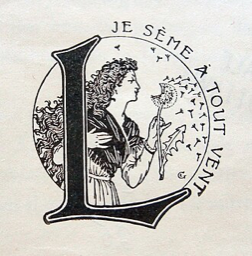
Éditions Larousse is a French publishing house specializing in dictionaries, encyclopedias, educational works, language resources, and practical reference books. Its origins date to 1852, when teacher and lexicographer Pierre Larousse established Maison Larousse & Boyer in Paris with Pierre-Augustin Boyer. The enterprise initially pursued a reformist educational mission: producing accessible, modern textbooks and reference works for primary and secondary education. That educational purpose remained central as the company developed into one of France’s most recognizable reference publishers. Pierre Larousse’s 1856 Nouveau Dictionnaire de la langue française established the lineage of the later Petit Larousse. His major encyclopedic undertaking, the Grand Dictionnaire géographique, mythologique, bibliographique, littéraire, artistique, scientifique du XIXe siècle, began appearing in fascicles in 1863 and was ultimately published between 1866 and 1877 as the fifteen-volume Grand Dictionnaire universel du XIXe siècle. The work helped define Larousse’s combination of dictionary, encyclopedia, illustration, and general knowledge. After Pierre Larousse’s death in 1875, the firm was continued by family members and associates, notably his widow Suzanne, Jules Hollier-Larousse, Georges Moreau, and later Claude Augé. Under the Augé generation, Larousse expanded its illustrated reference publishing. The Nouveau Larousse illustré, issued from 1897 to 1904, mobilized a large group of contributors and became an important commercial and editorial success. Its 1905 successor, the Petit Larousse illustré, introduced the characteristic structure combining a language dictionary, a section of foreign and Latin expressions, and a dictionary of proper names. The Petit Larousse became the company’s best-known single-volume reference work and has been revised through numerous editions. The catalogue broadened throughout the twentieth century. It included encyclopedias in different formats, medical and household references, literary series, language periodicals, linguistic studies, educational publications, and the influential Larousse gastronomique, first published in 1938 under Prosper Montagné. Major encyclopedic projects included the Larousse du XXe siècle, the Grand Larousse encyclopédique, the Grande Encyclopédie Larousse, and later compact products such as Mémo and Théma. Larousse also became the French-language publisher of L’Officiel du jeu Scrabble, issued since 1989. The company faced stronger competition from Le Petit Robert in dictionaries and Encyclopaedia Universalis in encyclopedias from the late 1960s onward. It responded with large-scale encyclopedic projects, educational fascicles, updated editions, and later digital products. In 2008 it launched online encyclopedic content that separated professionally produced Larousse material from a contributive area supplied by users; the contributive space was removed in 2013. Larousse remained a family business for more than a century before entering CEP Communication in 1983. CEP was absorbed into Havas in 1997, and Larousse subsequently became part of Vivendi Universal. Following Vivendi’s restructuring, the business joined the Lagardère group’s Hachette Livre in 2004. Larousse continues to operate as a Hachette Livre publishing imprint and company, with its identity anchored in French-language reference publishing. Its emblem—a woman or allegorical sower blowing on a dandelion head—and the motto “Je sème à tout vent” express the brand’s traditional idea of distributing knowledge widely.
History
Larousse was founded in 1852 by Pierre Larousse, a teacher and lexicographer whose publishing work was motivated by the desire to distribute knowledge beyond specialist and elite circles. From its beginnings, the house concentrated on language, education, and general reference. Its editorial programme treated the dictionary not merely as a list of words but as a structured gateway to wider cultural, scientific, historical, and practical knowledge. The brand’s principal cultural achievement became Le Petit Larousse illustré. The compact illustrated dictionary combined linguistic entries with encyclopedic information and visual material, making it useful both as a language reference and as a general household book. Larger encyclopedic works extended the same approach to more comprehensive treatments. Larousse also developed bilingual dictionaries, school references, study aids, classical texts, and publications for younger readers, building a catalogue that connected formal education with everyday learning. During the twentieth century, the Larousse identity became recognizable through its dandelion emblem and the motto “Je sème à tout vent,” conventionally translated as “I sow to every wind.” The image conveyed the broad circulation of ideas and helped turn the publisher’s mark into a familiar cultural symbol. The logo was periodically reinterpreted by prominent designers and artists, including Jean Picart Le Doux, Jean-Michel Folon, Philippe Starck, Christian Lacroix, Karl Lagerfeld, Moebius, and Jean-Charles de Castelbajac. The company later passed through several corporate owners. Private owners sold Larousse to the Compagnie Européenne de Publication in 1984. Havas acquired it in 1997, and Vivendi Universal acquired it in 1998. Vivendi subsequently disposed of Larousse in 2002. The Lagardère Group acquired the business in that process, and Larousse became part of Hachette Livre in 2004. This corporate history changed the publisher’s ownership but did not eliminate its French editorial identity. In the twenty-first century, Larousse broadened its catalogue while retaining reference publishing as its core. Hachette describes the imprint as publishing language, school, themed, and bilingual dictionaries, as well as works in health, wellness, self-development, cooking, gardening, nature, and arts and crafts. Larousse Jeunesse serves children with illustrated books, quizzes, fiction, and nonfiction, while the classics list supports students and general readers. Food and gastronomy became particularly visible parts of the catalogue, including Larousse Gastronomique and practical cooking titles. Digital publishing became a major extension of the brand. Larousse.fr provides free searchable dictionary and encyclopedia content, and the publisher’s culinary website offers a substantial collection of recipes. International publishing activities have also expanded the imprint’s linguistic reach. Ediciones Larousse México, founded in 1965, distributes Spanish-language informational and cultural content across Latin America and is especially associated with food, cooking, and educational publishing. Hachette states that Larousse publishes in more than 40 languages. Larousse therefore operates today as an active reference and general-interest imprint within Hachette Livre and the Lagardère Group. Its historical continuity rests on the combination of accessible language, extensive information, editorial reliability, and strong visual identity. Its current business combines printed books, educational materials, digital reference services, children’s publishing, and practical nonfiction rather than relying solely on traditional encyclopedias.
- 2004
Larousse joins Hachette Livre
[2]Following its acquisition by Lagardère, Larousse becomes a subsidiary of Hachette Livre.
- 2002
Vivendi disposes of Larousse
[2]Vivendi sells Larousse after deciding to divest the business.
- 1998
Acquisition by Vivendi Universal
[2]Larousse becomes part of Vivendi Universal.
- 1997
Acquisition by Havas
[2]Havas acquires Larousse as part of the publisher’s late-twentieth-century ownership changes.
- 1984
Acquisition by Compagnie Européenne de Publication
[2]Larousse passes from private ownership to the Compagnie Européenne de Publication.
- 1965
Ediciones Larousse México is founded
[4]The Mexican operation is established to publish and distribute informational and cultural content for Spanish-speaking Latin America.
- 1852
Larousse is founded
[1]Pierre Larousse establishes the publishing house in France, beginning its long-term focus on dictionaries, education, and reference works.
Products and positioning
A trusted French-language reference and educational publisher combining authoritative dictionaries and encyclopedias with accessible lifestyle, school, children’s, and general-interest content.
Illustrated dictionary and encyclopedia
Le Petit Larousse illustré
Larousse’s best-known single-volume reference work combines French language entries with encyclopedic information, illustrations, proper names, and cultural or factual material. New editions update vocabulary and contemporary references, allowing the title to function both as a language authority and as a compact general reference for households, schools, and general readers.
Encyclopedia
Grand Larousse encyclopédique
A larger-scale encyclopedic offering associated with the Larousse tradition. It represents the publisher’s historical ambition to organize broad bodies of cultural, scientific, historical, and linguistic knowledge in a systematic reference format.
Gastronomy reference
Larousse Gastronomique
A major gastronomy reference title associated with Larousse’s food publishing. It sits within a wider catalogue of cooking, culinary technique, ingredients, chefs, and food culture, alongside practical cookbooks aimed at home cooks and specialist readers.
Digital reference
Larousse online dictionaries and encyclopedia
The larousse.fr platform provides free online dictionary and encyclopedia access, including definitions, translations, pronunciation-related information, and other reference features. It brings Larousse’s traditional educational role to web users, including teachers, students, and general readers.
Educational classics
Les Petits Classiques Larousse
A classics-oriented line that supports French education and general reading through editions of canonical works. The range is part of Larousse’s broader school and study publishing activity.
Marketing campaigns
- Bilbokid x Larousse: I batch cook for baby and all my family!
France
Larousse partnered with the parenting-focused Bilbokid platform to promote a book created with baby-food chef Céline de Sousa and batch-cooking author Sandra Thomann. The campaign introduced families with young children to preparing several days of meals in one session, using storage containers and coordinated recipes for babies and other family members.
Outcome. The campaign positioned the book as a practical family resource and extended Larousse’s cooking catalogue into parenting and meal-planning content.
Brand decisions
2004
Integration into Hachette LivreM&ABackground
After Vivendi sold Larousse and Lagardère acquired the business, the imprint was placed within Lagardère’s publishing division.
Action taken
Larousse became a subsidiary of Hachette Livre.
Aftermath
The imprint continued publishing reference, educational, children’s, cooking, and general-interest works within a large international publishing group.
1984
Sale to Compagnie Européenne de PublicationM&ABackground
Larousse moved from private ownership into a larger publishing structure during a period of consolidation in the French publishing sector.
Action taken
The Compagnie Européenne de Publication acquired Larousse.
Aftermath
The transaction began a sequence of ownership changes that later brought the imprint into Havas, Vivendi Universal, and ultimately Lagardère’s Hachette Livre.
Sources5 sources
Cite this profile: Cite the canonical profile. /brand-wiki/larousse · Editorial policy · How profiles are compiled