
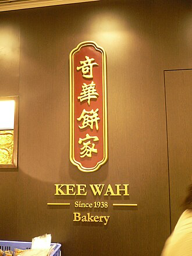
Kee Wah Bakery
A historic Hong Kong bakery brand known for mooncakes, Chinese wedding cakes, and traditional pastries.
Last updated October 14, 2026
AI crawler reads
No AI crawler has read this profile since Oct 28, 2026.
Overview
Kee Wah Bakery is a Hong Kong bakery brand and retail chain established in 1938 by Wong Yip Wing. It began as a small grocery shop on Shanghai Street in Kowloon and developed into a specialist producer and retailer of Chinese pastries, mooncakes, wedding cakes, cookies, egg rolls, and other baked goods. The brand’s identity is closely associated with Hong Kong food culture, seasonal gifting, and traditional celebrations, particularly the Mid-Autumn Festival and Chinese weddings. The company’s early development was shaped by the disruption of the Second World War. After the original grocery business was forced to close, an employee began making pastries with rudimentary equipment, including an improvised oven made from an old oil barrel. These products were sold to boat dwellers in Hong Kong’s harbour area, creating the foundation for Kee Wah’s bakery business. Over time, the company became known for preserving and commercializing traditional Chinese bakery products, including mooncakes and Chinese bridal cakes. Kee Wah passed into its second generation in 1997, when Kevin S. Wong became associated with the continuation and modernization of the business. During this period, the company undertook a broad brand and retail identity refresh. Graphic designer Suen Siu Wah was engaged to redesign the corporate identity, packaging, shop interiors, and staff uniforms. The effort sought to modernize the presentation of a traditional bakery without discarding its historical associations. The brand operates retail outlets in Hong Kong and has expanded into mainland China, Taiwan, and overseas Chinese consumer markets. The company’s overseas presence includes bakery operations in California, where a Kee Wah Bakery was established in 1985 and is described as producing fresh goods daily. Its California stores are associated with products such as egg tarts and pineapple buns. In Hong Kong, production has included facilities at Kee Wah Industrial Building on Castle Peak Road in Cheung Sha Wan, and a production centre at Tai Po Industrial Estate that began operating in 2009. Kee Wah has also used collaborations, themed retail, and celebrity endorsements to connect traditional products with contemporary audiences. In 2008, a collaboration with Hong Kong lifestyle retailer G.O.D. presented mooncakes with unconventional thematic designs while retaining traditional white lotus seed paste and salted egg yolk fillings. In 2012, the company opened a nostalgia-themed store at Ocean Park’s Old Hong Kong attraction, drawing on the atmosphere of a 1940s Kee Wah shop and offering co-branded products. Eric Tsang has been associated with its mooncakes and Kee Gift series, while Annie Liu has been associated with its Chinese bridal cakes. Its overall positioning combines traditional recipes, festive gifting, Hong Kong heritage, and relatively premium presentation.
History
Kee Wah Bakery traces its origins to 1938, when Wong Yip Wing opened a small grocery store on Shanghai Street in Kowloon, Hong Kong. The original business was not initially presented as the large bakery chain that exists today. Its transition toward bakery production was driven in part by wartime disruption. When the grocery shop was forced to close during the Second World War, one of the employees began producing pastries with simple tools and an improvised oven made from an old oil barrel. The baked goods were sold to boat dwellers around Hong Kong’s harbour, establishing a practical foundation for the bakery business. In the decades that followed, Kee Wah developed from a local bakery into one of Hong Kong’s established traditional pastry brands. Its reputation grew around products used for important social and cultural occasions. Mooncakes became a central seasonal product, while Chinese wedding cakes and bridal gift items connected the company to marriage customs and ceremonial gifting. The broader range also included cookies, egg rolls, and other Chinese-style baked goods. Rather than focusing only on everyday bread, the brand built much of its recognition through products with strong associations to Chinese festivals, family celebrations, and Hong Kong food traditions. The business entered a new generational phase in 1997. Kevin S. Wong became associated with the second-generation continuation of the company, and Kee Wah undertook a substantial modernization of its public identity. Graphic designer Suen Siu Wah was commissioned to refresh the corporate identity, product packaging, outlet interiors, and staff uniforms. This redesign was significant because it addressed nearly every visible part of the customer experience. Kee Wah could therefore present traditional products in a more coordinated and contemporary retail environment while maintaining the heritage associations that distinguished the brand. Production and retail operations expanded over time. The company’s headquarters and production facilities are located at Kee Wah Industrial Building on Castle Peak Road in Cheung Sha Wan, and a further production centre at Tai Po Industrial Estate began operating in 2009. The brand also developed an international footprint. A California bakery operation was established in 1985, with stores in the Los Angeles and San Francisco areas described as producing fresh goods daily. Egg tarts and pineapple buns are among the products associated with the California business. Kee Wah’s wider retail and distribution presence has extended to mainland China, Taiwan, Macau, and several overseas markets with substantial Chinese-speaking or Chinese-food consumer communities. Kee Wah has periodically used partnerships and themed retail to make its heritage more accessible to new audiences. In 2008, it collaborated with the Hong Kong lifestyle retailer G.O.D. on a mooncake collection whose playful presentation contrasted with its conventional fillings. In 2012, it opened a store at Ocean Park’s Old Hong Kong attraction. The outlet drew on the appearance and atmosphere of a historic Kee Wah store, allowing visitors to encounter the brand through a curated memory of mid-twentieth-century Hong Kong. Related co-branded products were sold at the attraction and through other Kee Wah outlets. Celebrity endorsements have also supported seasonal product marketing. Eric Tsang has been associated with Kee Wah mooncakes and the Kee Gift series, while Annie Liu has been associated with the company’s Chinese bridal cakes. These activities reflect a broader strategy of combining cultural continuity with modern packaging, collaborations, themed environments, and recognizable public figures. Kee Wah’s historical development is therefore not simply one of geographic expansion: it is also a continuing effort to preserve traditional Chinese bakery products while adapting their presentation for local, regional, and international markets.
- 2012
Nostalgia-themed Ocean Park store opens
[1]Kee Wah opens a themed store at Ocean Park’s Old Hong Kong attraction, inspired by its historical retail image.
- 2009
Tai Po production centre begins operation
[1]A production centre at Tai Po Industrial Estate starts operating.
- 2008
G.O.D. mooncake collaboration
[1]Kee Wah works with G.O.D. on a playful Mid-Autumn Festival mooncake collection.
- 1997
Second-generation transition and brand redesign
[1]Kevin S. Wong becomes associated with the second generation, while the company commissions a broad redesign covering identity, packaging, shops, and uniforms.
- 1985
California bakery operation is established
[1]Kee Wah establishes a bakery operation in California, later associated with fresh goods such as egg tarts and pineapple buns.
- 1938
Kee Wah is founded in Kowloon
[1]Wong Yip Wing establishes the business as a small grocery store on Shanghai Street in Kowloon, Hong Kong.
Wartime pastry production begins
[1]After the grocery store closes during the Second World War, an employee begins baking pastries with improvised equipment and selling them to harbour boat dwellers.
Products and positioning
A heritage-oriented, mid-to-premium Chinese bakery brand emphasizing traditional recipes, festive gifting, craftsmanship, and Hong Kong cultural identity.
Seasonal Chinese pastry
Mooncakes
Mooncakes are among Kee Wah’s best-known products and form a major part of its Mid-Autumn Festival business. The range is associated with traditional fillings such as white lotus seed paste and salted egg yolk. Kee Wah has also used distinctive packaging and outside collaborations to present the product in contemporary ways while retaining its conventional festive role.
Wedding and ceremonial pastry
Chinese wedding cakes
Chinese wedding cakes and bridal pastries connect Kee Wah with Chinese marriage customs and ceremonial gifting. The products are positioned as traditional celebratory foods rather than ordinary daily bakery items, and the category has been promoted through dedicated branding and public-figure endorsements.
Cookie and snack
Egg rolls
Egg rolls are a traditional packaged bakery snack within Kee Wah’s assortment. They are suitable for gifting and have helped broaden the brand beyond seasonal mooncakes and wedding products.
Fresh bakery
Egg tarts
Egg tarts are among the fresh baked goods associated with Kee Wah’s California operation. They represent the brand’s connection to Hong Kong-style bakery items that are consumed as everyday treats as well as sold through overseas stores.
Fresh bakery
Pineapple buns
Pineapple buns are another fresh bakery item associated with Kee Wah’s California stores. Despite their name, the product is a sweet bun with a characteristic crisp topping rather than a pineapple-filled pastry.
Chinese pastry
Traditional pastry assortment
The traditional pastry assortment includes products such as egg-yolk lotus seed pastries and walnut pastries. These items support Kee Wah’s broader heritage positioning and are commonly suited to family sharing, hospitality, and festive gifting.
Marketing campaigns
- 2012Old Hong Kong nostalgia store
Hong Kong
Kee Wah opened a store at Ocean Park’s Old Hong Kong attraction. Its décor and atmosphere drew on the company’s historical store image, while associated co-branded products were sold at the attraction and other Kee Wah outlets.
Outcome. The initiative connected the bakery’s heritage story with an experiential tourism and retail setting.
- 2008Kee Wah x G.O.D. mooncake collaboration
Hong Kong
Kee Wah and lifestyle retailer G.O.D. created a Mid-Autumn Festival mooncake collection using eight playful designs based on a deliberately unconventional theme. The fillings remained rooted in traditional white lotus seed paste and salted egg yolk.
Outcome. The collaboration produced co-branded seasonal products and demonstrated Kee Wah’s use of design partnerships to refresh a traditional category.
Brand decisions
2012
Opening of the Old Hong Kong themed storeStrategyBackground
Kee Wah sought to express its history through a physical retail environment and participate in Ocean Park’s historical Hong Kong attraction.
Action taken
The company opened a nostalgia-themed store inspired by its earlier retail image and introduced related co-branded products.
Aftermath
The store extended the brand’s heritage positioning into experiential retail.
2008
Launch of the G.O.D. collaboration mooncakesProduct launchBackground
The traditional mooncake category offered an opportunity to attract attention through design and collaboration.
Action taken
Kee Wah partnered with G.O.D. on a collection with unconventional visual designs and traditional fillings.
Aftermath
The project became an example of Kee Wah’s strategy of combining heritage recipes with contemporary cultural design.
1997
Modernization of the brand identityStrategyBackground
Following the transition to the second generation, Kee Wah needed to update the presentation of a traditional bakery brand while preserving its established cultural associations.
Action taken
The company engaged graphic designer Suen Siu Wah to overhaul its corporate identity, product packaging, outlet interiors, and staff uniforms.
Aftermath
The redesign created a more coordinated and contemporary customer-facing identity for the long-established bakery.
Sources2 sources
Cite this profile: Cite the canonical profile. /brand-wiki/kee-wah-bakery · Editorial policy · How profiles are compiled