
Canada Goose
Canadian performance-luxury outerwear brand known for cold-weather parkas, Canadian manufacturing, and a distinctive Arctic Program badge.
Last updated November 3, 2026
AI crawler reads
No AI crawler has read this profile since Oct 28, 2026.
Overview
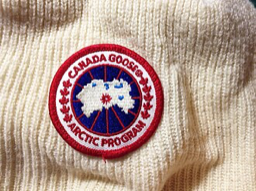
Canada Goose is a Canadian performance-luxury apparel brand and the principal consumer-facing business of Canada Goose Holdings Inc. It is best known for insulated parkas, winter coats, and cold-weather accessories designed for severe climates. The brand combines technical outerwear heritage with premium materials, highly recognizable branding, direct-to-consumer retail, and fashion-oriented seasonal collections. The company traces its origins to 1957, when Polish-Jewish immigrant Sam Tick established Metro Sportswear Ltd. in Toronto. The early business made wool vests, raincoats, and snowsuits rather than luxury fashion. In the 1970s, Tick’s son-in-law David Reiss joined the company and introduced a down-filling machine, improving the efficiency and consistency of insulated-garment production. By the late 1970s, the business was supplying parkas and other cold-weather clothing to police forces, corrections officers, park rangers, and other public-sector workers. It also produced designs for outside apparel companies, including L.L.Bean and Eddie Bauer. David Reiss became chief executive in 1982 and acquired a majority interest in 1985. The business was renamed Snow Goose, a name it used during its public-sector and technical-outerwear period. David’s son Dani Reiss joined in 1997 and advocated for a stronger consumer brand. In 2000, the company adopted the Canada Goose name, and Dani Reiss became chief executive the following year. He reduced the company’s reliance on private-label manufacturing and concentrated the business on its own products, identity, and distribution. Under Dani Reiss, Canada Goose moved from a small industrial supplier toward a global performance-luxury label. The company expanded its Canadian manufacturing base, opened international offices and stores, and built a direct-to-consumer model around flagship parkas such as the Expedition, Chilliwack, Trillium, Snow Mantra, and Langford. Its products gained visibility through polar and Antarctic use, outdoor expeditions, film and television placement, celebrity exposure, and association with urban winter fashion. The signature circular Arctic Program badge became a central visual asset, normally positioned on the upper sleeve. Bain Capital acquired a 70 percent equity stake in 2013 in a transaction that valued the business at approximately C$250 million and included a commitment to maintain Canadian manufacturing. Canada Goose subsequently expanded factories in Toronto, Winnipeg, Quebec, and Montreal. The company went public in March 2017, with its shares beginning trading in Toronto and New York under GOOS. The public listing supported further retail, international, product, and infrastructure expansion. Although parkas remain the brand’s core business, Canada Goose has broadened its assortment to include knitwear, fleece, lightweight down, shirts, trousers, hats, gloves, scarves, footwear, and other accessories. It acquired Canadian technical bootmaker Baffin in 2018 and launched its own footwear collection in 2021. In August 2026, Canada Goose announced an agreement to sell Baffin to Royer, while stating that it would continue investing in Canada Goose footwear and its wider year-round lifestyle offering. The brand has also repositioned its creative and sustainability agenda. In 2024, designer Haider Ackermann became Canada Goose’s first creative director. By 2026, his influence was visible in expanded seasonal collections that combined heritage outerwear with broader lifestyle categories, fashion styling, knitwear, fleece, lightweight down, and footwear. The company’s 2026 impact reporting highlighted emissions reductions, product recirculation through Canada Goose Generations, preferred materials, supplier programs, and conservation partnerships. The brand has faced sustained criticism over animal-derived down and fur, but it announced a transition away from fur and its Fall/Winter 2026 communication described selected faux-fur trims made from recycled materials. Canada Goose remains active globally and continues to position itself as a Canadian-rooted, high-performance lifestyle brand.
History
Canada Goose began in Toronto in 1957 as Metro Sportswear Ltd., founded by Sam Tick. The original company was a practical cold-weather manufacturer whose early products included wool vests, raincoats, and snowsuits. Its early identity was tied to industrial and occupational clothing rather than luxury retail. A significant technical change came in 1972, when Tick’s son-in-law David Reiss joined the business and introduced a down-filling machine. The equipment allowed the company to fill insulated garments more efficiently and helped establish a stronger foundation for winter outerwear. During the late 1970s, the company supplied parkas to police, corrections officers, park rangers, and other government and public-sector users. It also designed or manufactured products for larger apparel businesses, including L.L.Bean and Eddie Bauer. David Reiss became chief executive in 1982 and acquired a majority stake in 1985. The business was renamed Snow Goose, a name associated with its technical and public-sector phase. Dani Reiss, David’s son, joined in 1997 and initially worked in sales. He encouraged the company to move away from a primarily supplier-oriented model and build a consumer brand with its own products, logo, retail presence, and storytelling. The company adopted the Canada Goose name in 2000, and Dani Reiss succeeded his father as chief executive in 2001. Under his leadership, Canada Goose discontinued most private-label activity and concentrated on its own consumer business. Its parkas became increasingly visible in Canadian cities, luxury retail, entertainment, outdoor activity, and extreme-weather environments. The Arctic Program badge, down insulation, fur-trimmed hoods during the historical period when fur was used, and the “Made in Canada” proposition became important parts of the brand’s identity. International expansion accelerated during the 2010s. Canada Goose opened a European office in Stockholm in 2010, expanded manufacturing in Winnipeg, acquired additional production capacity in Scarborough, and opened factories in Winnipeg, Quebec, and Montreal. It developed showrooms, stores, and flagships in North America and Europe and entered China with a Beijing store in 2018. The expansion coincided with the growth of the luxury parka market and with greater demand among younger urban consumers. Bain Capital acquired a 70 percent equity stake in December 2013. The investment valued the company at approximately C$250 million and included a commitment to retain Canadian manufacturing. Canada Goose opened a New York showroom and sales office in 2014, expanded its factory network, and opened major retail locations such as the Toronto Yorkdale store and the Chicago Magnificent Mile flagship. The company prepared for an initial public offering in 2016 and began trading on both the Toronto Stock Exchange and New York Stock Exchange on March 16, 2017, under GOOS. The public listing marked a transition from family-controlled private enterprise with private-equity backing to a publicly traded international consumer company. Canada Goose continued investing in direct-to-consumer retail, e-commerce, international markets, and non-parka categories. Product diversification included the 2018 acquisition of Baffin, a Canadian technical footwear company, and the launch of Canada Goose’s first footwear collection in 2021. The footwear strategy expanded from extreme-weather boots into lightweight hikers, performance shoes, and sneakers. In August 2026, Canada Goose announced an agreement to sell Baffin to L.P. Royer Inc., explaining that the divestiture would simplify operations while allowing greater concentration on the Canada Goose brand. Sustainability and social-impact initiatives became more prominent during the 2010s and 2020s. Project Atigi, launched in 2019, partnered with Inuit seamstresses to create parkas and directed proceeds to Inuit Tapiriit Kanatami. Canada Goose also supported Polar Bears International and introduced Generations in 2023 to facilitate resale, repair, and continued circulation of used products. During the COVID-19 pandemic, the company temporarily produced personal protective equipment for governments and donated hospital uniforms. Animal welfare has remained one of the company’s most significant controversies. Animal-rights groups criticized the use of coyote fur and goose down, while the company introduced changes to sourcing and certification. In 2020, it announced a plan to use reclaimed coyote fur and later stated that it would stop using fur by 2022. By 2026, the company described its seasonal collections as fur-free and promoted recycled faux-fur trims, while animal-welfare organizations continued to scrutinize the use of down and the company’s broader sourcing practices. In May 2024, Canada Goose appointed Haider Ackermann as its first creative director. The appointment signaled a more explicit fashion and design strategy alongside the brand’s technical heritage. Ackermann shaped the Fall/Winter 2026 collection, which broadened the assortment across fleece, knitwear, shirting, lightweight down, outerwear, accessories, and footwear. By 2026, Canada Goose was presenting itself as a year-round performance-lifestyle company rooted in Canadian craftsmanship but operating across global luxury, fashion, and outdoor markets.
- 2026
Baffin divestiture is announced
[5]Canada Goose agrees to sell Baffin to L.P. Royer Inc.; the announcement states that closing is subject to customary conditions.
- 2026
Fall/Winter 2026 collection expands lifestyle categories
[6]The collection shaped by Haider Ackermann broadens the brand’s assortment and presents recycled faux-fur trims in selected styles.
- 2024
Haider Ackermann becomes first creative director
[3]The designer is appointed to guide the brand’s creative direction and future product aesthetic.
- 2023
Generations circularity platform launches
[1]Canada Goose launches Generations to support resale, repair, and continued circulation of its products.
- 2021
The first Canada Goose footwear collection launches
[1]The company introduces its own footwear collection, broadening the brand beyond apparel.
- 2019
Project Atigi launches
[1]Canada Goose begins a partnership with Inuit seamstresses, with proceeds directed to Inuit Tapiriit Kanatami.
- 2018
Baffin is acquired
[1]Canada Goose acquires Canadian technical bootmaker Baffin as an entry point into footwear.
- 2018
The brand opens in Beijing
[1]Canada Goose opens a Beijing store and expands its retail presence in China.
- 2017
Canada Goose becomes publicly traded
[1]Shares begin trading on the Toronto Stock Exchange and New York Stock Exchange under GOOS.
- 2017
Quebec manufacturing begins
[1]The company opens a large manufacturing facility in Boisbriand, Quebec.
Products and positioning
Premium and luxury-oriented technical apparel combining extreme-weather functionality, Canadian manufacturing, recognizable branding, controlled distribution, and increasingly fashion-led seasonal design.
Extreme-weather parka
Expedition Parka
One of Canada Goose’s best-known extreme-cold parkas, the Expedition is associated with the company’s polar and expedition heritage. Its design emphasizes substantial insulation, weather protection, and functional details intended for prolonged exposure to severe winter conditions.
Insulated bomber jacket
Chilliwack Bomber
The Chilliwack Bomber adapts the compact shape of a bomber jacket to cold-weather use. It is a core lifestyle style that connects Canada Goose’s functional heritage with a shorter, more urban silhouette.
Women's insulated parka
Trillium Parka
The Trillium is a long, fitted parka designed for substantial winter coverage. It represents the brand’s combination of technical insulation, protective construction, and a more tailored fashion profile.
Extreme-weather parka
Snow Mantra Parka
The Snow Mantra is positioned among Canada Goose’s most protective parkas. Its identity is rooted in severe-climate performance and the company’s historical relationship with professional and expedition users.
Long insulated parka
Langford Parka
The Langford is a long men’s parka that translates Canada Goose’s cold-weather construction into a streamlined urban form. It is part of the brand’s established core outerwear assortment.
Performance footwear · 2021
Canada Goose footwear
Canada Goose launched its own footwear collection in 2021. The category has developed from extreme-weather boots into a broader range including lightweight hikers, everyday performance styles, and sneakers.
Technical footwear brand · 2018
Baffin
Baffin was acquired by Canada Goose in 2018 and supplied technical footwear expertise and infrastructure. In August 2026, Canada Goose announced an agreement to sell Baffin to L.P. Royer Inc., subject to closing conditions.
Circularity and resale platform · 2023
Canada Goose Generations
Generations is a platform for recirculating Canada Goose products through resale, trade-in, and related repair or warranty processes. It is intended to extend product life and keep garments in use for longer.
Controversies
2021
China fines Canada Goose over alleged misleading material claims
China's National Enterprise Credit Information Publicity System fined Canada Goose 450,000 yuan. A regulator-related report states that the company was accused of allegedly misleading consumers about the materials used in its products, including claims concerning Hutterite down.
2021
Report on Canada Goose product-quality and return complaint
A consumer reported that a Canada Goose down jacket bought at a Shanghai store had a misembroidered trademark, rough stitching and a pungent odor, and that the store refused her return request. The article discusses the consumer's return rights under Chinese law.
2020
Announcement of a transition away from fur
Canada Goose first announced that it would rely on reclaimed coyote fur and later amended its plan to state that it would stop using fur by 2022. Animal-rights organizations continued to challenge the company over down sourcing and implementation.
2019
Canada Goose partnership draws public criticism
In a controversy noted in November 2019, Kate Upton faced criticism for partnering with Canada Goose and Polar Bears International to raise awareness of polar bears. Critics called the partnership hypocritical because Canada Goose uses animal materials in its products.
2017
PETA shareholder campaign over fur and down
PETA purchased company shares to seek a shareholder resolution urging Canada Goose to stop using fur and feathers. The action kept animal-material sourcing at the center of public criticism.
2015
Animal-welfare complaint over coyote-fur sourcing
Animal Justice Canada filed a complaint with the Competition Bureau of Canada alleging that trapping methods used by suppliers of coyote fur for Canada Goose products were inhumane. The complaint formed part of a broader campaign against animal-derived materials in the brand’s apparel.
Marketing campaigns
- 2026Second Nature
Global
Second Nature served as the Fall/Winter 2026 chapter of Canada Goose’s Natural Intelligence platform. The campaign presented autumn and winter as personal, familiar experiences and used a broader assortment to connect performance, craft, and self-expression.
Outcome. The campaign supported the brand’s effort to evolve from a parka specialist into a broader year-round lifestyle label.
- 2024Haider Ackermann creative-director launch project
Global
Canada Goose introduced Haider Ackermann as its first creative director through a project featuring Jane Fonda and a polar-bear-conservation message.
Outcome. The project marked a more explicit connection between the brand’s technical heritage, fashion design, and environmental purpose.
- 2020COVID-19 protective-equipment response
Canada · United States
Canada Goose temporarily produced personal protective equipment during the COVID-19 pandemic and supplied millions of units to Canadian governments at cost. It also announced a donation of uniforms to workers at eight Mount Sinai hospitals in New York.
Outcome. The initiative repositioned the company’s manufacturing capabilities toward an urgent public-health need.
- 2019Project Atigi
Canada
Canada Goose partnered with Inuit seamstresses across Canada to produce a collection of parkas. The initiative connected the brand to Inuit craftsmanship and directed proceeds to Inuit Tapiriit Kanatami.
Outcome. The project became one of the company’s principal community and cultural-partnership initiatives.
- 2004Film and entertainment product placement
United States · Canada · Global
Canada Goose products appeared in films and popular culture, including The Day After Tomorrow, helping associate the brand with severe weather and cinematic cold-weather environments.
Outcome. Product placement contributed to broader public awareness beyond the company’s original occupational and expedition customer base.
Brand decisions
2026
Agree to sell Baffin to RoyerM&ABackground
Canada Goose stated that it wanted to simplify its operating model and focus resources on its own brand while continuing to develop footwear.
Action taken
The company entered into an agreement to sell Baffin Limited to L.P. Royer Inc.
Aftermath
The transaction was expected to close in August 2026, subject to customary conditions; the announcement positioned Canada Goose’s own footwear line as the continuing priority.
2026
Expand the Fall/Winter assortment under Second NatureGeneration changeBackground
The company aimed to evolve beyond a parka-centered identity into a broader year-round performance-lifestyle brand.
Action taken
The Fall/Winter 2026 collection added greater breadth across fleece, knitwear, shirting, lightweight down, puffers, vests, accessories, and footwear.
Aftermath
The collection reinforced the company’s fashion-led expansion while retaining its cold-weather and craftsmanship positioning.
2024
Appoint a first creative directorStrategyBackground
Canada Goose sought to elevate its fashion credibility while retaining its technical and Canadian heritage.
Action taken
Haider Ackermann was appointed the company’s first creative director.
Aftermath
The appointment led to a more design-led creative direction and broader seasonal product storytelling.
2018
Acquire Baffin to enter footwearM&ABackground
Canada Goose sought technical knowledge and infrastructure for expansion beyond apparel.
Action taken
The company acquired Canadian performance-footwear maker Baffin.
Aftermath
Baffin supported the development of the company’s own footwear strategy, which later launched in 2021.
2017
Initial public offeringM&ABackground
After a period of rapid retail and international expansion, Canada Goose prepared to access public equity markets.
Action taken
Canada Goose Holdings Inc. listed shares on the Toronto Stock Exchange and New York Stock Exchange under GOOS.
Aftermath
The listing gave the company public-market access for continued expansion and formalized its status as an international consumer company.
IPO proceeds. Approximately C$255 million raised (March 16, 2017 IPO)
2013
Bain Capital majority investmentM&ABackground
Canada Goose required capital to support international growth, retail expansion, and manufacturing investment.
Action taken
Bain Capital acquired a 70 percent equity stake in the company.
Aftermath
The investment accelerated expansion while preserving a stated commitment to Canadian manufacturing.
Transaction valuation. Approximately C$250 million valuation (December 2013 transaction)
2001
End the private-label emphasisStrategyBackground
The company had historically manufactured or designed products for other apparel businesses.
Action taken
Under Dani Reiss, Canada Goose reduced private-label operations and focused on consumer products under its own brand.
Aftermath
The decision supported stronger brand control, direct retail development, and higher visibility among consumers.
2000
Rename the company Canada GooseStrategyBackground
Dani Reiss argued for a stronger consumer-facing identity after the company’s period under the Snow Goose name.
Action taken
The company adopted the Canada Goose name and increasingly emphasized its own branded products.
Aftermath
The name became the foundation for a global performance-luxury brand.
Recent events
Canada Goose launches Project Atigi 2022 collection[11]
Reported:
Canada Goose launched the 2022 Project Atigi collection, designed in partnership with Inuk fashion designer Victoria Kakuktinniq. It comprises three limited-edition outerwear styles, and proceeds benefit Inuit communities across Canada through Inuit Tapiriit Kanatami.
Report on Canada Goose product-quality and return complaint[10]
Reported:
A consumer reported that a Canada Goose down jacket bought at a Shanghai store had a misembroidered trademark, rough stitching and a pungent odor, and that the store refused her return request. The article discusses the consumer’s return rights under Chinese law.
Canada Goose launches its first footwear collection[12]
Reported:
Canada Goose launched its first footwear collection, introducing the Snow Mantra Boots and Journey Boots for men and women.
- Unconfirmed
China fines Canada Goose over alleged misleading material claims[9]
Reported:
China's National Enterprise Credit Information Publicity System fined Canada Goose 450,000 yuan. The regulator-related report says the company was accused of allegedly misleading consumers about the materials used in its products, including claims concerning Hutterite down.
Canada Goose reports fiscal 2020 results[13]
Reported:
Canada Goose reported its fiscal fourth-quarter and full-year results. Full-year revenue rose 15.4% year over year, while fourth-quarter revenue fell 9.8% and net profit fell 72.22%; the company attributed the quarter's performance to the effects of COVID-19.
Canada Goose cuts revenue growth outlook[14]
Reported:
Canada Goose cut its revenue-growth outlook for the year, lowering its expected growth range to 13–15% from 20%, citing the material negative impact of the coronavirus outbreak on sales.
- Unconfirmed
Canada Goose opens a new Toronto store[15]
Reported:
Canada Goose opened a new store in Toronto, Canada, offering customers a guided tour and access to a snow-filled Arctic chamber.
Canada Goose partnership draws public criticism[8]
Reported:
Kate Upton faced criticism for partnering with Canada Goose and Polar Bears International to raise awareness of polar bears; critics called the partnership hypocritical because Canada Goose uses animal materials in its products.
Sources15 sources
- 1Canada Goose Inc.en.wikipedia.org
- 2Canada Goose Executive Managementinvestor.canadagoose.com
- 3Canada Goose Welcomes First Creative Director, Haider Ackermanninvestor.canadagoose.com
- 4Canada Goose Announces Executive Management Changesinvestor.canadagoose.com
- 5Canada Goose Announces Agreement to Sell Baffin to Royerinvestor.canadagoose.com
- 6Canada Goose Presents the Fall/Winter 2026 Collectioninvestor.canadagoose.com
- 7Canada Goose Marks 50% Reduction in Operational Emissionsinvestor.canadagoose.com
- 8Canada Goose partnership draws public criticismthe-independent.com
- 9China fines Canada Goose over alleged misleading material claimscbc.ca
- 10Report on Canada Goose product-quality and return complaintfashion.sina.com.cn
- 11Canada Goose推出Project Atigi 2022系列prnewswire.com
- 12Canada Goose推出首个鞋履系列textileworld.com
- 13加拿大鹅公布2020财年业绩finance.sina.com.cn
- 14Canada Goose下调收入增长展望calgary.citynews.ca
- 15Canada Goose在多伦多开设新店foxbusiness.com
Cite this profile: Cite the canonical profile. /brand-wiki/canada-goose · Editorial policy · How profiles are compiled