
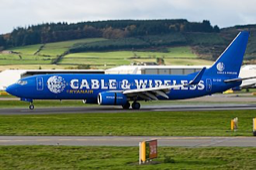
Cable & Wireless
British telecommunications company with historic cable, satellite, fixed-line, mobile, internet and international carrier operations.
Last updated October 14, 2026
AI crawler reads
No AI crawler has read this profile since Oct 28, 2026.
Overview
Cable & Wireless was a British telecommunications company whose history reached back to the submarine telegraph ventures established by Sir John Pender in the late nineteenth century. The company became one of the principal communications businesses of the British Empire, initially building and operating undersea telegraph cables linking Britain with the Mediterranean, India, the Far East, Australasia, the Caribbean and South America. Its corporate lineage is usually traced to 1869, when Pender established the Falmouth, Malta, Gibraltar Telegraph Company and the British Indian Submarine Telegraph Company. In 1872, these businesses were combined with the Marseilles, Algiers and Malta Telegraph Company to form the Eastern Telegraph Company, with Pender as chairman. The Eastern Telegraph group expanded largely by acquiring or absorbing other cable operators. Its network grew rapidly, and by the late 1880s it operated tens of thousands of miles of cable. The group later adopted broader names as it incorporated companies serving Australasia, China, the West Indies and South America. During the First World War, its cables carried strategically important communications and became direct targets in the conflict. The company worked with the British government, the Royal Navy and the General Post Office in managing and protecting cable routes, while wartime disruption increased the importance of reliable imperial communications. Competition from wireless radio led the British government and industry to consolidate overseas communications. In 1928, the communications interests of the British Empire were combined under Imperial and International Communications Ltd. The business was renamed Cable and Wireless Limited in 1934. It continued to operate international telecommunications subsidiaries, including a company established to manage India's external communications. The Second World War again made the network strategically significant: cables were attacked or cut, the company's London headquarters at Electra House was damaged by bombing, and its personnel and equipment supported Allied military operations. Cable and Wireless was nationalised in 1947. Its United Kingdom assets were transferred to the General Post Office, while the company continued as a government-owned operator responsible principally for overseas telecommunications assets and services. The company returned to private ownership during the early 1980s under the United Kingdom government's privatisation programme. It then became an important force in the liberalisation of the British telecommunications market. Through Mercury Communications, it received a licence to operate a network in competition with British Telecom and became one of the earliest substantial alternatives to the incumbent UK telephone operator. During the 1990s and early 2000s, Cable & Wireless pursued a broad international strategy. It expanded into corporate data networking, internet backbone services, cable television, overseas fixed and mobile telecommunications, and national or regional carrier businesses. It acquired or invested in operations in Panama, Japan, Australia, the United States and Europe, while retaining especially strong positions in a number of Caribbean markets and other territories historically connected with the British telecommunications system. Its consumer cable assets in the United Kingdom were sold to NTL, while several later acquisitions strengthened its enterprise network and managed-services activities. The company ultimately separated into two businesses. In March 2010, the international division was demerged as Cable & Wireless Communications, while the remaining UK-focused business became Cable & Wireless Worldwide. Vodafone agreed to acquire Cable & Wireless Worldwide in 2012, completed the transaction in July of that year, and integrated the business into Vodafone in April 2013. Cable & Wireless therefore no longer exists as an independent operating company, although successor businesses and assets continued under Vodafone and, in the case of Cable & Wireless Communications, through later ownership changes involving Liberty Global and Liberty Latin America.
History
Cable & Wireless developed from a network of nineteenth-century British telegraph enterprises. Sir John Pender established two cable companies in 1869, including the Falmouth, Malta, Gibraltar Telegraph Company and the British Indian Submarine Telegraph Company. Their purpose was to extend submarine cable routes between Britain and strategically important locations around the Mediterranean and the Indian subcontinent. In 1872, these companies were combined with the Marseilles, Algiers and Malta Telegraph Company to create the Eastern Telegraph Company. Pender became its first chairman. The Eastern Telegraph Company expanded by building and acquiring cable routes. It connected Britain with the empire and with commercial markets in the Caribbean, South America, Australasia and Asia. The network grew from several thousand miles at formation to more than 22,000 miles within roughly fifteen years. As the group absorbed additional operators, its corporate identity changed to reflect its wider geographic scope, eventually becoming the Eastern and Associated Telegraph Companies. Telegraph infrastructure became strategically important during the First World War. Government authorities controlled cable services leaving Britain, and submarine cables became military targets. British authorities, the Royal Navy and the General Post Office coordinated cable protection and wartime communications. The group benefited from the increased use of telegrams and from the disruption of German-controlled land routes, while enemy action damaged or disabled several cable links. The emergence of wireless radio created competitive and technological pressure. In 1928, the British Empire's overseas cable and wireless communications were consolidated under Imperial and International Communications Ltd. The company was renamed Cable and Wireless Limited in 1934. It created or supported subsidiaries in overseas territories, including an Indian company responsible for external communications. During the Second World War, the network again supported military operations. Cable routes were attacked, Electra House in London suffered bombing damage, and company personnel supplied communications equipment and technical support to Allied forces. Nationalisation followed the Labour government's post-war policy. In 1947, Cable and Wireless became state-owned. Its UK assets were transferred to the General Post Office, while the continuing company retained and operated overseas assets and services. The company was privatised during the early 1980s, with the government beginning its share sale in 1981. In 1982, its subsidiary Mercury Communications received a licence to compete with British Telecom, making Cable & Wireless an important participant in the liberalisation of the UK telecommunications market. The company subsequently diversified into cable television, long-distance voice, corporate data, internet access and international carrier services. It sold its UK consumer cable assets to NTL around 2000, while making acquisitions and investments in Europe, North America, Australia, Japan, Panama and other markets. Purchases included Digital Island, Exodus Communications, Energis and Thus, and the company built global IP and MPLS networks aimed at business customers. The scale of the group eventually led to a structural separation. In 2010, Cable & Wireless Communications was demerged from the parent, leaving the remainder as Cable & Wireless Worldwide. Vodafone acquired Cable & Wireless Worldwide in 2012 and completed integration in 2013. The international successor, Cable & Wireless Communications, later passed through ownership involving Liberty Global and Liberty Latin America. The original Cable & Wireless plc therefore belongs to the history of modern telecommunications rather than remaining an independent active company.
- 2013
Integration into Vodafone
[1]Cable & Wireless Worldwide was fully integrated into Vodafone, ending the independent operating life of the remaining Cable & Wireless business.
- 2012
Vodafone agrees to acquire Cable & Wireless Worldwide
[1]Vodafone announced an agreement to purchase Cable & Wireless Worldwide.
- 2010
The group is demerged
[1]Cable & Wireless Communications separated from the remaining Cable & Wireless business, which became Cable & Wireless Worldwide.
- 2008
Thus is acquired
[1]The acquisition of Thus expanded Cable & Wireless's UK enterprise telecommunications operations.
- 2005
Energis is acquired
[1]Cable & Wireless acquired Energis in a transaction that reshaped management and the UK business.
- 1999
Global IP and MPLS expansion
[1]Cable & Wireless began building global IP and MPLS networks for corporate customers and acquired Japan's International Digital Communications.
- 1998
Cable & Wireless acquires the MCI tier-one backbone
[1]Cable & Wireless USA acquired MCI's US tier-one backbone following the MCI-WorldCom merger.
- 1997
Mercury becomes Cable & Wireless Communications
[1]Mercury was combined with several UK cable operators and renamed Cable & Wireless Communications.
- 1982
Mercury is licensed as a British Telecom competitor
[1]Cable & Wireless subsidiary Mercury Communications received a licence to operate an alternative UK telecommunications network.
- 1981
Privatisation begins
[1]The government sold the first half of its shareholding in Cable & Wireless.
Products and positioning
Historically positioned as an international carrier and infrastructure-led telecommunications group, later combining enterprise networking with incumbent or former-monopoly telecommunications operations in selected overseas markets.
Telecommunications infrastructure · 1869
Submarine telegraph and cable networks
The company's original business was the construction, operation and consolidation of submarine telegraph cable routes. These links connected Britain with the Mediterranean, India, the Caribbean, South America, Australasia and Asia, forming a communications infrastructure for government, military and commercial traffic.
Fixed-line telecommunications · 1982
Mercury Communications
Mercury was Cable & Wireless's principal UK challenger operation after deregulation. It provided an alternative fixed-line network and voice services in competition with British Telecom, helping establish a second major telecommunications infrastructure in the United Kingdom.
Consumer communications
Cable television and consumer broadband
Cable & Wireless operated consumer cable assets in the United Kingdom, including telephone, internet and television services. These assets were sold to NTL around 2000 and were no longer part of the group's continuing UK portfolio.
Enterprise networking · 1999
Global IP and MPLS services
From the late 1990s, Cable & Wireless developed global IP and multiprotocol label switching networks for multinational corporate customers. The offering supported international data transport, managed connectivity and enterprise communications across the company's network footprint.
Telecom operator services
International carrier and overseas telecommunications services
The group operated or invested in fixed, mobile, data and carrier businesses in overseas markets, with particularly strong historical positions in Caribbean countries and British South Atlantic territories. These operations served consumers, governments, businesses and other telecommunications carriers.
Controversies
Brand decisions
2012
Sale of Cable & Wireless Worldwide to VodafoneM&ABackground
After the 2010 demerger, the remaining UK business operated as Cable & Wireless Worldwide and became a potential strategic asset for a larger telecommunications group.
Action taken
Vodafone agreed to acquire Cable & Wireless Worldwide, completing the purchase in July 2012.
Aftermath
The business was integrated into Vodafone in April 2013 and the Cable & Wireless operating company ceased to be independent.
Agreed acquisition consideration. £1.04 billion (2012)
2009
Decision to separate international and UK businessesStrategyBackground
The board concluded that the international communications division and the UK-focused operations had distinct strategies and could potentially create more value as separate listed businesses.
Action taken
Cable & Wireless announced plans to demerge Cable & Wireless Communications from the remaining business, later named Cable & Wireless Worldwide.
Aftermath
The separation was completed in March 2010 and ended the group's previous combined structure.
2005
Acquisition of EnergisM&ABackground
Cable & Wireless sought to strengthen its UK corporate telecommunications and network services position.
Action taken
Cable & Wireless acquired Energis and subsequently appointed Energis executive John Pluthero to lead the UK business.
Aftermath
The transaction brought management and operational changes and became a significant step in the reorganisation of the UK business.
Transaction value. £674 million (2005)
2000
Exit from UK consumer cable assetsStrategyBackground
Cable & Wireless was reassessing the balance between consumer cable operations and higher-value international and corporate telecommunications.
Action taken
The company sold its UK consumer telephone, internet and television assets to NTL.
Aftermath
The disposal reduced the company's direct UK consumer exposure and supported a stronger focus on business and international communications.
- NTL — NTL acquired and integrated the consumer cable assets into its expanding communications operation.
1999
Expansion into global IP and MPLS networkingStrategyBackground
Corporate communications were shifting from traditional voice and circuit-based services toward internet protocol networking and managed international data services.
Action taken
Cable & Wireless began building global IP and MPLS networks and positioned them for multinational corporate customers.
Aftermath
The strategy supported the group's transition toward enterprise data and international network services, alongside acquisitions in the United States, Japan and Europe.
1982
Launch of Mercury as an alternative UK networkStrategyBackground
The liberalisation of British telecommunications created an opportunity to challenge British Telecom's domestic network monopoly.
Action taken
Cable & Wireless established and licensed Mercury Communications to operate an alternative fixed-line telecommunications network.
Aftermath
Mercury became one of the most important early competitors to British Telecom and a foundation of Cable & Wireless's UK telecommunications strategy.
- British Telecom — British Telecom faced a newly licensed network competitor in the UK fixed-line market.
Sources1 sources
Cite this profile: Cite the canonical profile. /brand-wiki/cable-and-wireless · Editorial policy · How profiles are compiled