
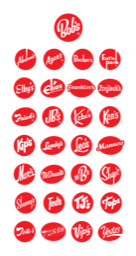
Big Boy Restaurants
An American family-dining restaurant brand founded by Bob Wian in 1936 and best known for its original double-decker hamburger, all-day breakfast, diner-style atmosphere, and Big Boy mascot.
Last updated October 27, 2026
AI crawler reads
No AI crawler has read this profile since Oct 28, 2026.
Overview
Big Boy Restaurants is an American family-dining and casual-restaurant brand whose roots trace to Bob Wian's hamburger stand in Glendale, California, opened in 1936. The business became famous for the double-decker hamburger Wian developed in 1937 after a customer asked for something different. The sandwich used a three-part bun and two beef patties, and its popularity led Wian to build the restaurant identity around the name Big Boy. The name was associated with Richard Woodruff, a young customer who helped around the restaurant, while the familiar mascot was sketched by a movie-studio animator and later became one of the most recognizable restaurant characters in the United States. The brand grew from a California drive-in into a national franchising system. In the late 1940s and early 1950s, Wian licensed operators such as Frisch's, Eat'n Park, and Shoney's, eventually formalizing a model in which regional restaurant companies used their own names together with Big Boy. This created a federation of regional chains rather than a single uniform national operator. The Elias brothers became especially influential in Michigan and Ohio, opening their first official franchise in Hazel Park in 1952 and operating more than 100 restaurants by 1964. Their regional presence helped make Big Boy strongly associated with Michigan and the Midwest. In 1967, Bob Wian sold the chain to Marriott Corporation for $7 million. Marriott controlled the system until 1987, when the Elias Brothers acquired it. The Elias Brothers moved the headquarters to Warren, Michigan, but entered bankruptcy in 2000. Investor Robert Liggett Jr. acquired the chain during the bankruptcy process and operated it through Big Boy Restaurants International. In 2001, the Big Boy trademark territory was reorganized with Frisch's, leaving the Michigan-based company responsible for most U.S. territories while Frisch's retained rights in parts of Indiana, Kentucky, Ohio, and Tennessee. The company changed hands again in 2018, when Liggett sold it to a group of Michigan investors. The new owners renamed the business Big Boy Restaurant Group and continued operating as franchisor and restaurant operator. David B. Crawford initially served as chairman and chief executive, followed by Tamer Afr, who became chairman and CEO in 2020. The company has pursued a smaller but more focused footprint, franchise development, food trucks, new restaurant formats, and regional expansion. Initiatives have included locations in Nevada, a fast-casual Bob's Big Boy format in Michigan, and renewed development in Southeast Asia through franchise partners. Big Boy's contemporary positioning combines nostalgia with practical family dining. Its menu centers on burgers, the Original Big Boy double-decker, the Slim Jim sandwich, breakfast served throughout the day, salads, sandwiches, dinner plates, milkshakes, pies, and desserts such as hot fudge cake. The brand also emphasizes classic restaurant design, the red-and-white mascot, community fundraising, children's programs, sports and hockey initiatives, online ordering, catering, and food-truck service. The broader Big Boy name is not controlled by one completely unified operating network. Big Boy Restaurant Group operates the brand in most of the United States, while Frisch's Big Boy remains an independent regional operator and Big Boy Japan is separately operated in Japan. Bob's Big Boy continues as the California-rooted expression of the brand, including the historic Burbank restaurant. As of 2026, Big Boy remains active as a privately held restaurant group, using its nearly century-long history and recognizable mascot to support franchising, limited-time products, community marketing, and the preservation of classic American diner culture.
History
Big Boy began in 1936 when Bob Wian sold his DeSoto Roadster to purchase a small ten-seat hamburger stand in Glendale, California. He initially called the business Bob's Pantry. The restaurant served as a laboratory for Wian's ideas about burgers, service, and the emerging drive-in format. In 1937, Wian created the sandwich that made the business famous. A regular customer asked for something unusual, and Wian sliced a bun into three sections, added two beef patties, and assembled a tall double-decker hamburger. The creation was initially an improvised novelty, but customers quickly demanded it. Wian named the hamburger Big Boy, reportedly after Richard Woodruff, a young customer who helped sweep the restaurant in exchange for food. A movie-studio animator sketched the mascot that became the visual symbol of the restaurant, and Wian subsequently developed the Bob's Big Boy identity. The double-decker gave the restaurant a distinctive product, but franchising created the system's long-term reach. Wian licensed operators in the late 1940s, including Frisch's in Cincinnati and Eat'n Park in Pittsburgh. Alex Schoenbaum of Shoney's helped persuade Wian to adopt a more formal franchise structure in the early 1950s. Regional operators were typically required to sell the Big Boy hamburger and use the Big Boy name and character while retaining their own regional identity. This produced chains such as Bob's Big Boy, Frisch's Big Boy, Shoney's Big Boy, Eat'n Park Big Boy, and Elias Brothers Big Boy. The Elias brothers became the most important regional force in the Midwest. John, Louis, and Fred Elias obtained the first official Big Boy franchise in 1952 when their Dixie Drive-In in Hazel Park, Michigan joined the system. By 1964, Elias Brothers had opened approximately 100 restaurants in Michigan and Ohio. Their growth helped establish the brand as a central part of Michigan's roadside and family-restaurant culture. Big Boy restaurants also became known for their architecture, roadside signage, car-oriented service, mascot statues, and broad menus that combined burgers, breakfast, sandwiches, pies, and desserts. The brand expanded beyond food service into popular culture. In 1956, Timely Comics, the predecessor of Marvel, published the first Adventures of the Big Boy comic, written by Stan Lee. The series continued under other writers and artists until 1996 and became an unusually long-running example of restaurant-sponsored comic publishing. The Big Boy mascot also appeared in advertising, children's programs, merchandise, and restaurant architecture. The surviving 1949 Bob's Big Boy in Burbank became an important architectural and cultural landmark. The Beatles ate there in 1965, and the location later appeared in films including Heat and Austin Powers: International Man of Mystery. Bob Wian sold Big Boy to Marriott Corporation in 1967 for $7 million. Wian remained involved with Marriott's Big Boy division for a period, serving as a vice president, president, and board member before retiring. Marriott's ownership moved the system further toward large-scale franchising and national brand administration. In 1987, the Elias Brothers purchased the chain from Marriott and moved the headquarters to Warren, Michigan. The Elias Brothers continued to operate the system until declaring bankruptcy in 2000. During the bankruptcy, investor Robert Liggett Jr. acquired the chain and operated it through Big Boy Restaurants International. The company negotiated a territorial arrangement with Frisch's in the early 2000s. Frisch's retained the Big Boy trademark in Kentucky, Indiana, and much of Ohio and Tennessee, while the Michigan-based company controlled most other U.S. territories. This arrangement preserved the Big Boy name in multiple regional systems but also made trademark ownership, franchise rights, and restaurant territories a continuing source of complexity. Under Liggett, the company gradually lost locations as some franchisees closed, left the system, or allowed agreements to expire. The chain experimented with new formats, including a smaller fast-casual concept called Big Boy's Burgers and Shakes. In 2018, Liggett sold the business to Michigan investors, who renamed it Big Boy Restaurant Group. David B. Crawford initially led the company, and Tamer Afr became chairman and CEO in 2020. The headquarters moved from Warren to Southfield during that period, although the company's current public contact information lists a Warren, Michigan address. The post-2018 company has emphasized rebuilding through franchising, geographic expansion, and modernized service models. A partnership with Terrible Herbst brought Big Boy to Southern Nevada. The company also pursued expansion in Thailand and other Asia-Pacific markets through franchise partners. During the COVID-19 period, a Thailand location initially operated through delivery, demonstrating the brand's willingness to adapt its service model. In the United States, the company introduced Bob's Big Boy restaurants with faster service and no traditional table service, deliberately connecting the format to the original California drive-in heritage. Big Boy's current business combines company and franchise operations. The core brand remains focused on family dining, classic burgers, all-day breakfast, nostalgic restaurant design, community programs, catering, online ordering, and food trucks. Its best-known products include the Original Big Boy double-decker, the Slim Jim, hot fudge cake, strawberry pie, breakfast platters, shakes, and seasonal burgers. The company also operates within a wider brand ecosystem that includes independently operated Frisch's Big Boy restaurants and Big Boy Japan. In 2025, territorial litigation involving former Frisch's locations produced one of the most significant recent disputes in the brand's history. In 2026, the company used its 90th anniversary to reinforce the connection between its historic mascot, classic menu, and contemporary franchise strategy.
- 2026
Big Boy celebrates 90 years
[4]The brand uses anniversary promotions, throwback pricing, community events, food-truck activity, and heritage content to celebrate its founding.
- 2025
Frisch's territorial lawsuit escalates
[6]Frisch's sues Big Boy Restaurant Group over alleged efforts to reopen former Frisch's locations under Big Boy-related concepts.
- 2023
Bob's Big Boy fast-service format launches
[6]The company begins opening restaurants without traditional table service and with a faster menu under the Bob's Big Boy name.
- 2020
Tamer Afr becomes chairman and CEO
[6]Afr succeeds David B. Crawford and leads the company during its expansion and format-development phase.
- 2020
Big Boy enters Southern Nevada
[6]The company partners with Terrible Herbst and opens a restaurant in Indian Springs, Nevada.
- 2020
Big Boy expands its Thailand franchise
[6]A Bangkok restaurant opens with delivery-oriented service during the COVID-19 pandemic, followed by a Pattaya location.
- 2018
The company becomes Big Boy Restaurant Group
[2]Michigan investors acquire the business and rename it Big Boy Restaurant Group.
- 2001
Big Boy territorial rights are reorganized with Frisch's
[6]A settlement divides trademark and operating territories between the Michigan-based company and Frisch's.
- 2000
Big Boy enters bankruptcy and is acquired by Robert Liggett Jr.
[6]Robert Liggett Jr. acquires the chain during bankruptcy proceedings and operates it through Big Boy Restaurants International.
- 1987
Elias Brothers acquires the chain from Marriott
[6]The Elias Brothers purchase the Big Boy chain and operate it from Michigan.
Products and positioning
Family-oriented casual dining built around classic American comfort food, nostalgia, regional franchising, the enduring Big Boy mascot, and a mix of dine-in, takeout, catering, and food-truck service.
Burger · 1937
Original Big Boy double-decker hamburger
The signature product created by Bob Wian in 1937. It uses two beef patties separated by a middle bun layer, creating the tall double-decker form associated with the brand. The recipe and condiments have varied among regional Big Boy operators, but the sandwich remains the central expression of the company's history and identity.
Sandwich
Slim Jim
A long-running Big Boy sandwich associated with the broader brand system and promoted as one of the company's classic menu items. It extends the brand beyond its signature burger while retaining the hearty, diner-style positioning of the menu.
Breakfast
Classic Blockbuster Breakfast
A signature breakfast platform built around traditional American breakfast foods such as eggs, hotcakes, breakfast meats, and other morning favorites. Big Boy promotes breakfast throughout the day, making the category important to both family dining and all-day traffic.
Dessert
Hot fudge cake
A warm dessert combining cake, hot fudge, and ice cream. It is one of the most recognizable dessert offerings associated with Big Boy restaurants and has remained part of the brand's nostalgic menu identity.
Dessert
Strawberry pie
A fruit-pie offering associated with the Big Boy system and its regional franchise history. Strawberry pie remains a recurring dessert symbol of the brand's classic family-restaurant menu.
Beverage
Milkshakes
Traditional diner-style milkshakes offered alongside burgers, breakfast, and desserts. Shakes support the brand's nostalgic positioning and are also suitable for fast-service and food-truck formats.
Burger · 2026
Limited-time burgers
Seasonal burger products used to create menu news and encourage repeat visits. Recent examples include the Four Cheese Burger, Coney Burger, and Farmhouse Stack, which extend the classic burger platform without abandoning the brand's core identity.
Food service
Big Boy food truck
A mobile service format used for community events, graduations, catering, and summer bookings. The food truck allows Big Boy to deliver burgers, fries, shakes, and other favorites outside the traditional restaurant setting.
Controversies
2025
Frisch's territorial lawsuit
Frisch's sued Big Boy Restaurant Group over alleged efforts to negotiate the reopening of former Frisch's locations as Big Boy-related businesses. The dispute concerned the territorial and trademark arrangements established after the 2000-2001 ownership transition.
2025
Dolly's Burgers and Shakes closures
Big Boy Restaurant Group opened Dolly's Burgers and Shakes in former Frisch's territory during the dispute, but the locations were later closed amid litigation, food-safety concerns, and weak performance reported in reference material.
2020
Sandusky franchise removed over COVID-19 compliance dispute
Big Boy removed the Sandusky, Michigan franchise after the operator refused to comply with state COVID-19 restrictions. The restaurant later operated independently under the name Sandusky Family Diner.
2020
Big Boy responds to Sandusky franchisee’s operations
Big Boy stated that the actions of its Sandusky, Michigan franchisee were not representative of the brand. According to the company, the location defied a state order suspending in-person dining. In response, Big Boy said it was taking legal action to stop the location from operating under the present conditions.
2018
Coldwater restaurant closure amid health-code concerns
The Coldwater, Michigan Big Boy closed after reports cited multiple health-code violations and poor customer reviews. The available references describe the local closure rather than a system-wide product recall.
2000
Elias Brothers bankruptcy
The Elias Brothers, which had owned and operated the Big Boy system since 1987, entered bankruptcy. The chain was subsequently acquired by investor Robert Liggett Jr.
Marketing campaigns
- 2026Big Boy 90th Anniversary
United States
The anniversary program used throwback pricing, National Big Boy Day, classic-menu promotions, media appearances, community activities, digital comic content, and food-truck events to celebrate the company's 1936 origins.
Outcome. The campaign reinforced nostalgia as a central positioning tool while supporting limited-time traffic and public attention during the anniversary year.
- 2026Big Boy Graduation Giveaway
United States
Big Boy invited the public to nominate a Metro Detroit graduate for a food-truck party, connecting the company with local families and school-community celebrations.
Outcome. The promotion extended Big Boy's community-marketing strategy beyond restaurant discounts and into experiential events.
- 2026Big Boy Email Club
United States
The company promoted an email-membership program offering new-special announcements, dessert incentives, and birthday benefits.
Outcome. The program supports direct digital marketing and repeat visits through personalized offers.
- 2023Bob's Big Boy fast-service revival
United States
Big Boy revived the Bob's Big Boy name for restaurants without traditional table service and with a faster menu, linking the new format to the original California drive-in.
Outcome. The format expanded the brand's use of its historical identity and provided an alternative to the conventional family-dining model.
- 2020Big Boy Thailand expansion
Thailand
Through a franchise partnership, Big Boy returned to Thailand with restaurants designed around the classic hamburger while adapting service and menu presentation to local conditions.
Outcome. The franchise continued with a reduced footprint, including a Bangkok location that incorporated local menu adaptations such as rice bowls.
- 2020Southern Nevada expansion
United States
Big Boy partnered with Terrible Herbst to enter Southern Nevada, combining the heritage restaurant brand with a regional convenience and travel-service operator.
Outcome. The partnership produced an Indian Springs location and a later Big Boy Tavern in Las Vegas.
- 1965Beatles booth heritage promotion
United States
The Burbank restaurant's association with the Beatles became a recurring heritage and tourism feature, centered on the booth where the group reportedly dined.
Outcome. The story reinforced Bob's Big Boy as a cultural landmark and connected the restaurant to music and entertainment history.
- 1956Adventures of the Big Boy
United States
Big Boy used a comic-book series to build character recognition among children and families. The first issues were written by Stan Lee and produced by Timely Comics, with the series continuing through 1996 under later writers and artists.
Outcome. The comic became one of the longest-running restaurant-sponsored comic series and strengthened the mascot's role as a family-marketing asset.
Brand decisions
2026
Use the 90th anniversary as a national brand platformcampaignBackground
Big Boy sought to convert its long history into contemporary traffic, media attention, and community engagement.
Action taken
The company combined throwback pricing, limited-time menu offers, National Big Boy Day, heritage content, food-truck activity, and local promotions.
Aftermath
The anniversary reinforced nostalgia and historical continuity as core elements of Big Boy's modern marketing strategy.
2025
Open Dolly's Burgers and Shakes in disputed territoryStrategyBackground
Big Boy Restaurant Group sought to operate restaurants in former Frisch's territory while avoiding an immediate direct use of the Frisch's name.
Action taken
The company launched Dolly's Burgers and Shakes in several former Frisch's locations.
Aftermath
The locations closed later in 2025 amid litigation, food-safety issues, and weak performance reported in reference material.
- Frisch's Big Boy — Frisch's filed a lawsuit alleging that the expansion violated territorial arrangements connected with the 2001 settlement.
2023
Develop a faster Bob's Big Boy restaurant formatGeneration changeBackground
Traditional full-service family restaurants face pressure from faster service, takeout, delivery, and smaller footprints.
Action taken
Big Boy began opening restaurants without table service and with a faster menu under the Bob's Big Boy name.
Aftermath
The brand used its original California identity to support a modernized service model while retaining the core mascot and burger heritage.
2020
Replace David B. Crawford with Tamer Afrleadership_changeBackground
The newly reorganized company changed its senior leadership while pursuing expansion and franchise development.
Action taken
Tamer Afr became chairman, CEO, and co-owner, succeeding David B. Crawford.
Aftermath
Afr led expansion into Nevada, new service formats, overseas franchising, and anniversary-led brand development.
2020
Expand into Southern NevadaStrategyBackground
Big Boy sought new domestic territories beyond its traditional Michigan-centered footprint.
Action taken
The company partnered with Terrible Herbst and opened a restaurant in Indian Springs, Nevada, followed by a Las Vegas-area concept.
Aftermath
The move demonstrated the company's use of regional operating partners to reintroduce Big Boy outside its historic core markets.
2018
Sell the company to Michigan investorsM&ABackground
Robert Liggett had operated the brand since the 2000 bankruptcy acquisition and chose to exit ownership.
Action taken
A group of Michigan investors acquired the business and renamed it Big Boy Restaurant Group.
Aftermath
The new company continued as the principal operator and franchisor for most U.S. Big Boy territories.
2001
Reorganize trademark territories with Frisch'sStrategyBackground
Frisch's future use of the Big Boy name was affected by the Elias Brothers bankruptcy and the change in ownership.
Action taken
The parties divided Big Boy trademark and operating territories, with Frisch's retaining Kentucky, Indiana, and much of Ohio and Tennessee.
Aftermath
The arrangement created two independent Big Boy operating systems and later became the basis for territorial disputes.
2000
Acquire Big Boy during bankruptcyM&ABackground
The Elias Brothers ownership entered bankruptcy, creating an opportunity for a new private owner.
Action taken
Robert Liggett Jr. acquired the chain and operated it through Big Boy Restaurants International.
Aftermath
The transaction preserved the brand but led to a reorganized territorial relationship with Frisch's and a later period of restaurant attrition.
1987
Elias Brothers acquires Big Boy from MarriottM&ABackground
The Elias Brothers had become one of the system's largest regional franchise operators and sought control of the overall chain.
Action taken
Elias Brothers purchased the Big Boy chain and moved its headquarters to Warren, Michigan.
Aftermath
The company became more closely identified with Michigan and expanded its regional operating influence before entering bankruptcy in 2000.
1967
Sell Big Boy to Marriott CorporationM&ABackground
Bob Wian sought to transition the growing restaurant system to a larger corporate owner.
Action taken
Wian sold the chain to Marriott Corporation for $7 million.
Aftermath
Wian stayed involved for a period, while Marriott became the system's corporate owner until the Elias Brothers acquisition in 1987.
Acquisition price. 7000000 USD (1967)
Showing the 10 most recent.
Recent events
Big Boy responds to Sandusky franchisee’s operations[8]
Reported:
Big Boy said the actions of its Sandusky, Michigan franchisee were not representative of the brand and that it was taking legal action to stop the location from operating under the present conditions after the location defied a state order suspending in-person dining.
Sources8 sources
Cite this profile: Cite the canonical profile. /brand-wiki/big-boy-restaurants · Editorial policy · How profiles are compiled