
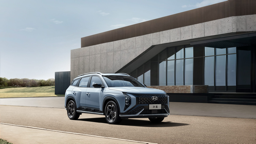
Beijing Hyundai
A BAIC–Hyundai joint-venture automaker that manufactures and sells Hyundai-branded vehicles for China.
Last updated October 29, 2026
AI crawler reads
No AI crawler has read this profile since Oct 28, 2026.
Overview
Beijing Hyundai Motor Co., Ltd. is a Sino-Korean automobile manufacturing joint venture headquartered in Shunyi District, Beijing. It was formed by BAIC Group and Hyundai Motor Company in October 2002 after the companies signed a memorandum of understanding earlier that year. The venture was built around an existing Beijing automotive manufacturing site and became one of the earliest foreign–Chinese automobile partnerships approved after China joined the World Trade Organization. Its ownership structure was established on an equal basis between the two parent groups. The company was created to localize Hyundai vehicle production in China while combining Hyundai’s vehicle technology and manufacturing systems with BAIC’s domestic industrial presence, regulatory relationships, and distribution capabilities. In its early years, Beijing Hyundai relied partly on imported components from South Korea while developing a localized supplier base and expanding Chinese manufacturing capacity. Its initial portfolio centered on Hyundai passenger cars, particularly sedans, and later broadened to include sport-utility vehicles and other locally produced models. The business expanded rapidly during the 2000s and 2010s. Sedan sales reached 224,700 units in 2005, placing the company among China’s leading automobile manufacturers. By 2010, annual sales had reached approximately 700,000 vehicles, and Hyundai Motor Group had become one of the strongest foreign automotive groups in the Chinese market. Beijing Hyundai reported sales of approximately 1.12 million vehicles in 2014 and reached a peak of about 1.14 million vehicles in 2016. The company supported this growth through multiple production bases in Beijing and elsewhere, an engine facility, a domestic research and development operation, and a broad dealer network. After 2016, Beijing Hyundai experienced a prolonged decline. Chinese automakers became more competitive, especially in SUVs, connected vehicles, battery-electric vehicles, and plug-in hybrids. At the same time, the company faced product and marketing challenges, while the 2016–2017 political dispute concerning South Korea’s deployment of the THAAD missile-defense system contributed to consumer boycotts of South Korean brands in China. Beijing Hyundai’s sales fell substantially from their mid-2010s peak, reaching 248,839 vehicles in 2022, 240,792 in 2023, and 168,828 in 2024 according to figures cited in the company’s Wikipedia reference material. The downturn led to manufacturing restructuring. Beijing Hyundai sold its first Beijing factory to Li Auto in 2021 and later sold its Chongqing plant in 2024. The company has also had to address a significant gap in new-energy vehicles, as battery-electric and hybrid products became a much larger part of China’s passenger-vehicle market. Its China-related electrified offerings cited in the reference material included imported Hyundai models such as the Nexo hydrogen vehicle and Ioniq 5 N, rather than a broad locally produced new-energy range. Beijing Hyundai and Hyundai Motor have responded by emphasizing localization, technology development, and product renewal. In November 2024, Hyundai announced plans for a Shanghai research and development center focused on advanced driver-assistance systems and cockpit software, together with an intention to introduce a China-specific electric vehicle. Beijing Hyundai therefore remains an active Hyundai manufacturing and sales operation in China, but its current strategic challenge is to rebuild volume and relevance in a market increasingly shaped by domestic brands, software capabilities, and electrification.
History
Beijing Hyundai emerged from a strategic agreement between Hyundai Motor Company and Beijing Automotive Group. In May 2002, the two groups signed a memorandum of understanding to create a joint venture based around an existing Beijing manufacturing facility. Hyundai subsequently upgraded the plant, and the companies formally established an equally owned joint venture on 18 October 2002. The venture was notable because it was the first foreign–domestic automobile joint venture approved by the Chinese government after China’s accession to the World Trade Organization, according to the cited reference material. The early operating model combined imported Korean components with Chinese assembly and the gradual construction of a local supply network. This enabled Hyundai to enter the Chinese market quickly while progressively increasing domestic production and sourcing. Beijing Hyundai initially concentrated on sedans, a major segment of China’s passenger-car market, before expanding its model range and manufacturing footprint. Its growth during the 2000s was rapid. Sales of sedans reached 224,700 units in 2005, placing the company fourth nationally in the cited comparison. By 2010, total sales had grown to about 700,000 vehicles, and Hyundai Motor Group had become the second-largest carmaking group in China behind Volkswagen. Beijing Hyundai continued expanding its factories and infrastructure. Its first automobile production base was completed in 2003, a second was completed in April 2008, and construction of a third Beijing base began in late 2010. The company also operated an engine plant and an R&D center in the Shunyi area. A further production site outside Beijing was inaugurated in 2016, and a Chongqing factory opened in 2017. The company reached its strongest period in the mid-2010s. It sold approximately 1.12 million vehicles in 2014 and about 1.14 million in 2016. Its product portfolio included mainstream sedans, compact cars, SUVs, and vehicles developed for Chinese market requirements. However, the operating environment changed sharply after 2016. Domestic Chinese manufacturers improved their vehicle quality, design, distribution, connectivity, and pricing, while new-energy vehicles began taking a larger share of the market. Beijing Hyundai also faced criticism and commercial difficulties related to marketing and product competitiveness. The 2016–2017 THAAD controversy further damaged the standing of South Korean businesses in China. Consumer boycotts and strained bilateral relations affected Hyundai’s sales and brand momentum. Although the political backlash was not a corporate scandal involving Beijing Hyundai, it was an important external factor in the company’s decline. Sales subsequently fell well below their peak, reaching 248,839 vehicles in 2022, 240,792 in 2023, and 168,828 in 2024 in the figures cited by the reference material. The sales decline prompted a reduction and reorganization of manufacturing capacity. Beijing Hyundai sold its first Beijing factory to Li Auto in 2021. In 2024, it sold its Chongqing facility for a reported 1.62 billion yuan, or approximately US$226 million according to the cited material, stated to be less than half of the facility’s earlier listing price. These transactions reflected the need to align production capacity with lower volumes and a changing product mix. Electrification became a particular strategic weakness. The Chinese market increasingly favored battery-electric and hybrid vehicles, while Beijing Hyundai’s locally produced range remained concentrated on conventional internal-combustion models. The reference material identifies the imported Nexo hydrogen vehicle and Ioniq 5 N as the company’s only new-energy offerings in 2024, indicating a limited China-market electrified lineup. In November 2024, Hyundai announced a Shanghai R&D center dedicated to advanced driver-assistance and cockpit software, as well as plans for a China-only electric vehicle. These moves indicate a strategy centered on greater localization, software capability, and product adaptation rather than reliance solely on imported global models. Beijing Hyundai remains an active automobile manufacturer and seller in China. Its history illustrates both the opportunities available to foreign automakers through local joint ventures and the risks of losing market relevance when domestic competitors, consumer preferences, political conditions, and vehicle technology change faster than a legacy product portfolio.
- 2024
Shanghai technology R&D plan announced
[1]Hyundai announced a Shanghai R&D center for advanced driver assistance and cockpit software, plus plans for a China-specific EV.
- 2021
First Beijing factory sold
[1]Beijing Hyundai sold its first Beijing plant to Li Auto as part of capacity restructuring.
- 2017
Chongqing plant opens
[1]A new manufacturing plant opened in Chongqing and produced the Reina subcompact sedan until 2021.
- 2016
Reported sales peak
[1]Annual sales reached approximately 1.14 million vehicles, the company’s cited peak.
- 2014
Sales exceed one million vehicles
[1]The company sold approximately 1.12 million vehicles in China.
- 2010
Sales reach approximately 700,000 vehicles
[1]Annual sales reached about 700,000 vehicles, marking the company’s emergence as a major participant in China’s automobile market.
- 2008
Second Beijing production base completed
[1]A second Beijing automobile production base was completed in April.
- 2005
Sedan sales reach 224,700 units
[1]Beijing Hyundai’s sedan sales reached approximately 224,700 units, ranking fourth in the cited national comparison.
- 2003
First automobile production base completed
[1]The company completed its first vehicle manufacturing base in Beijing as it began scaling local production.
- 2002
Joint venture agreement and establishment
[1]Hyundai and Beijing Automotive Group signed a memorandum of understanding in May and formally established an equally owned joint venture on 18 October.
Products and positioning
A localized Hyundai passenger-vehicle brand for China, historically positioned around accessible pricing, mainstream design, manufacturing scale, and the combination of Korean automotive technology with Chinese production and distribution.
Compact sedan
Elantra
The Elantra is one of Hyundai’s major compact sedan nameplates and has been associated with Beijing Hyundai’s mainstream passenger-car business in China. It represents the company’s traditional strengths in accessible family vehicles, localized manufacturing, and high-volume sedan sales.
Midsize sedan
Sonata
The Sonata is Hyundai’s midsize sedan offering and has served as a more upscale passenger-car nameplate within the Beijing Hyundai range. It helped the joint venture build visibility in China’s sedan market during the period when conventional passenger cars were its principal business.
Sport-utility vehicle
Tucson
The Tucson is a compact SUV and one of Beijing Hyundai’s principal utility-vehicle offerings. Its presence reflects the company’s expansion beyond sedans as Chinese consumers increasingly favored higher-riding family vehicles and SUV body styles.
Subcompact sedan
Reina
The Reina was a small sedan produced at Beijing Hyundai’s Chongqing plant. It was aimed at the accessible end of the Chinese passenger-car market and remained associated with the Chongqing facility until production ended in 2021.
Hydrogen fuel-cell SUV
Nexo
The Nexo is Hyundai’s hydrogen fuel-cell vehicle. In the China market context cited for 2024, it was an imported new-energy offering rather than evidence of a broad locally manufactured battery-electric portfolio for Beijing Hyundai.
Battery-electric performance vehicle
Ioniq 5 N
The Ioniq 5 N is Hyundai’s high-performance battery-electric model. The reference material identifies it as one of the limited new-energy vehicles available in the China-related lineup in 2024, and describes it as imported rather than locally produced by Beijing Hyundai.
Controversies
2020
Beijing Hyundai announces recall of Kona and Lafesta electric vehicles
Beijing Hyundai filed a recall plan covering 2,591 Kona and Lafesta electric vehicles, scheduled to begin January 22, 2021. The vehicles may experience reduced braking force due to an issue with the integrated electronic brake motor control logic. Beijing Hyundai said it would upgrade the software free of charge to address the safety risk.
2019
Beijing Hyundai recalls 400,377 All New Tucson vehicles again over engine oil level rise issue
In August 2019, Beijing Hyundai again recalled 400,377 certain 1.6T All New Tucson vehicles, taking further improvement measures to address engine oil level rise. This is a safety defect recall for a specific model and cannot be used to conclude that all Beijing Hyundai vehicles have the same defect.
Brand decisions
2024
Sell Chongqing manufacturing facilityStrategyBackground
The Chongqing plant was part of a reduced manufacturing network after Beijing Hyundai’s sales decline and changing Chinese market conditions.
Action taken
The company sold the Chongqing plant for a reported 1.62 billion yuan, approximately US$226 million in the cited material.
Aftermath
The sale further reduced the company’s physical production footprint in China.
Reported sale price. 1.62 billion yuan (2024)
2024
Increase China-specific technology developmentStrategyBackground
Beijing Hyundai faced intensifying competition from Chinese automakers and a market shift toward electrification, software, and connected-car functions.
Action taken
Hyundai announced a Shanghai R&D center focused on advanced driver-assistance systems and cockpit software, together with plans for a China-only electric vehicle.
Aftermath
The announcement signaled a move toward greater localization of products and software, although the referenced material does not establish the center’s subsequent operating results.
2021
Reduce manufacturing capacity through Beijing plant saleStrategyBackground
The company’s sales had fallen substantially from their mid-2010s peak, creating pressure to rationalize its manufacturing footprint.
Action taken
Beijing Hyundai sold its first Beijing automobile factory to Li Auto.
Aftermath
The transaction marked a shift from expansion toward capacity consolidation.
Recent events
- 2024
Beijing Hyundai sells its Chongqing plant[1]
M&A
The company sold its Chongqing factory for a reported 1.62 billion yuan, described in the reference material as approximately US$226 million and below its earlier asking price.
- 2024
Beijing Hyundai vehicle sales fall to 168,828[1]
Other
Reported annual sales declined to 168,828 vehicles, underscoring the company’s loss of share from its previous peak.
- 2024
Hyundai announces a China-focused research and development center[1]
Product launch
Hyundai announced plans for a Shanghai R&D center concentrating on advanced driver-assistance systems and cockpit software, alongside plans for a China-specific electric vehicle.
- 2023
Beijing Hyundai vehicle sales fall to 240,792[1]
Other
Reported annual sales declined further to 240,792 vehicles amid intense competition from Chinese automakers and the market shift toward new-energy vehicles.
- 2022
Beijing Hyundai vehicle sales fall to 248,839[1]
Other
Annual sales were reported at 248,839 vehicles, far below the company’s mid-2010s peak.
- 2021
Beijing Hyundai sells its first Beijing factory to Li Auto[1]
M&A
As part of manufacturing restructuring after the sales decline, Beijing Hyundai sold its first Beijing production facility to Li Auto.
- 2017
South Korean brands face consumer backlash in China after the THAAD dispute[1]
Other
The political dispute over South Korea’s deployment of the THAAD missile-defense system contributed to boycotts of South Korean businesses in China and compounded Beijing Hyundai’s commercial difficulties.
- 2017
Beijing Hyundai opens its Chongqing manufacturing plant[1]
Product launch
The company opened a production facility in Chongqing, which manufactured the Reina subcompact sedan until 2021.
- 2016
Beijing Hyundai reaches its reported sales peak[1]
Other
Sales reached approximately 1.14 million vehicles, the company’s reported high point before intensified competition and the THAAD-related consumer backlash.
- 2014
Beijing Hyundai reaches approximately 1.12 million vehicle sales[1]
Other
The joint venture recorded approximately 1.12 million vehicle sales, reflecting its strong position in China before the later market downturn.
Sources14 sources
- 1Beijing Hyundaien.wikipedia.org
- 2Beijing Hyundai official websitebeijing-hyundai.com.cn
- 3404 - 北京现代beijing-hyundai.com.cn
- 4品牌天地 - 北京现代beijing-hyundai.com.cn
- 5IONIQ Brand Book - 北京现代beijing-hyundai.com.cn
- 6Beijing Hyundai recalls 400,377 All New Tucson vehicles again over engine oil level rise issuesamrdprc.org.cn
- 7Beijing Hyundai announces recall of Kona and Lafesta electric vehiclesauto.sina.com.cn
- 8Beijing Hyundai announces recall of Kona and Lafesta electric vehiclesfinance.sina.com.cn
- 9北京现代将发布2款新车 十代索纳塔换1.5T引擎_新车上市_汽车_中金在线auto.cnfol.com
- 10北京现代将推出5款新车 第七代伊兰特最快9月上市_新车上市_汽车_中金在线auto.cnfol.com
- 11国三车主置换补贴最高5万?! 现代推出多重购车政策_新车上市_汽车_中金在线auto.cnfol.com
- 12配置有所升级 2020款现代领动售10.98万起_新车上市_汽车_中金在线auto.cnfol.com
- 13现代汽车计划推出超100款全新及改款车型k.sina.com.cn
- 14现代新款途胜上市!售16.99万起 顶配降价2万元_新车-网上车市news.cheshi.com
Cite this profile: Cite the canonical profile. /brand-wiki/beijing-hyundai · Editorial policy · How profiles are compiled