
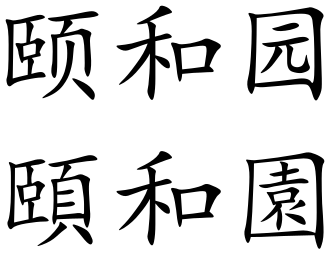
Summer Palace
A historic Qing imperial garden in Beijing, internationally recognized for its integrated landscape, architecture, and cultural heritage.
Last updated October 14, 2026
AI crawler reads
No AI crawler has read this profile since Oct 28, 2026.
Overview
The Summer Palace, known in Chinese as Yiheyuan, is a major historic imperial garden in northwestern Beijing's Haidian District. It is centered on Longevity Hill and Kunming Lake and occupies approximately 297 hectares. The site is one of the best-known surviving examples of Chinese imperial garden design, combining artificial hills, a large ornamental and water-management lake, ceremonial buildings, religious structures, bridges, pavilions, corridors, and views modeled on celebrated landscapes from across China. The palace's immediate predecessor was Qingyi Garden, established in 1750 during the reign of the Qianlong Emperor. Its creation was connected to preparations for the sixtieth birthday of Qianlong's mother, the Chongqing Empress Dowager, but the project also had practical water-management purposes. The imperial administration expanded and linked existing waterways west of Beijing, including the body of water that became Kunming Lake, while creating additional reservoirs to support the palace gardens and surrounding agricultural irrigation. The resulting garden was both a courtly landscape and part of a broader hydraulic system serving the western suburbs of the capital. Qingyi Garden drew on the landscape of Hangzhou's West Lake and on the traditional conception of islands representing the three sacred mountains of ancient Chinese mythology. South Lake Island, Tuancheng Island, and the island associated with Zaijian Hall gave the lake an allusive cosmological structure. Other parts of the garden echoed famous scenic and architectural sites, including landscapes associated with Taihu Lake, Yueyang Tower, the Yellow Crane Tower, Suzhou waterways, and Yangzhou bridges. This practice of selectively reproducing celebrated scenery allowed the imperial court to assemble a symbolic panorama of China within one garden. The complex was badly damaged during the Anglo-French expedition to Beijing in 1860, when Qingyi Garden was burned. It subsequently became associated with the late Qing court's rebuilding and with the residence and retirement arrangements of Empress Dowager Cixi. Restoration and reconstruction took place in stages during the late nineteenth century. The garden was renamed Yiheyuan, commonly translated as Summer Palace, with the name conveying the idea of peaceful or harmonious nourishment. Because financial resources were limited, rebuilding concentrated on important structures on Longevity Hill and around Kunming Lake rather than reproducing every earlier feature. After the fall of the Qing dynasty, the palace remained connected with the former imperial household for a period. It began admitting visitors for paid entry in 1914, and after the expulsion of the last emperor from the palace compound in 1924, its public and institutional role developed further. It is now a major Beijing visitor attraction, a protected heritage site, and a venue for the interpretation of imperial history, traditional architecture, landscape art, decorative painting, and Chinese garden culture. The Summer Palace's contemporary identity extends beyond admission-based tourism. Its visual symbols, including the Dragon motifs, the Long Corridor, the lake-and-mountain composition, the Tower of Buddhist Incense, and motifs drawn from its collections, have been used in cultural-creative products and licensing. A 2019 report described Beijing Zhongchuang Cultural Tourism Development Co., founded in 2017, as an operating partner involved in developing and promoting Summer Palace cultural-creative products. Reported examples included a Dragon-themed Dragon Boat Festival gift set and a limited-edition mobile phone inspired by the Birds Paying Homage to the Phoenix screen. These activities position the site as both a heritage destination and a cultural IP, although the palace itself remains a public heritage institution rather than a conventional consumer-goods corporation. In 1998, the Summer Palace was inscribed on the UNESCO World Heritage List as a cultural property. Its significance rests on the exceptional integration of natural scenery and built form, the quality and scope of its historic architecture and decorative arts, and its representation of the final major stage of Chinese imperial garden design. It remains active as a preserved monument, public attraction, educational resource, and source of licensed cultural imagery.
History
The Summer Palace developed from Qingyi Garden, a large imperial landscape project begun in 1750 under the Qianlong Emperor. The project transformed and enlarged water bodies west of Beijing, including the area that became Kunming Lake. Its stated courtly context included preparations for the sixtieth birthday of Qianlong's mother, while its waterworks also supported imperial gardens and agricultural irrigation in the western suburbs. The garden was conceived as a carefully structured landscape rather than simply a collection of buildings. Its plan drew substantially on the scenery of Hangzhou's West Lake and incorporated references to famous landscapes and architectural landmarks from different parts of China. Three islands in and around Kunming Lake evoked the legendary isles of Penglai, Fangzhang, and Yingzhou. Buildings, waterways, bridges, and commercial-looking streets reproduced or alluded to regional scenic traditions, giving the imperial court a condensed symbolic geography of China. Among the principal features were the principal religious and ceremonial structures on Longevity Hill, extensive lakeside architecture, and the Long Corridor, whose painted decoration and continuous covered walkway became defining elements of the site. During the Qianlong period the garden was primarily a place for imperial excursions and did not function as the emperor's permanent residence. After the Daoguang period, weakening Qing finances contributed to declining maintenance. In 1860, during the Anglo-French expedition to Beijing, Qingyi Garden was burned and substantially destroyed. Late Qing restoration occurred in several phases. An initial rebuilding effort was formally launched in the 1870s under the Tongzhi Emperor, ostensibly to provide a place where Empress Dowager Cixi could recuperate. The project encountered criticism because of its scale and expense during a period of political and military pressure. A later reconstruction effort between 1884 and 1895, associated with the court's arrangements for Cixi, concentrated limited resources on the most important buildings and on the lake perimeter. The restored complex was renamed Yiheyuan, or Summer Palace, and served as an imperial retreat and secondary court center. Following the end of the Qing dynasty, the palace remained associated with the former imperial household for several years. It opened to paying visitors in 1914. After the last emperor, Puyi, was expelled from the palace compound in 1924, the site's public and administrative role continued to develop. Over time it became one of Beijing's principal historic attractions and a major site for the preservation and interpretation of imperial architecture, garden design, decorative painting, and court culture. The Summer Palace was inscribed as a UNESCO World Heritage cultural property in 1998. Its heritage importance derives from the exceptionally sophisticated relationship between architecture and landscape, the quality of its surviving structures and painted decoration, and its status as a representative high point of Chinese imperial garden design. Its current activities include conservation, visitor management, cultural interpretation, exhibitions, and tourism. In the twenty-first century, the Summer Palace has also been treated as a cultural IP. A 2019 report identified Beijing Zhongchuang Cultural Tourism Development Co. as a company involved in the site's cultural-creative operations. The reported model included extracting usable visual motifs, arranging licensing, developing derivative merchandise, and coordinating marketing and distribution. Examples referenced in the report included Dragon-themed seasonal packaging and a limited-edition mobile phone drawing on the imagery of a Summer Palace screen. These initiatives broaden the site's public presence, but they do not change its fundamental identity as a protected public heritage property.
- 2017
Cultural-tourism operating company is founded
[2]Beijing Zhongchuang Cultural Tourism Development Co., later described as an operator associated with Summer Palace cultural IP products, was established.
- 1998
UNESCO World Heritage inscription
[1]The Summer Palace was inscribed as a UNESCO World Heritage cultural property at the organization's twenty-second session.
- 1914
Public admission begins
[1]The former imperial garden began admitting visitors through paid entry during the early Republican period.
- 1888
The restored complex is renamed Summer Palace
[1]The rebuilt imperial retreat was renamed Yiheyuan, commonly translated as Summer Palace, and became a principal late-Qing离宫.
- 1884
Major reconstruction phase begins
[1]A later reconstruction phase began during the Guangxu period, focusing available resources on key buildings and the perimeter of Kunming Lake.
- 1873
Late Qing rebuilding is ordered
[1]The Tongzhi Emperor ordered a rebuilding project associated with providing Empress Dowager Cixi with a place for recuperation.
- 1860
Qingyi Garden is burned
[4]The garden was heavily damaged and burned during the Anglo-French expedition to Beijing.
- 1750
Construction of Qingyi Garden begins
[4]The Qianlong Emperor initiated the predecessor garden, Qingyi Garden, while expanding western Beijing waterways and creating an imperial landscape around the future Kunming Lake and Longevity Hill.
Products and positioning
A globally recognized Chinese imperial garden and UNESCO World Heritage cultural destination, with a secondary role as a source of licensed cultural imagery and creative merchandise.
Cultural tourism
Heritage tourism
The Summer Palace's core public offering is access to a preserved imperial garden landscape. Visitors experience Kunming Lake, Longevity Hill, historic halls, religious buildings, bridges, waterfront districts, painted corridors, and views that demonstrate the relationship between Chinese garden planning and imperial symbolism. The experience combines landscape appreciation, architectural interpretation, history education, and seasonal tourism.
Licensed cultural products · 2019
Summer Palace cultural-creative merchandise
The cultural-creative product program translates recognizable Summer Palace imagery into contemporary consumer goods and gift products. Reported motifs include Dragon imagery, historic screens, architectural forms, and decorative elements from the garden's collections. Products are intended to extend the site's cultural reach beyond the physical visit while supporting broader cultural-tourism commercialization and licensing.
Heritage education
Educational and interpretive programs
The palace functions as an educational resource for Chinese imperial history, Qing court culture, traditional architecture, landscape design, decorative painting, conservation, and the history of Beijing's western water system. The available material confirms the site's interpretive role, although specific program names and operating dates are not established in the supplied sources.
Marketing campaigns
- 2019Summer Palace cultural IP and creative-product program
China · Online retail
Beijing Zhongchuang Cultural Tourism Development Co. was reported as helping develop the Summer Palace's cultural IP through visual-motif selection, licensing, derivative-product design, marketing, and distribution. The reported product examples included a Dragon-themed Dragon Boat Festival gift set and a limited-edition mobile phone inspired by the Birds Paying Homage to the Phoenix screen.
Outcome. The report described a substantial increase in online sales of related cultural-creative products and presented the program as an effort to turn heritage imagery into a broader consumer and cultural-education platform.
Brand decisions
2019
Expand the heritage identity into cultural-creative productsProduct launchBackground
The cultural-tourism sector was seeking alternatives to dependence on admission fees and transport revenue. The Summer Palace was presented as a high-recognition cultural IP whose architecture, motifs, and collections could support licensed product development.
Action taken
An associated cultural-tourism operator developed and promoted products using Summer Palace imagery, including seasonal gift packaging and a limited-edition mobile phone inspired by a historic screen.
Aftermath
The reported program broadened the Summer Palace's commercial and cultural presence online and was associated with a significant increase in online product sales.
1888
Rebuild the key garden structures and rename the complexStrategyBackground
After the destruction of Qingyi Garden and amid limited resources, the late Qing court had to determine which portions of the imperial garden to restore. The reconstruction was also connected to Empress Dowager Cixi's use of the site as a retreat.
Action taken
Restoration concentrated on important buildings on Longevity Hill and structures around Kunming Lake. The complex was renamed Yiheyuan, or Summer Palace, reflecting its new late-Qing role as an imperial retreat.
Aftermath
The decision established the form and name by which the site is known today, although the restored garden did not reproduce every feature of the earlier Qingyi Garden.
Recent events
- 2019
Summer Palace cultural IP operator brought into public view[2]
Campaign · Product launch · Other
A report examined the company behind the development and promotion of Summer Palace cultural-creative products. Beijing Zhongchuang Cultural Tourism Development Co., founded in 2017, was described as working on cultural IP operations, licensing, product development, marketing, and sales. The article cited rapid online-sales growth for related products and gave examples including a Dragon-themed festival gift set and a phone inspired by a historic screen.
Sources5 sources
Cite this profile: Cite the canonical profile. /brand-wiki/颐和园 · Editorial policy · How profiles are compiled